
Industrial Ergonomics Services in Singapore
Ergo Global provides industrial ergonomics services in Singapore for organisations managing physical work in manufacturing, laboratories, logistics, technical operations and other non-office environments.
Our work focuses on non-office and physically demanding tasks: manual handling, lifting, repetitive activity, awkward posture, force, static loading, workstation or equipment layout and the interaction between people and the process. We can support a single problem task or a wider programme across departments and sites.
Industrial Ergonomics for Singapore Workplaces
Industrial ergonomics focuses on fitting physical work, equipment and work environments to the people performing the task. In Singapore, this can apply across manufacturing, logistics, laboratories, engineering, facilities, data centres and other operational workplaces where employees lift, reach, handle equipment, repeat tasks or work in constrained postures.
Common Ergonomic Risks in Operational Environments
The same job title can contain very different ergonomic exposures depending on equipment, layout and work organisation. Common issues include repeated reaching, low or overhead work, handling from floor or pallet level, static standing, high hand force, awkward access to components, poorly positioned tools, repetitive inspection work, pushing and pulling equipment, or tasks that require employees to twist while handling a load.
A task-based assessment is therefore more useful than relying only on generic training or a checklist. It shows which part of the job is driving the risk and where a design or process change can make the largest difference.
Industrial Ergonomics Services Available in Singapore
Ergonomic Risk Assessments
Detailed ergonomic risk assessments can be completed for specific industrial, laboratory, logistics or technical tasks. The assessment considers posture, force, repetition, duration, manual handling, reach and task design and produces practical recommendations for reducing exposure.
RULA and REBA Assessments
Where a recognised posture-assessment method is appropriate, RULA can be used for upper-limb and constrained upper-body tasks, while REBA can support assessment of more dynamic whole-body work. The method is selected according to the task rather than applied as a standard template to every job.
Manual Handling and Lifting Assessments
For work involving lifting, lowering, carrying, pushing or pulling, the assessment examines the full handling task rather than weight alone. Load position, frequency, reach, lift height, grip, travel distance, equipment and space constraints can all influence the risk profile.
Ergonomic Audits and Prioritisation
For sites with many tasks, an ergonomic audit or screening programme can identify which activities should be assessed first. This is useful where an organisation needs a structured site-wide view rather than commissioning detailed analysis of every workstation at the outset.
Posture & Task Analysis
For work dominated by awkward, repetitive or static postures, task analysis identifies why the worker is adopting the position and what changes to height, reach, layout, tools or process are likely to improve it.
Industrial Ergonomics in the Singapore WSH Context
Singapore’s workplace safety and health framework recognises work-related musculoskeletal disorders and the role of ergonomic risk factors. A practical ergonomics programme therefore needs to do more than provide generic posture advice: it should identify the task conditions that contribute to physical exposure and help employers reduce those risks at source.
Industries We Can Support in Singapore
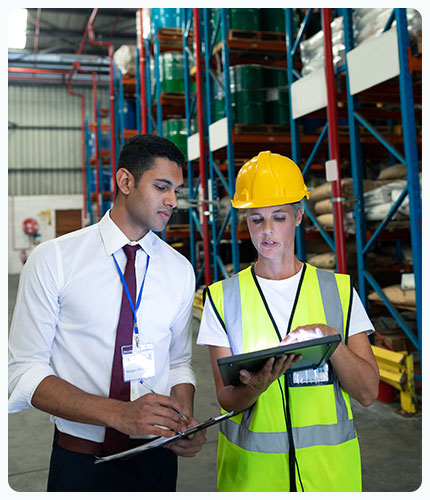
Manufacturing and electronics
Warehousing and logistics
Laboratories and research
Healthcare
Facilities and technical services
Regional APAC operations
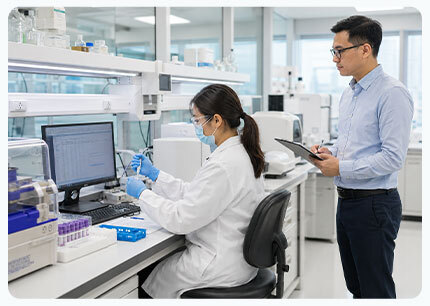
Abbott Singapore – Laboratory Ergonomics Case Study
Abbott engaged Ergo Global to help address
musculoskeletal disorders (MSDs) and staff-reported bodily discomfort within its Singapore laboratory. Ergo Global carried out a full analysis of the facility and its staff, including process analysis, employee surveys and employee observations.
9 processes analysed
900 employees assessed
Singapore Laboratory
View Case Study
Supporting Multi-Site and Regional Operations

From Assessment to Workplace Improvement
An ergonomics assessment should result in action. Recommendations are therefore written so they can be understood by the teams responsible for implementing them. Controls may involve workstation height, component location, storage design, handling equipment, tool positioning, access, workflow, task sequence or the way work is distributed across the shift.
Where a recommendation requires capital expenditure or engineering work, lower-cost interim actions can also be identified. This allows organisations to reduce obvious exposure while a more permanent redesign is planned.
What to Expect from an Ergo Global Engagement
initial discussion to define the site, task or problem to be assessed
on-site observation of representative work activities
use of appropriate ergonomic assessment methods where required
clear identification of the factors driving the risk
prioritised practical recommendations
reporting suitable for safety, operations, engineering and management review
follow-up or reassessment after changes, where required
Need Industrial Ergonomics Support in Singapore?
Frequently Asked Questions
What workplaces can you assess in Singapore?
Do we need a full site audit or a task-specific assessment?
If the risk is already known, a detailed task assessment may be the fastest route. If there are many tasks and no clear priority, an ergonomic audit or screening exercise can identify where deeper assessment should start.
Can you assess manual handling as part of an industrial ergonomics review?
Yes. Lifting, carrying, pushing and pulling can be assessed as part of the wider task, with more detailed manual-handling analysis where required.
Can the same framework be used across other APAC sites?
Yes. A consistent assessment structure can be applied across multiple sites while keeping the observations and recommendations specific to each facility and task.