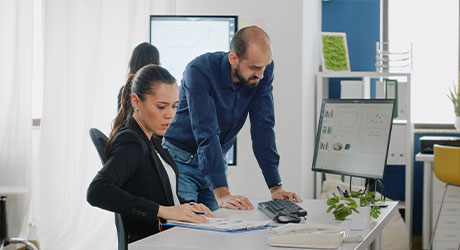
An ergonomic audit gives management a structured view of ergonomic risk across a workplace, department, process or facility. It is designed for organisations that need to move beyond individual complaints and understand where the biggest ergonomic exposures sit across the operation.
Ergo Global audits industrial and non-office environments to identify priority tasks, recurring risk patterns and gaps in existing controls. The output is a practical improvement roadmap: what needs attention first, what should be assessed in more detail and where changes in equipment, layout, process or training are likely to have the greatest effect.
Employee feedback and reported discomfort where available;
Training, reporting and escalation processes;
Areas requiring task-specific ergonomic risk assessment.
Audit vs Task-Specific Assessment
Choose an ergonomic audit when the concern is broad, the main problem areas are not yet clearly identified, or risks need to be prioritised across multiple tasks, departments or work areas. Choose a task-specific risk assessment when the problem task or exposure is already known and needs detailed analysis. The two approaches are complementary: an audit can create the priority list, while detailed assessments then quantify or analyse the highest-risk tasks.
Define scope, sites, departments and known concerns.
2
Review available incident, discomfort, absence or process information where relevant.
3
Walk the work areas and observe representative tasks.
4
Identify recurring ergonomic risk factors and high-priority jobs.
5
Classify issues by urgency, exposure and likely improvement opportunity.
6
Recommend which controls can be implemented immediately and which tasks require deeper assessment.
7
Create a prioritised action plan for ownership, follow-up and reassessment.
Executive risk summary
Areas/tasks reviewed
Observed ergonomic risk factors
Priority ranking
Photographic / annotated evidence, where permitted
Quick wins
Engineering / layout actions
Tasks needing detailed assessment
Action owners
Recommended reassessment intervals
What Is Included in an Ergonomic Audit Report?
An ergonomic audit report gives organisations a clear, prioritised view of the ergonomic risks identified across the areas and tasks reviewed. It should begin with an executive risk summary and record the main work activities, locations and exposures observed during the audit. Key ergonomic risk factors should be documented and ranked by priority so that teams can focus first on the issues requiring the most attention.
Where permitted, the report can include photographic or annotated evidence to make findings easier to understand. It should distinguish between quick wins that can be implemented promptly and engineering, layout or process changes that may need further planning. Tasks requiring more detailed assessment, such as RULA, REBA, manual handling or posture analysis, should also be identified clearly.
To support implementation, the report should set out practical next steps, recommended action owners and suitable reassessment intervals. This helps the organisation understand which findings need immediate action, which require further investigation and which should be reviewed again after controls have been introduced. The result is a structured action framework rather than a simple list of observations.
From Audit Findings to Action
The value of an audit is in what happens next. Recommendations can include changes to material storage, workstation height, work sequencing, reach zones, lifting aids, hand tools, task rotation, break patterns, worker education or specialist assessment. We can also help the organisation create a repeatable ergonomics process rather than treating every issue as a one-off event.
Multi-site ergonomic audits use a repeatable framework across different facilities so that ergonomic risks can be reviewed, scored and prioritised consistently. This creates a common approach for comparing findings across locations while still allowing for differences in local operations, workforce conditions and regulatory requirements.
Central Reporting & Risk Trends
Central reporting can help identify recurring ergonomic risks, common equipment or layout issues and control measures that may apply across more than one site. It also makes it easier to highlight locations or tasks that need more detailed follow-up assessment.
Cross-Site Improvement Planning
For organisations managing several facilities, this approach provides a consistent basis for prioritising actions, sharing practical improvements and tracking progress across the wider programme, while allowing site-specific recommendations where local conditions or requirements differ.
Where We Conduct Ergonomic Audits
Audits can be adapted to manufacturing sites, warehouses and logistics operations, laboratories, healthcare environments, construction and technical facilities. The methodology changes with the work; the goal remains the same: identify risk, prioritise action and improve the fit between people and the work system.
A walkthrough may identify tasks that would benefit from a structured posture assessment. RULA may be appropriate where upper-limb and trunk posture are the main concern. REBA may be more suitable for dynamic whole-body tasks. These methods should be used to deepen the analysis of selected tasks rather than scoring every job indiscriminately.
If you have several sites, multiple problem tasks or no clear view of where to start, an ergonomic audit can create the baseline. Tell us the facility type, approximate workforce and main concerns and we can scope the audit around your operating environment.