Ergonomic Posture & Task Analysis
Posture problems are often symptoms of task design. A worker may bend because the work is too low, reach because materials are too far away, rotate because the process is arranged to one side, or hold the arms elevated because the tool or work surface is poorly positioned.
Ergo Global’s posture and task analysis looks at the working position in context. We identify awkward, sustained or repetitive postures, determine what in the task is creating them and recommend changes that improve the fit between the person and the work.
What We Analyse
Neck and trunk flexion, extension and rotation
Shoulder elevation and unsupported arm positions
Wrist and forearm posture
Kneeling, squatting and lower-limb posture
Standing and static loading
Reach distance and work height
Movement frequency and task repetition
Tool, control and material location
Task sequence and work organisation.
What an Ergonomic Posture Analysis Involves
An ergonomic posture analysis begins with observation of the task and selection of representative parts of the work cycle. The assessment considers how long and how frequently different postures are adopted, including joint positions, reach distances, working heights and visual demands.
Tool, equipment and material positions are also reviewed to understand how the workstation or task setup influences posture. Where appropriate and authorised, photographs or video may be used to capture different task phases and repeated movements. Relevant measurements can also be taken to support the assessment.
The analysis considers the wider employee and task context so that findings reflect how the work is actually performed rather than relying on posture alone.
Static and Dynamic Work
Not every risky posture looks dramatic. Holding a moderate position for a long period can create a different kind of demand from a short, highly awkward movement. We therefore consider duration and repetition as well as the angle of the body.
Dynamic tasks can also shift exposure between body regions. A change that improves the shoulder may increase trunk bending, so recommendations must be assessed across the whole task.
When RULA or REBA Helps
Where a structured posture score adds value, RULA or REBA may be used. RULA is particularly useful for upper-limb, neck and trunk exposure, while REBA is better suited to dynamic whole-body tasks.
These methods support the analysis but do not replace understanding the complete workflow. Where the exposure cannot be represented adequately
by a single score, a broader posture and task analysis is used to consider the complete work cycle and task context.
Task Analysis Goes Beyond Posture
A posture can only be improved sustainably if the task allows it. We therefore look at workstation dimensions, reach zones, material placement, equipment, pace, work sequence, force and opportunities for recovery. The goal is to change the conditions that create the posture rather than simply telling the worker to ‘stand correctly’.
Typical Recommendations
Change work surface height
Bring materials or controls into a better reach zone
Provide support or adjustability
Modify tool selection or tool position
Change the orientation of the worker to the process
Reduce sustained or overhead work
Alter task sequence or rotation
Introduce mechanical assistance
Provide targeted education after the physical task has been improved.
Examples of Tasks We Analyse
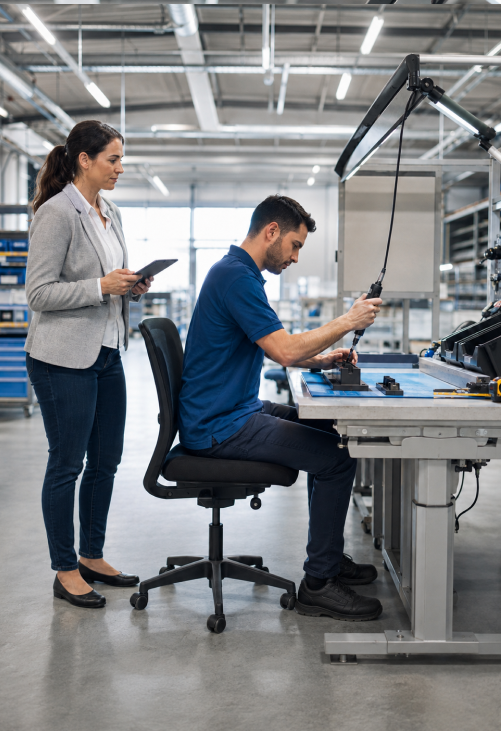
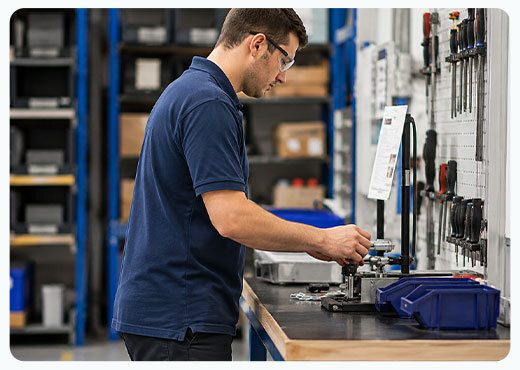
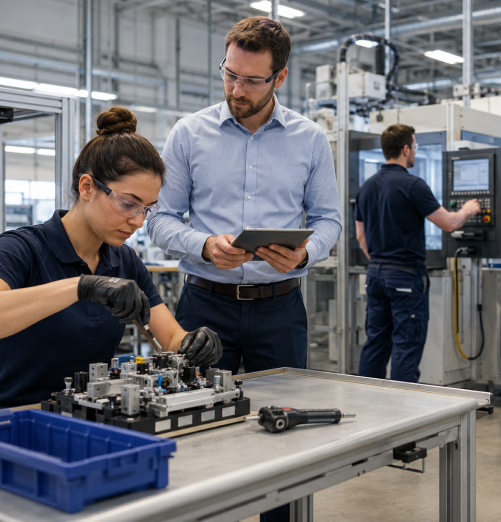
Posture and task analysis can be applied across a wide range of industrial and technical activities. Typical examples include machine access, bench and assembly work, laboratory tasks, maintenance activities, overhead work and work performed at low levels.
Assessments can also cover repetitive fine-motor activities, control-room tasks and other technical work where posture changes throughout the work cycle or where reach, working height, equipment position and task organisation may contribute to ergonomic exposure.
Typical Deliverables
Typical deliverables include a clear description of the task and postures assessed, supporting observations or evidence, and method scores where tools such as RULA or REBA are used.
The findings identify the principal factors driving ergonomic exposure and provide practical design, workstation, equipment or process recommendations. Actions can be prioritised according to the level of concern and the practicality of improvement.
Where changes are implemented, reassessment can be recommended to confirm whether exposure has been reduced and whether further improvements are required.
Part of a Wider Ergonomic Assessment
If the task also involves lifting, force, high repetition or multiple exposures, posture analysis may form one part of a wider ergonomic risk assessment.
Discuss a Posture or Task Analysis
If a worker or team is reporting discomfort, or a process appears to require awkward or sustained positions, share the task and site details with us. We can determine whether posture analysis, RULA, REBA or a wider assessment is the right approach.