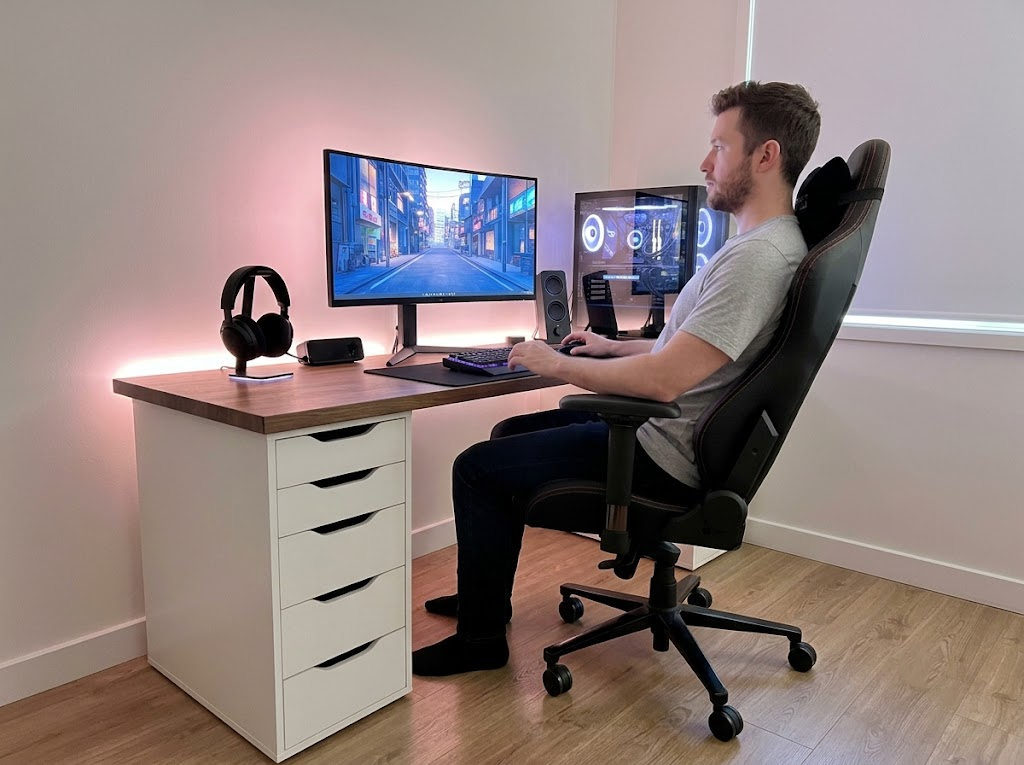


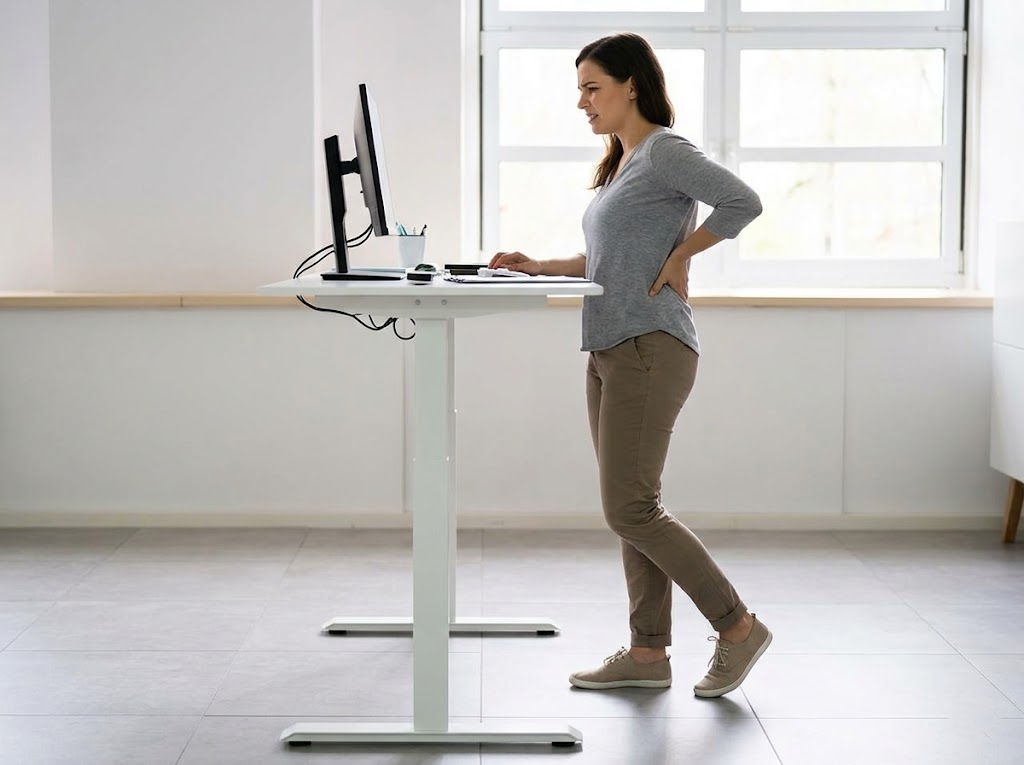
You bought the standing desk, raised it for the first time, and felt great for about forty minutes. Then your feet started to ache, your lower back tightened, and by mid-afternoon you were back in your chair.
That drop-off is one of the most common reasons people abandon standing work, and it usually comes down to what you are standing on. A hard floor gives your body nothing to work with, and an anti-fatigue mat for a standing desk is often the missing piece that makes standing sustainable.
What an Anti-Fatigue Mat Actually Does
An anti-fatigue mat is a cushioned surface placed in front of your standing desk to reduce the strain of standing on hard flooring. The name points to its purpose: reducing leg, foot, and back fatigue that builds during long standing sessions on concrete, tile, or laminate.
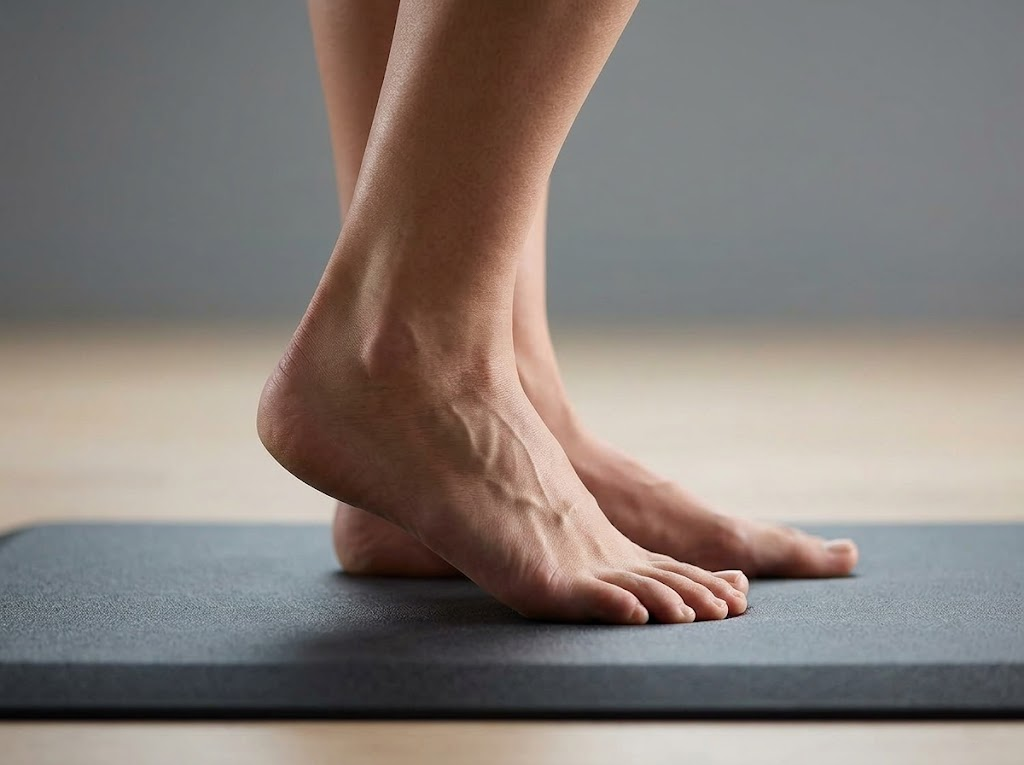
The mechanism is more active than simple padding. Standing perfectly still on any surface restricts blood flow and continuously loads the same muscles. A quality mat introduces a slightly unstable surface that prompts small, near-constant adjustments in your feet and calves. Those micro-movements keep the lower-leg muscles engaged, support circulation back toward the heart, and spread pressure across the foot rather than concentrating it.
Research on standing comfort consistently finds that this kind of dynamic standing produces far less fatigue than holding one fixed position.
The cushioning also absorbs some of the impact that hard floors send back into your joints. Studies on anti-fatigue matting have reported lower perceived discomfort and leg fatigue compared with standing on unmodified floors, along with better focus during the afternoon slump, when standing comfort tends to decline.
>>> Read more: Standing Desk Ergonomics: How to Set Up and Use Your Desk
Do You Need an Anti-Fatigue Mat for Your Standing Desk?
Standing is a genuine improvement over sitting all day, and it comes with a catch. Standing for hours on a hard floor introduces its own problems, including sore feet, aching legs, and added pressure on the lower back and knees.
Prolonged static standing has also been linked to circulatory issues, such as varicose veins and leg swelling, when movement and support are lacking. A mat helps close that gap so the benefits of standing are not undone by the surface underneath you.
An anti-fatigue mat is worth it for most standing desk users, and in a few situations it’s close to non-negotiable.
- You stand for more than 30 to 45 minutes at a stretch
- Your floor is concrete, tile, hardwood, or another hard surface
- You already feel foot, leg, or lower-back fatigue when standing to work
- You are on your feet for a large share of the workday
- You want to stand more but keep giving up because of discomfort
There are cases where a mat matters less. If you stand only in short bursts of ten to fifteen minutes, or your floor is already carpeted over a soft underlay, you may feel little difference. Even then, a mat tends to encourage longer, more comfortable standing intervals, which is usually the goal of buying a standing desk in the first place.
How to Choose an Anti-Fatigue Mat for a Standing Desk
The right mat depends on a handful of specifications that decide how it feels on day one and how it holds up a year later. Price is a weak predictor of quality here, so it helps to shop based on these factors rather than cost alone. The sections below walk through each one.
Thickness
Thickness determines how much cushioning and support the mat provides. The widely recommended standard for a standing desk mat is about 3/4 inch, or roughly 19 millimeters. This range gives real fatigue relief while staying stable enough to stand on in normal shoes.
Thicker is not automatically better. Mats thicker than 1 inch can feel soft and unstable, making balancing harder and straining the ankles, especially in dress shoes or heels. For most desk users, 3/4-inch is the balance between comfort and stability.
Material
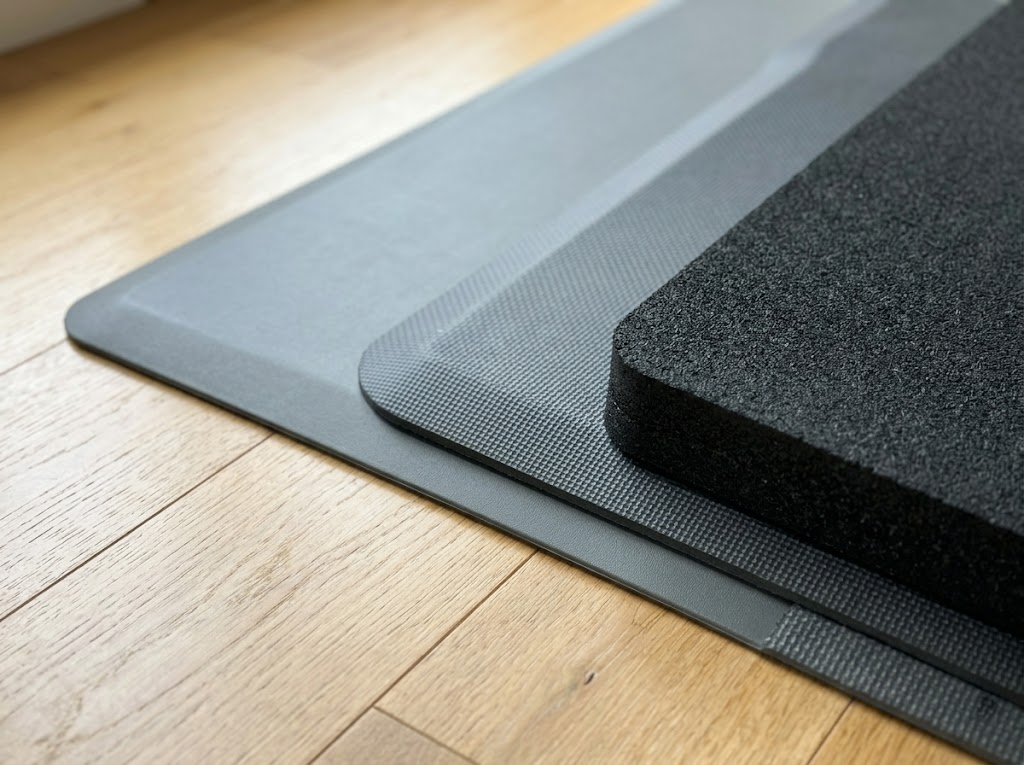
Material is the factor that separates a mat that lasts from one that flattens within months. The best-performing options use closed-cell polyurethane or nitrile rubber foam, which resist compression set, the permanent flattening that robs a mat of its cushion over time. High-density polyurethane returns to shape almost immediately after you step off.
Cheaper mats often rely on basic open-cell foam or PVC. These feel fine at first and then collapse with daily use, losing much of their support within six to twelve months. If long-term value matters to you, material is where to spend.
Size
Your mat should give you room to shift your stance and move your feet, not pin you to a single spot. A footprint of around 20 by 32 inches suits most single workstations. Taller users, or anyone who stands with a wide stance and paces slightly in place, benefit from wider or longer options within the 24-by-36-inch range.
Measure your typical standing footprint before ordering, including the space you drift into when you shift your weight. A mat that is too small pushes you off its edges and defeats the purpose.
Flat versus contoured
Anti-fatigue mats come in two broad styles, and the difference affects how much they encourage movement.
| Style | How it works | Best for |
| Flat mat | Even cushioned surface with beveled edges | Simplicity, dress shoes, easy sliding in and out |
| Contoured (terrain) mat | Raised domes, ridges, and edges that prompt weight shifts | Active standing, long sessions, calf and foot stretches |
Contoured mats add hills and dips that nudge you to change your foot position and stretch throughout the day, which reduces fatigue more than passive standing on a flat surface does. Flat mats are simpler to reposition and pair better with formal footwear.
Edges, base, and surface
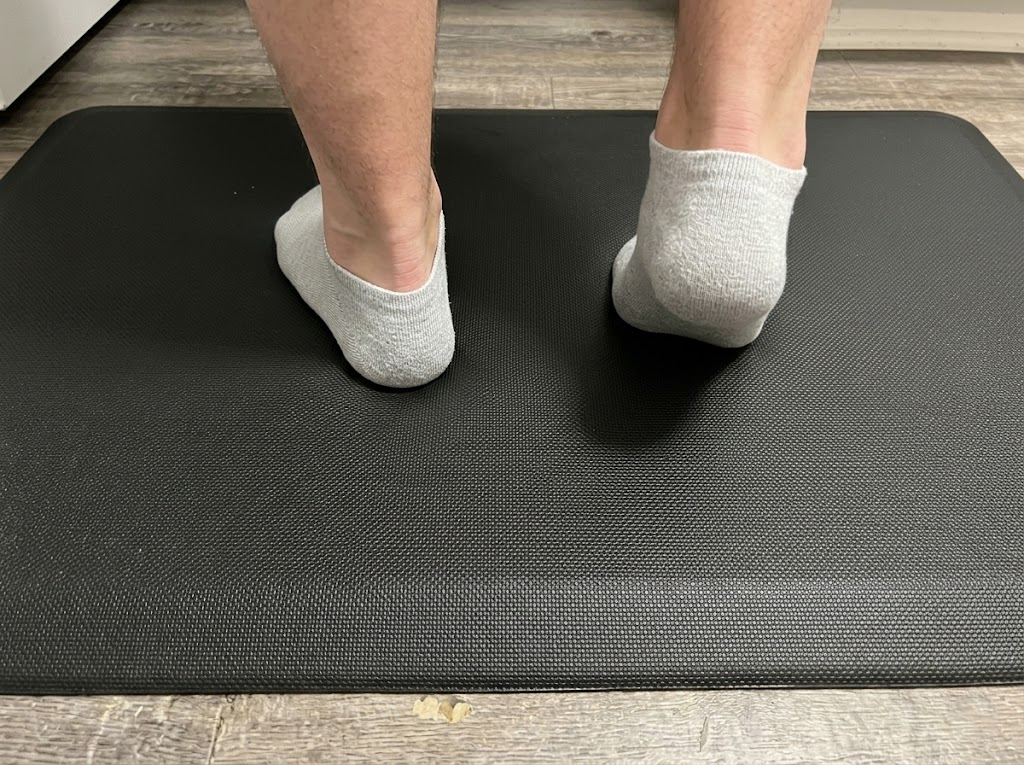
A few practical details round out a good mat. Look for beveled, tapered edges that reduce the risk of tripping and let you step on and off smoothly. Check that the underside is genuinely non-slip, particularly if you have smooth hardwood or polished concrete, where thin backing can skid. A waterproof, wipeable top surface keeps cleaning simple and helps the mat last.
>>> Read more: How to Set Up the Best Ergonomic Desk Position
7 Most Popular Anti-Fatigue Mats for Standing Desks
The mats below are among the most widely bought and reviewed options for standing desks, spanning terrain designs, flat foam, and budget picks. Prices and availability shift over time, so treat these as a shortlist to compare rather than a fixed ranking. Each link takes you to where you can shop the current listing.
1. Ergodriven Topo
The Topo is the mat most often recommended by people who stand for hours a day. Its contoured surface, with a raised center dome and angled side ridges, offers multiple places to rest your feet and encourages natural weight shifts and calf stretches. It uses durable polyurethane foam and carries a long warranty, which helps justify its premium price.
2. Ergodriven Topo Mini
The Topo Mini brings the same terrain concept in a smaller footprint, sized for people around 5 feet 4 inches and shorter or for tighter workspaces. The terrain features are proportioned to stride length, so the smaller size suits shorter users better than the full Topo.
3. ComfiLife Anti-Fatigue Mat
The ComfiLife is a popular budget flat mat that offers a reasonable spec: 3/4-inch foam, beveled edges, and a non-slip base. Its standout feature is a strong satisfaction-based warranty, which makes it a low-risk entry point for new standing desk users. The high-density foam will compress faster than polyurethane over years of heavy use.
4. Sky Solutions Sky Mat
The Sky Mat is a well-reviewed flat option that offers a good size for the money and comes in a range of colors beyond standard black. It provides a comfortable cushioned surface for general standing work and slides in and out easily when you switch between sitting and standing.
5. Kangaroo Original and Pro
The Kangaroo Original has been a long-running best-seller in this category, valued for consistent quality at a low price. The firm 3/4 inch foam supports your weight without bottoming out, and the anti-skid bottom holds on hardwood. The 1-inch Kangaroo Pro adds extra cushioning for those who want a softer feel.
6. CumulusPRO Commercial Grade
The CumulusPRO delivers effective anti-fatigue performance at a more affordable price than premium terrain mats. Its 24-by-36-inch size allows for small weight shifts, and it performs well on smooth floors thanks to a solid non-slip base. Heavier users who stand for many hours daily may notice faster compression over time.
7. Gorilla Grip Anti-Fatigue Mat
The Gorilla Grip rounds out the list with a wide range of sizes and colors, which makes it easy to match a specific desk footprint or office look. It offers a comfortable flat surface with a textured, grippy underside that stays put during use.
>>> Read more: 10 Top Ergonomic Office Furniture Products for 2025
Getting the Most From Your Mat
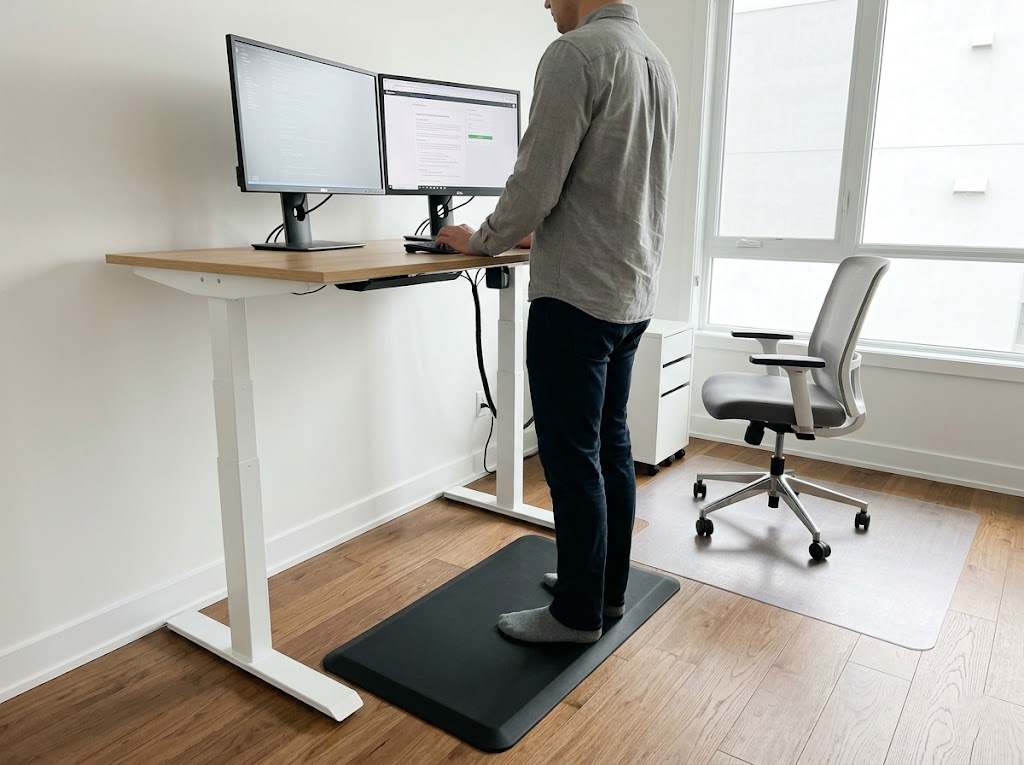
A mat does its best work as part of a wider standing routine. Buying one and then standing rigidly in place for hours misses much of the benefit. These habits help you get full value from it.
- Alternate sitting and standing. Aim to switch positions every 30 to 60 minutes rather than committing to a full day on your feet.
- Keep moving on the mat. Shift your weight, adjust your stance, and use any raised areas to stretch your calves through the day.
- Wear supportive footwear. Soft, cushioned shoes complement the mat, and standing barefoot or in hard-soled shoes reduces its effect.
- Position it correctly. Place the mat directly under your desk, with a chair mat or a clear floor for your seated intervals.
- Fix your desk height too. Set the desktop so your elbows rest at about 90 degrees, and your monitor sits at eye level, so your posture is sound whether you sit or stand.
A comfortable surface underfoot supports the hours you spend standing, and a properly configured workstation protects your posture the rest of the day.
>>> Read more: Ergonomics for Computer Users: How to Prevent Work Pains
How We Can Help at Ergo Global
At Ergo Global, we help individuals and organizations turn a pile of ergonomic gear into a setup that genuinely works. An anti-fatigue mat is one piece of a healthy standing workstation, and its value grows when your desk height, monitor position, seating, and sit-stand routine all align with it.
Our team runs comprehensive ergonomics assessments, delivers employee training workshops, and designs workspaces that keep your people comfortable, productive, and free of the aches that pull them back into their chairs. We pair practical recommendations with a self-assessment platform that makes ergonomics measurable across your whole workforce.
If standing fatigue or desk discomfort is affecting your team, we would love to help you build a workspace that supports better health every day.
Ready to get your standing setup right? Talk to our ergonomics consultants and start building a healthier, more productive workplace.