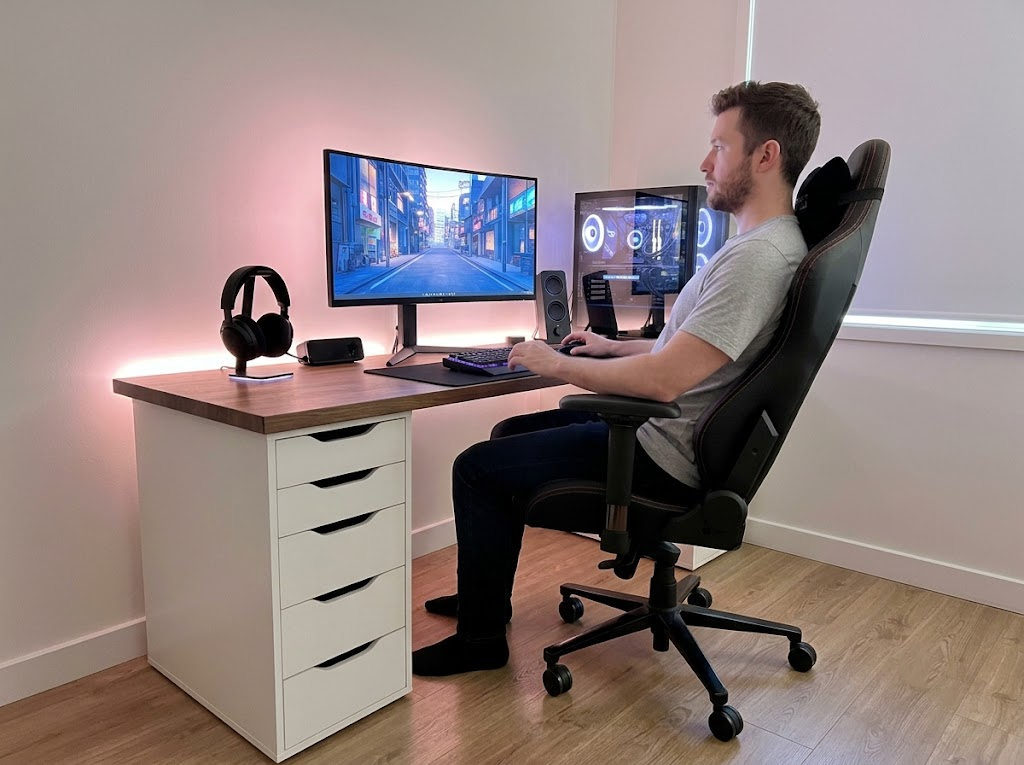


Most office workers spend six to eight hours a day sitting, often without a real break beyond a quick walk to the kitchen.
That routine adds up over months and years. It shows up as back pain, afternoon fog, and general stiffness by the end of the day.
Standing desks have become one of the most common responses to this problem, and the research behind them holds up well. Universities, hospitals, and government health agencies have all measured what happens to the body when someone alternates between sitting and standing during work hours, and the effects extend well beyond posture.
The standing desk benefits below come from published studies. Each one includes a note on how to obtain the result on your own workstation.
A desk alone will not deliver much. How it gets used over the course of a normal workweek is what determines whether any of this pays off.
What Long Hours of Sitting Do to Your Body
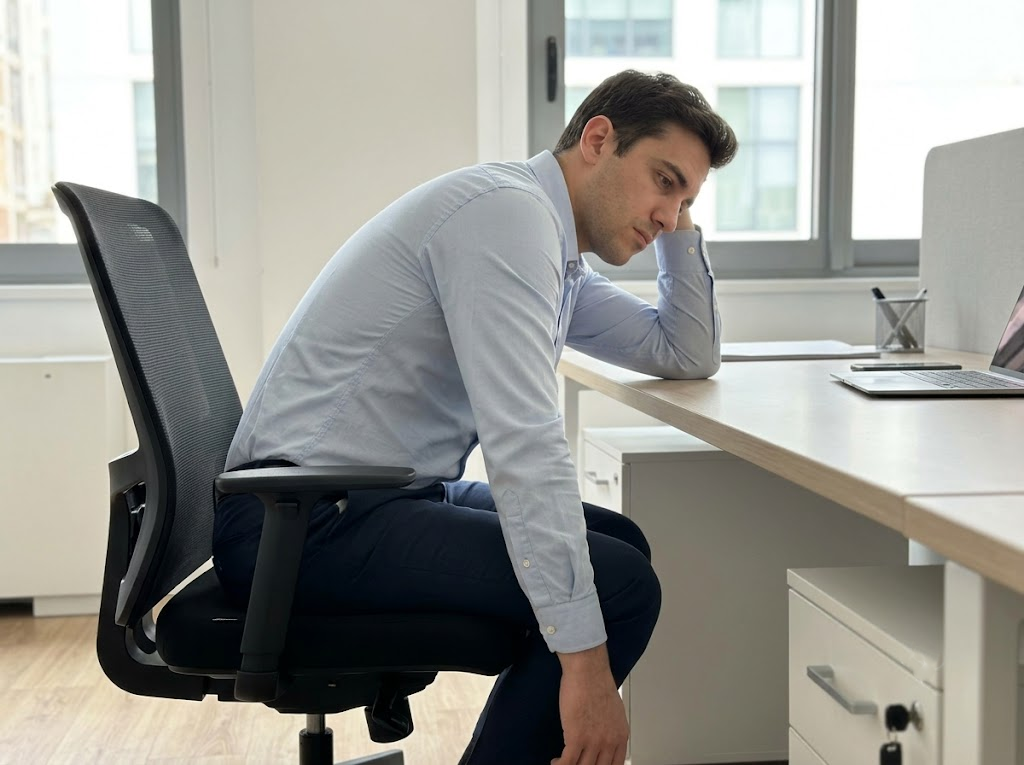
Before looking at what standing helps with, it helps to understand what prolonged sitting works against. Sitting for extended stretches:
- Flattens the natural curve of the lower spine
- Switches off the core muscles that normally support the back
- Slows circulation in the legs
Research from the Mayo Clinic links extended daily sitting to higher blood pressure, higher blood sugar, and a greater risk of death from heart disease, even among people who exercise regularly outside of work hours.
Occasional sitting is a normal part of any workday. The risk builds with duration and a lack of variation, which is where a sit-stand setup earns its place in a well-designed workstation.
>>> Read more: What Sitting Does to Your Spine
8 Standing Desk Benefits Backed by Research
Several of these benefits show up within a few weeks of consistent use. Here is what the research actually measured, broken down by outcome.
Less Back and Neck Pain
The CDC’s Take-a-Stand Project followed a group of office employees given sit-stand devices for their desks. After reducing sitting time by about an hour a day, participants reported a 54 percent drop in upper back and neck pain within four weeks, along with a noticeable improvement in mood.
Standing shifts the load off the lumbar spine and reactivates the core muscles that keep the back stable. That combination explains why the relief happens so quickly.
Better Blood Sugar Control
One of the more surprising benefits of standing desks shows up in blood work.
In one study, office workers who stood for three hours after lunch saw their post-meal blood sugar spike drop by 43 percent compared to those who sat for the same stretch of time.
Later research found that alternating between sitting and standing every 30 minutes produced smaller but still meaningful improvements in insulin resistance over time. This matters most for anyone managing prediabetes, diabetes, or a family history of either.
Lower Blood Pressure
A 2024 randomized trial followed 283 older adults with a body mass index between 30 and 50. Half received a standing desk, an activity tracker, and coaching sessions focused on reducing sitting time.
After six months, that group had cut their daily sitting time by about 32 minutes and saw their systolic blood pressure drop by an average of 3.5 points. Researchers noted that result came close to the improvement typically seen from dedicated exercise programs.
This benefit depends on reducing total sitting time throughout the day. Prolonged, uninterrupted standing has its own downsides for blood pressure, which is why this article keeps coming back to alternating positions during the day.
Better Circulation and Long-Term Heart Health
A 2021 study tracked office workers using sit-stand desks over 24 weeks. Researchers measured flow-mediated dilation, a test that assesses how well blood vessels dilate and constrict.
The standing group showed meaningful improvement in this marker, along with better fasting triglycerides and insulin sensitivity. Researchers noted no negative effect on heart rate.
Standing engages the calf and leg muscles, which act as a secondary pump, helping move blood back toward the heart. Prolonged sitting allows blood to pool in the lower body, and regular standing intervals counter that effect over the course of a workday. Over months, this adds up to a measurable reduction in cardiovascular strain.
Lower Long-Term Risk of Chronic Disease
A large meta-analysis pooling data from nearly 800,000 people found that high levels of sedentary time carry a substantial cost over time. Compared with the least sedentary group, the most sedentary group faced a 112 percent higher relative risk of diabetes and a 147 percent higher relative risk of cardiovascular disease.
The same analysis found a 90 percent higher relative risk of cardiovascular death and a 49 percent higher relative risk of death from any cause. The diabetes association was the strongest of the group.
These numbers describe population-level risk, and individual outcomes vary widely. The practical takeaway is that total daily sitting time is worth tracking, and a standing desk is a practical tool for reducing that number over months and years.
Fewer Distractions During the Day
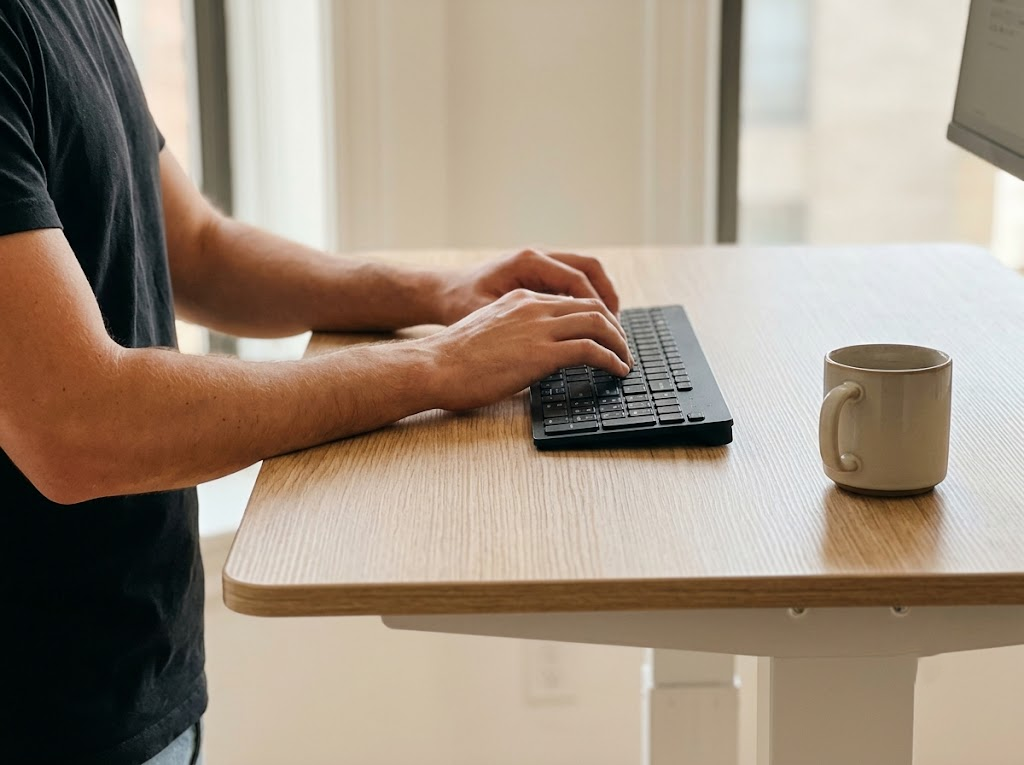
Texas A&M University researchers compared workers who used traditional desks with those who used stand-biased desks. They found that 80 percent of traditional desk users reported lower back discomfort, compared to just over half of the standing group.
Reduced discomfort tends to translate directly into longer, more sustained focus. It is hard to concentrate on a task while shifting in a chair every few minutes.
Improved Mood and Energy
Employees in the CDC study mentioned above reported measurable mood improvements alongside their drop in pain. Later research has found similar patterns around energy levels and afternoon fatigue.
Movement increases blood flow to the brain. Even small increases in circulation appear to affect alertness during long stretches of screen time.
More Calories Burned Across the Day
Standing burns roughly 8-10 more calories per hour than sitting. On its own, that number sounds small.
Over a full workday, it adds 50 to 80 extra calories. Over the course of a year, that becomes a meaningful amount of additional movement without a single trip to the gym.
A standing desk will not replace structured exercise, and the calorie difference alone will not drive meaningful weight loss. Pairing it with regular activity outside of work hours is what turns that modest daily number into a real long-term benefit.
How to Get These Benefits Without Straining Your Body
Each of the benefits above depends on using the desk correctly.
A desk set at the wrong height, or used for eight straight hours without a break, can create new sources of strain.
Alternate Sitting and Standing Throughout the Day
Standing for long, unbroken stretches carries its own risks, including varicose veins, swollen feet, and joint strain.
The goal is variation between sitting and standing, built up gradually as your body adjusts. Most ergonomists recommend starting with 30 to 60 minutes of standing spread across the day.
From there, build toward a target of 2 to 4 total hours, broken into 15- to 30-minute intervals throughout the day.
Set the Desk Height First
A desk set too high forces the shoulders up and strains the neck. One set too low rounds the back forward.
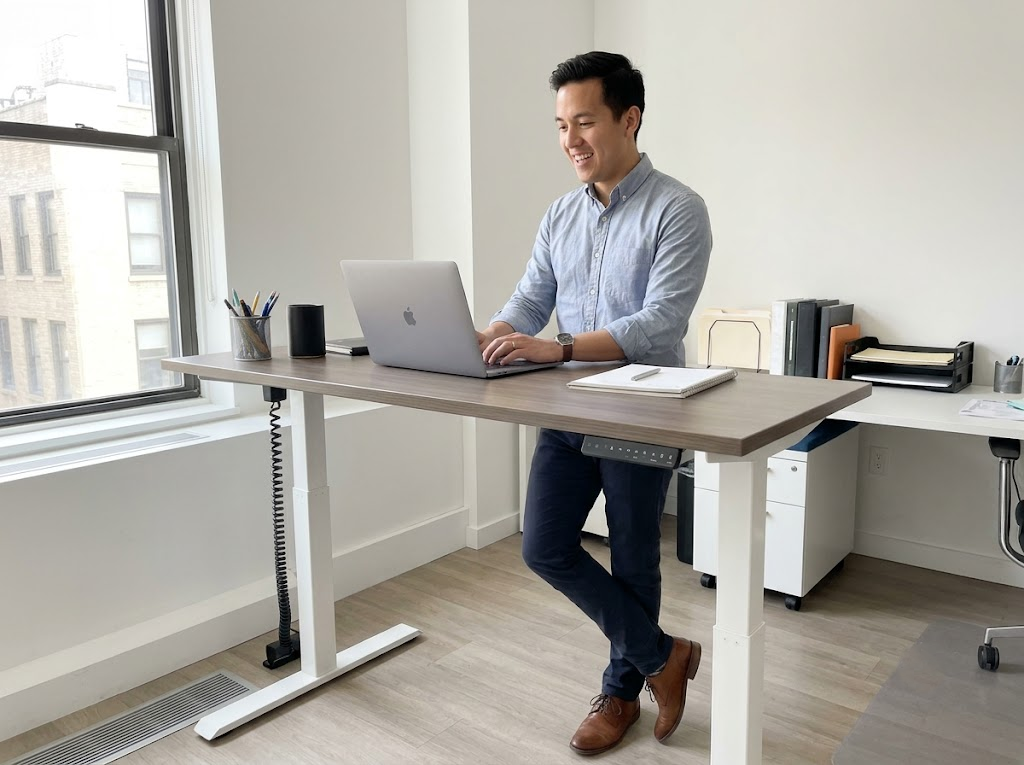
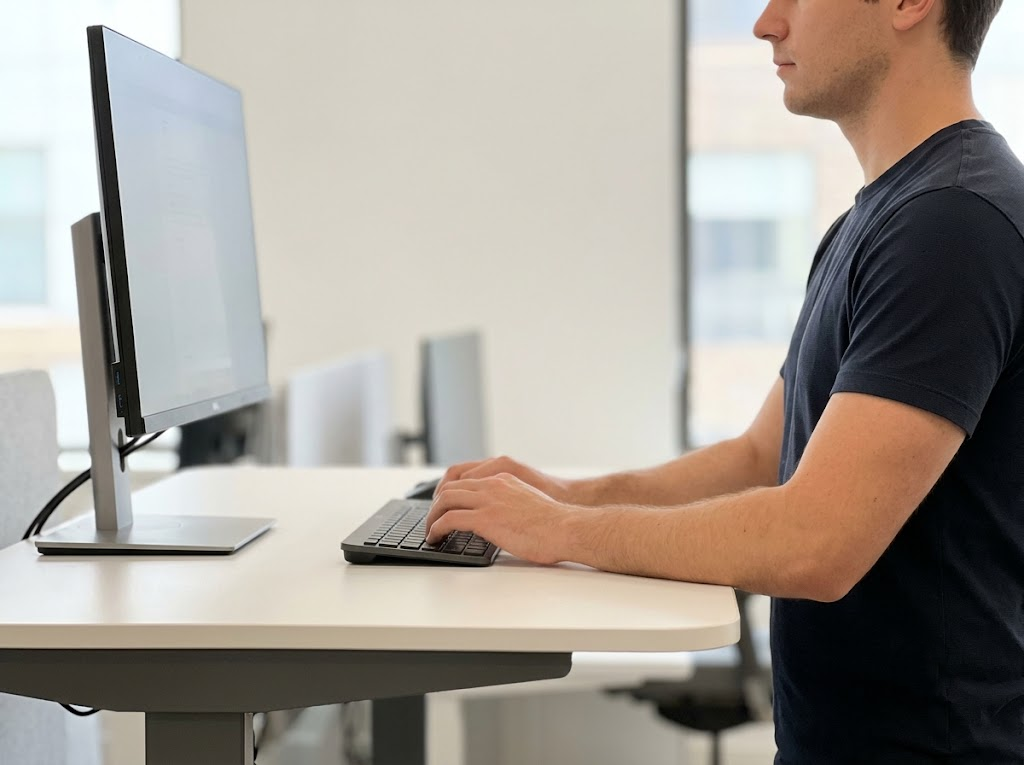
When standing, aim for your elbows to rest at roughly a 90-degree angle, with your monitor at eye level and about an arm’s length away.
A fixed-height standing desk locks you into one position, limiting the variation you actually get during the day.
A sit-stand desk adjusts between sitting and standing height, usually with an electric motor or a manual crank. That makes it far easier to follow the interval-based approach the research above is built around.
For most people, the adjustable version delivers better results. It simply gets used more consistently throughout the workday.
>>> Read more: The Ultimate Standing Desk Ergonomics Set Up Guide
Support Your Feet and Legs
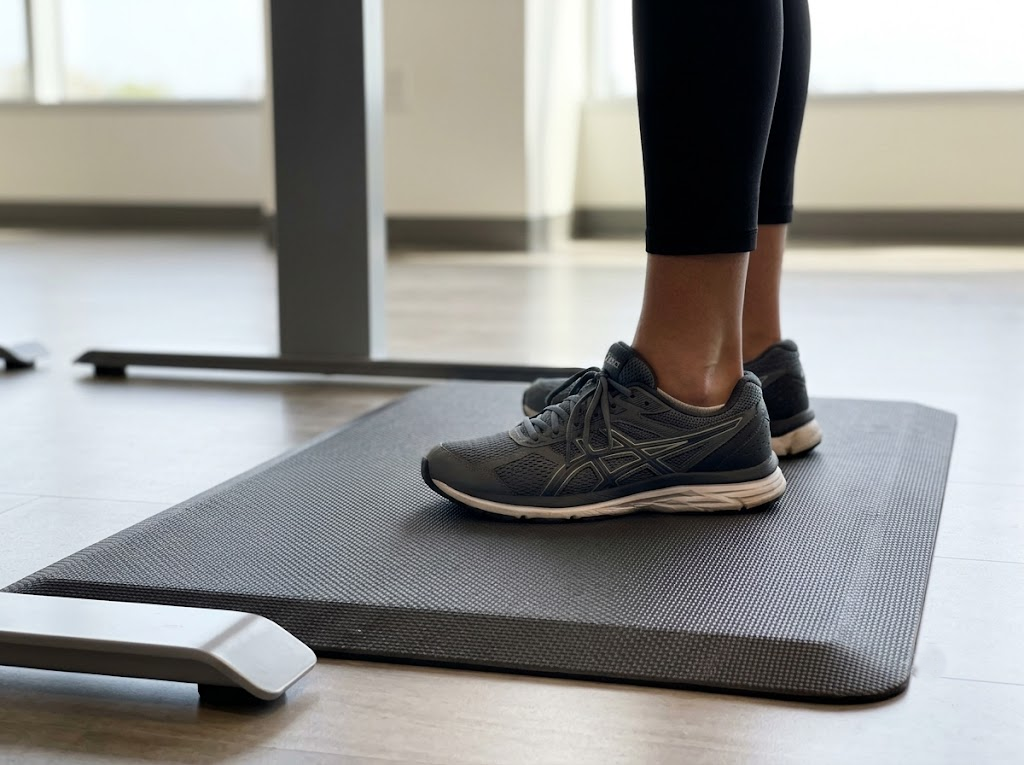
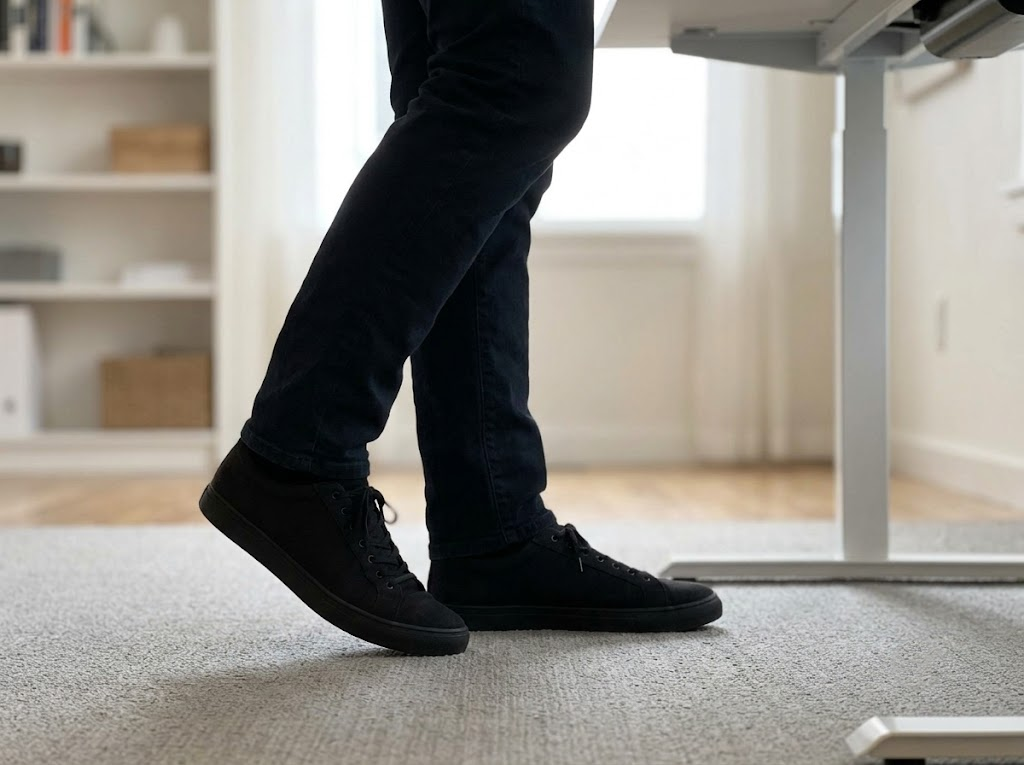
An anti-fatigue mat reduces pressure on the joints during prolonged standing. Supportive footwear matters more than most people expect.
Standing on a hard floor in flat shoes for hours is one of the fastest ways to turn a helpful habit into a sore lower back by the end of the week.
Laptop users face an added challenge, since a laptop screen and keyboard are fixed to each other. Propping a laptop on a stand and pairing it with an external keyboard and mouse keeps the screen at eye level while your hands stay in a neutral typing position, whether you are sitting or standing.
A monitor arm solves the same problem for anyone running a full-size display. It makes it much easier to keep the screen height consistent as the desk itself moves up and down throughout the day.
A quick checklist for a properly set up standing desk:
- Elbows at roughly 90 degrees when typing
- Monitor top edge at or slightly below eye level
- Shoulders relaxed, away from the ears
- Feet flat, weight distributed evenly across both feet
- An anti-fatigue mat under a supportive pair of shoes
- A timer or reminder to switch positions every 30 to 60 minutes
Signs Your Team Could Use Standing Desks
For companies weighing whether to invest in sit-stand desks for an office or a remote workforce, a few patterns tend to emerge before anyone files a formal complaint.
- Frequent reports of back, neck, or shoulder discomfort during the day
- A rise in short-term sick days tied to musculoskeletal complaints
- Afternoon slumps in focus that show up consistently across a team
- Employees improvising with boxes or books to raise their laptop screens
>>> Read more: The Hidden Cost of Bad Office Ergonomics.
The financial case tends to back this up as well. Musculoskeletal disorders account for a large share of workplace injury claims, and direct treatment costs alone run into the billions each year across the workforce.
Carpal tunnel and strain claims regularly cost employers tens of thousands of dollars per case once lost time and treatment are factored in.
A modest investment in sit-stand desks and proper setup guidance tends to look small next to those figures, particularly for teams that spend most of the day at a screen.
A quality chair and a standing desk address different parts of the same problem. The chair supports proper posture while seated, and the desk adds positional variation throughout the day.
Teams deciding where to start often get more immediate relief from fixing the chair first, then adding standing desks as the next step.
>>> Read more: Top 20 Ergonomic Chairs for Back Pain Relief
Let Us Help You Set It Up Right
A standing desk delivers real benefits, though only when the height, timing, and posture are dialed in correctly. This is where a lot of the value gets lost in practice.
Companies invest in equipment and skip setup, and employees end up standing in the same poor posture they had while sitting.
At Ergo Global, we work with teams and individuals to assess workstations, correct desk and monitor height, and build sit-stand routines that fit real workdays. Our ergonomists have supported over 550,000 assessments across 55 countries, and we know what actually turns discomfort into comfort.
If your team is considering standing desks, or already has them and wants better results, reach out to us for a workstation assessment.