

Every workplace hides a few tasks that quietly wear people down, whether it is a warehouse lift repeated a hundred times a shift or a long afternoon hunched over a keyboard. Left unchecked, that everyday strain hardens into real injuries, lost workdays, and climbing costs.
A workplace ergonomics program is how a company gets ahead of the problem, spotting the tasks that hurt, fixing them, and making sure the fixes actually hold.
What a Workplace Ergonomics Program Is
A workplace ergonomics program is a proactive system that shapes the job to fit the worker. Its purpose is to prevent musculoskeletal disorders (MSDs), such as carpal tunnel syndrome, back strains, and tendonitis, by identifying physical hazards and eliminating them at the source. It gives a company a repeatable process for spotting the tasks that strain the body, easing that strain, and checking that the fix actually worked.

Four moves sit at the center of any real program, and the seven steps that follow put each one to work:
- Identify risk factors. Assess each workspace for stressors such as repetitive motion, awkward postures, heavy lifting, and vibration.
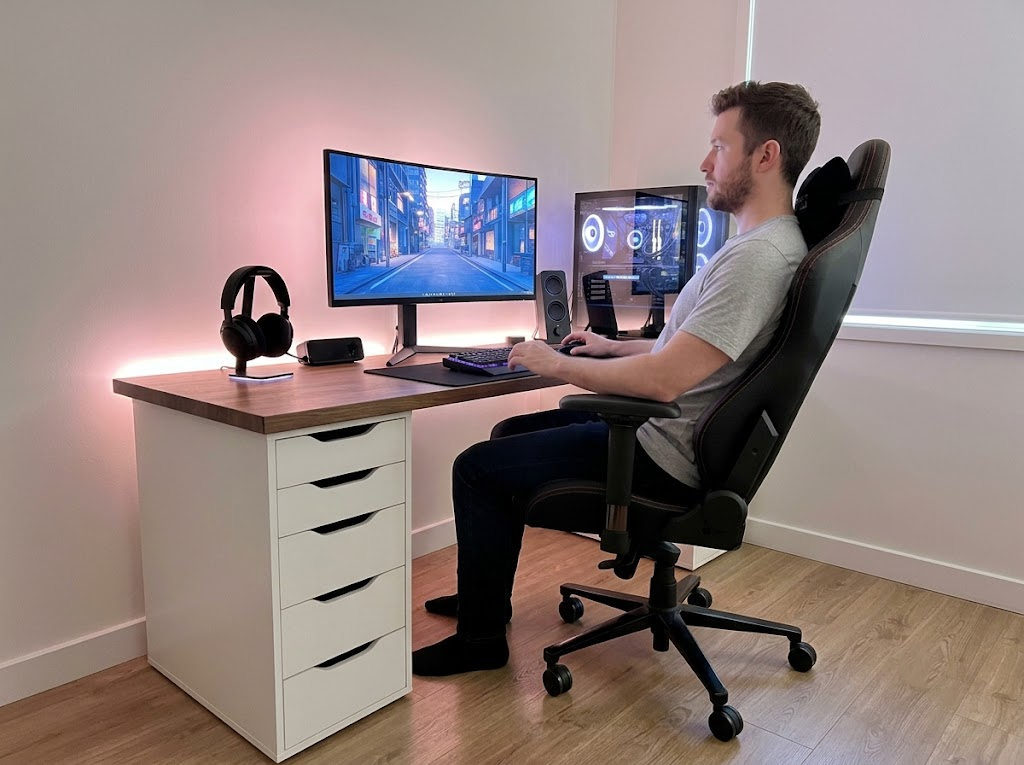
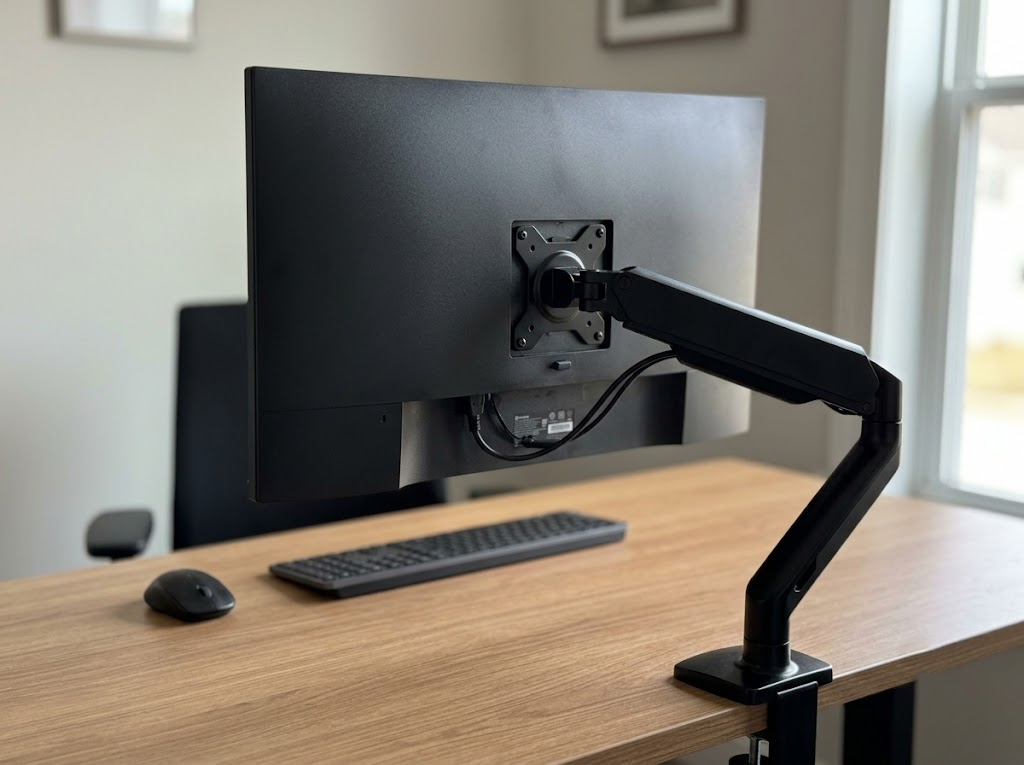
- Put solutions in place. Reshape equipment and tasks with height-adjustable desks, ergonomic chairs, and monitor arms that raise the screen to eye level.
- Train your people. Show managers how to spot risks and teach employees to set up their own workstations.
- Encourage early reporting. Give workers a simple, blame-free way to flag discomfort before it grows into a serious injury.
Companies that commit to a program like this tend to see healthier, more comfortable employees, steadier productivity, and lower workers’ compensation costs.
>>> Read more: A Guide to Workplace Ergonomic Assessments
Why Work-Related MSDs Deserve Your Attention
Musculoskeletal disorders are costly and undermine both productivity and morale. Workers are dealing with one struggle after another to meet the demands of the job, and the absences add up fast.

The scale is easy to underestimate. In 2019, roughly 325,270 cases meant time away from work because of a musculoskeletal disorder, close to 29 percent of all such cases that year.
The disruption runs deeper than the count suggests. The median time away for one of these disorders is 14 days, compared with nine days for other work-related injuries. A functioning program lets you catch problems early and build solutions before they spread. The benefits stack up:
- Preventing avoidable losses in productivity, quality, and profit
- Lowering absenteeism and lost-time injuries
- Reducing workers’ compensation premiums
- Keeping experienced people on the job and engaged
Designing a fix starts with understanding the work itself: the processes, tasks, tools, and workstation layouts involved. From there, one practical question guides the design: whether a person or a machine is better suited to a given task. The aim is for people to handle tools, methods, and materials without undue strain. A proactive, engineering-led approach that removes risk factors at their source lets managers and workers head off problems before they start.
Build Your Program in Seven Steps
The steps below provide a repeatable path from the first assessment to lasting change. Work through them in order the first time, then let the final step loop you back to the start. A workplace ergonomics program works best as a companion to the health and safety systems you already run.
Step 1: Identify risk factors

Find the tasks that load the body, then measure them properly.
Start with a walkthrough and look for the physical stressors that drive most strain:
- Awkward postures, like bending, twisting, or reaching overhead
- Forceful exertions, like heavy lifting or hard gripping
- Repetitive motions on short task cycles
- Static postures held for long stretches
- Vibration and contact stress from tools or pressing against hard edges
Score what you see with validated tools such as REBA and RULA for posture, the Strain Index for the hand and wrist, and the NIOSH lifting equation for manual handling. A structured method for spotting these risk factors keeps you consistent from one job to the next, and a task that stacks several stressors together is where you begin.
>>> Read more: How to Perform an Ergonomics Assessment
Step 2: Involve and train management and workers
A program lives or dies on backing from the top and input from the floor.
You need both. Leadership sets clear goals, names an owner, and funds the work, ideally through a short written policy and a small committee that draws on safety, HR, operations, and frontline staff.
The people doing each job know its strains best, so bring them in through surveys, a suggestion log, or plain conversation, and close the loop by telling them what happened with their ideas.
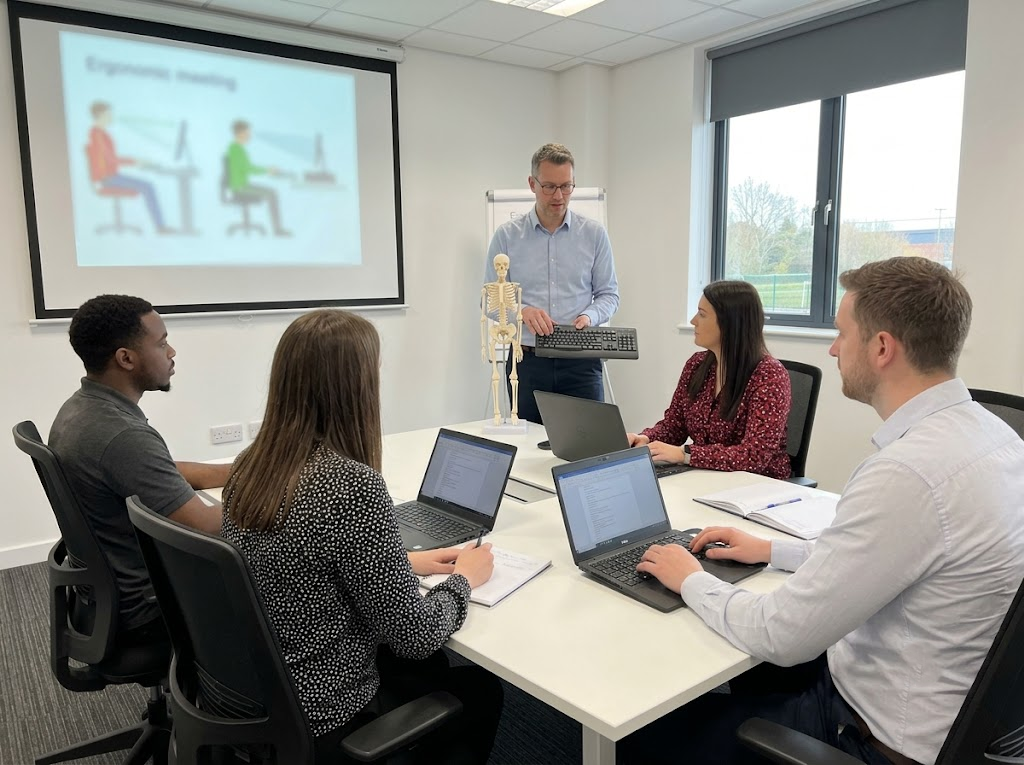
Training ties the two together, since workers, supervisors, and managers who learn what ergonomic risk looks like carry the habits into daily work. A structured plan for involving and training everyone helps you reach each group.
Step 3: Collect health and medical evidence
Let the data show you where trouble already lives. Before you redesign anything, gather what your own records reveal. Pull from several places so the picture is complete:
- OSHA injury and illness logs
- Company medical records
- Workers’ compensation and insurance claims
- Absentee records
- Job transfer applications
From these, you can work out an incidence rate, the number of new cases per 100 full-time workers, and a prevalence rate that counts every active case in a period. Comparing those rates across departments or against your industry shows where the strain is concentrated. If one department reports far more trouble than the rest, study its risk factors right away.
Records only tell part of the story, so add interviews and symptom surveys to surface the aches people have not formally reported. A good survey asks about the location, timing, and severity of symptoms, the difficulty of the task, and past history, and a body map lets workers mark exactly where it hurts. Keep surveys anonymous, voluntary, and on paid time, and run them only when you are ready to act on the results. Periodic medical exams by a qualified provider, along with a task-by-task job analysis, then confirm which disorders trace back to which jobs.
>>> Read more: Office Ergonomics Checklist: 50 Questions for Workplace Health
Step 4: Implement your ergonomics program
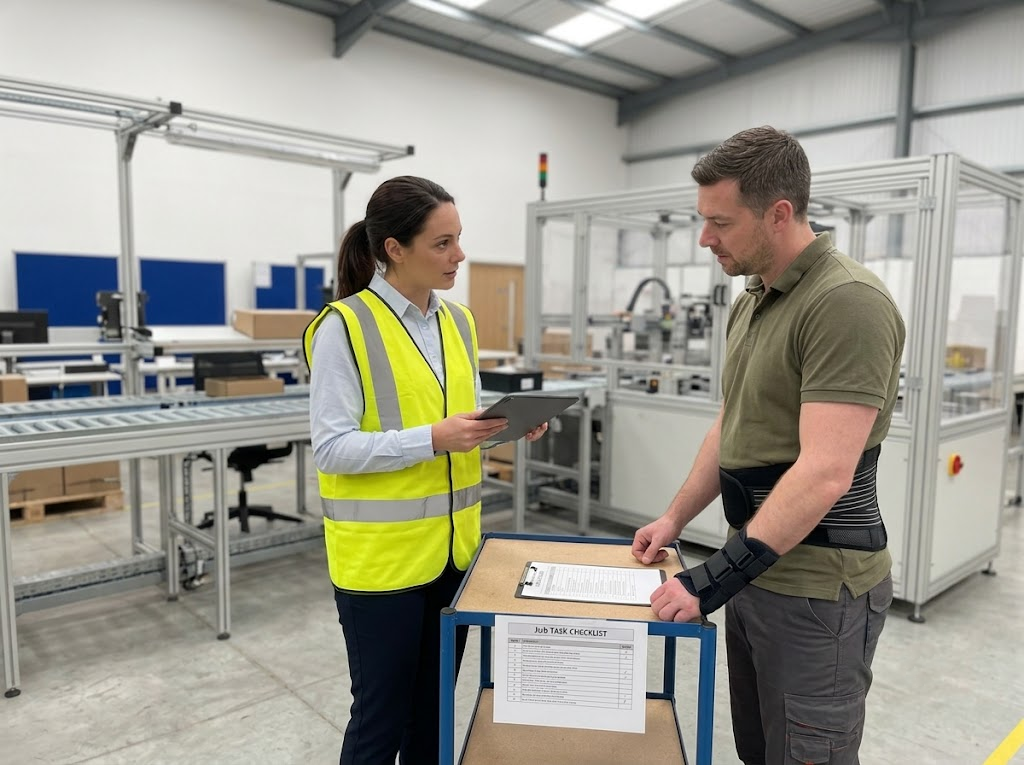
Fix the worst risks, starting with the ones you can design out entirely. Good practice follows a hierarchy, most effective first and moving down only when you have to:
| Control type | What it does | Examples |
| Engineering | Redesigns the job or tool so the hazard is gone | Height-adjustable workstations, lift tables, powered assists, better-gripped tools |
| Administrative | Changes how or how often the work is done | Job rotation, microbreaks, pacing, training on lifting technique |
| Personal equipment | Adds a last layer of personal protection | Anti-vibration gloves, knee pads, supportive footwear |
Engineering fixes come first because they eliminate the hazard at its source rather than relying on a worker to remember a technique. Administrative habits still pull their weight, and small ones add up, like a short microbreak every 20 minutes and a longer posture reset each hour, both shown to reduce strain on repetitive work.
Step 5: Evaluate your program
A program earns its keep only when you can prove it did. So check the results, then go around again. Follow up on each change to confirm it reduced the risk and did not create a new one, since people using new muscle groups can feel sore at first. Check in about a week after a change, then again after a month, and give new hires or anyone back from a long absence roughly two weeks to condition their muscles.
For the wider picture, compare the numbers before and after each change:
- Injury and illness rates
- Lost workdays and restricted-duty days
- Workers’ compensation costs
- Absenteeism and turnover
- Productivity and quality
A benefit-cost ratio, a payback period, or a return-on-investment figure turns those results into language a finance team respects. Give changes time, since old symptoms can take months to fade, then feed what you learn into the next round.
>>> Read more: 7 Steps for Conducting an Ergonomics Assessment
Step 6: Promote worker recovery

Catch an ache early and help people back to work fast. The sooner someone flags discomfort, the cheaper and simpler it is to sort out. Speed matters more than people expect, because the odds of returning to work fall sharply the longer someone stays away, and even a minor injury can turn into lasting disability when recovery is handled poorly. Make reporting easy and free of blame, then move quickly when a concern comes in.
Back it with a return-to-work program that offers modified duties, restricted tasks, or a temporary transfer, so anyone recovering stays connected to the job. Recovery works best as a shared responsibility:
- Employers build the return-to-work program and protect medical privacy.
- Health care providers learn the real physical demands of each role before advising on limits.
- Workers follow safe practices and report symptoms early.
Letting your provider walk the floor and see the actual tasks leads to far better return-to-work decisions.
Step 7: Maintain commitment and involvement
Keep the attention alive so the gains hold. Programs rarely fail on technique. They fade when leadership drifts, and budgets follow. Guard against that by keeping ergonomics on the agenda, refreshing training as tasks and staff change, and reporting results back to the people who fund the work. Management support is what carries a program through its quiet stretches, so protect it.
Worker involvement is the other half, and a lasting program pulls input from a mix of worker and management representatives, often including:
- Safety personnel
- Health care providers
- Ergonomics specialists
- Human resources
- Maintenance workers
- Engineers
- Purchasing specialists
Together, these groups conduct job analyses, identify hazards, review injury records and symptom surveys, develop control measures, and procure the equipment the program needs. Workers themselves are trained to recognize physical risk factors, which lets them flag potential hazards, changing conditions, and ideas for improvement.
The payoff of that involvement reaches beyond lower WMSD risk. Workers who take part tend to be:
- More motivated
- More satisfied in their jobs
- Better at problem-solving
- More open to change in the workplace
- More knowledgeable about their own work
Sustained commitment and involvement turn a one-time push into a genuine culture of safety, where everyone shares responsibility for how the work feels on the body.
>>> Read more: Top Ergonomics Certifications to Get for a Safer Workplace
Tailoring the Program to Your Workplace
The seven steps hold true everywhere, though the hazards and fixes vary by setting. In an office, the risks come from long static sitting, repetitive typing and mousing, and hours of screen viewing, so the wins are adjustable chairs and desks, monitors at eye level, and habits that break up sustained postures.

On an industrial or warehouse floor, the strain swings toward manual handling, high force, and awkward positions, which moves the focus to lift assists, smarter workflow layout, and job rotation.
Remote and hybrid setups carry their own trap, since home workstations are often makeshift and out of sight, making remote assessments and a clear equipment stipend worth including in the plan from the outset.
A single company often runs all three at once, so a strong program keeps one consistent method while letting the specific controls flex by environment.
Build Your Ergonomics Program With Us
At Ergo Global, we help organizations turn these steps into a working program that fits their people and their budget.
Our certified ergonomists assess your offices, industrial sites, and remote setups, then translate the findings into practical fixes, training, and follow-up that continue to improve over time.
We have helped more than half a million employees across over 100 companies work in greater comfort, and we would be glad to do the same for yours. Whether you are starting from scratch or strengthening what you already have, we can meet you where you are and build from there.
Ready to protect your team and your bottom line? Reach out to us for an ergonomic assessment, and we will help you design a workplace ergonomics program that lasts.