

Dental hygiene is one of the most physically demanding professions in healthcare. Working in confined spaces, holding the same posture for hours at a time, and performing precise, repetitive hand movements day after day takes a serious toll on the body. Studies consistently show that musculoskeletal disorders are among the most common occupational health issues for dental hygienists, with complaints ranging from neck and shoulder pain to wrist strain and lower back discomfort.
The good news is that most of these problems are preventable. With the right strategies in place, hygienists can protect their physical health, extend their careers, and provide better care to patients.
Why Musculoskeletal Injuries Are So Common in Dental Hygiene
Musculoskeletal disorders are widespread in dental hygiene, and the numbers are striking. According to RDH Magazine, a 2022 study found that 91% of dental hygienists surveyed were either currently suffering from or had previously experienced a work-related musculoskeletal disorder.
The most common pain areas are equally telling. A 2019 study of dental workers referenced in the same publication reported recurring pain in the following regions:
- Neck (60.7%)
- Upper back (52.4%)
- Lower back (41.7%)
- Hands and wrists (60 to 69.5%)
Nearly one-third of dentists retire due to musculoskeletal disorders. The risk is arguably even higher for hygienists, who spend more time on repetitive hand-scaling tasks than any other member of the dental team.

These are not minor inconveniences. They are career-ending injuries when left unchecked. A PMC/NIH study on dental ergonomics identifies carpal tunnel syndrome, tendonitis, and chronic back pain as some of the most frequently reported conditions in the profession. The earlier a hygienist addresses these risk factors, the better the long-term outcome.
This is why a proactive ergonomics approach for dental hygienists is so important. Waiting until symptoms appear is waiting too long.
Common Pain Areas for Dental Hygienists
Before improving your ergonomics, it helps to know where the strain tends to concentrate. The most common pain areas include:
- Neck and upper back from a forward head posture while viewing the oral cavity
- Shoulders from elevated or forward-rotated arm positions
- Lower back pain from prolonged static sitting and bending
- Wrists and hands from repetitive scaling and instrument grip
- Thumbs from pinching instruments during scaling
Nearly 60% of dental professionals report work-related neck pain, and 52% report lumbar pain, according to a 2024 study published in MDPI. Understanding where your own pain tends to appear is the first step toward addressing the root cause.
The Cost of Ignoring Ergonomics for Dental Hygienists
The price of poor ergonomics extends far beyond day-to-day discomfort. According to the same PMC research cited earlier, many dental hygienists are forced to reduce hours, take unpaid leave for physical therapy, or retire early. The financial impact of MSDs on individual practitioners often amounts to thousands of dollars in lost wages and medical expenses each year.
On the career side, early retirement is common. Dental hygienists who develop chronic pain often cannot return to full clinical practice even after treatment. Starting ergonomic habits early is the single best way to prevent this outcome.
How to Improve Ergonomics for Dental Hygienists
Chronic pain affects over 70% of dental professionals, but proactive ergonomics can prevent it. Small, consistent changes transform your daily practice. These adjustments reduce strain, boost comfort, and extend your career. This guide provides actionable steps to implement today.
1. Position the Patient Correctly
Why it matters: Incorrect patient height forces your neck and back to compensate, causing immediate strain and long-term injury.
How to do it: Adjust the dental chair so the patient’s mouth aligns with your elbow height when standing. For maxillary work, recline fully so their face is parallel to the ceiling. Adjust the headrest per quadrant. Tilt slightly forward for mandibular molars to avoid chin tucking, or backward for upper anterior teeth. Test the position before starting. If you are reaching, bending, or twisting, the chair is not set right. This simple step alone reduces cervical strain by up to 40 percent.
2. Maintain a Neutral Spine
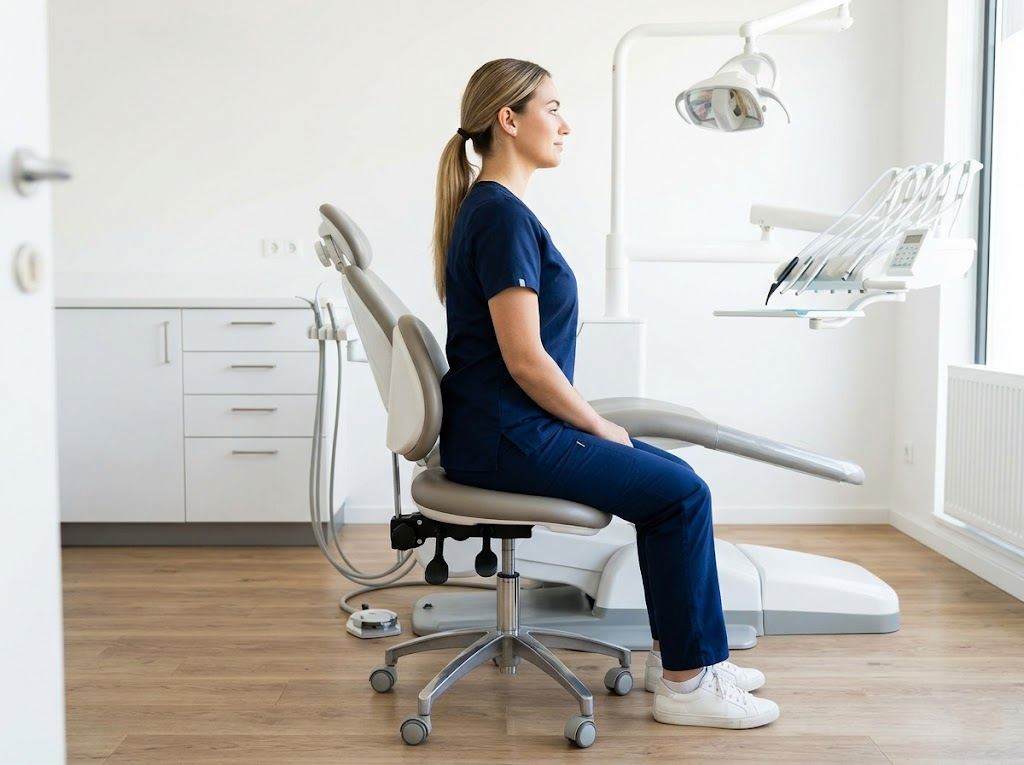
Why it matters: Slouching or twisting compresses spinal discs and strains muscles, often triggered by poor lighting rather than weak core strength.
How to do it: Keep ears aligned over shoulders, shoulders over hips, and maintain a gentle lower-back curve. Check your posture every 15 minutes. If you need to lean to see better, fix the lighting or magnification first. Never adjust your posture to compensate for poor setup. Frequent micro-adjustments of your stool height, patient recline, or overhead light angle will help you stay neutral throughout the appointment.
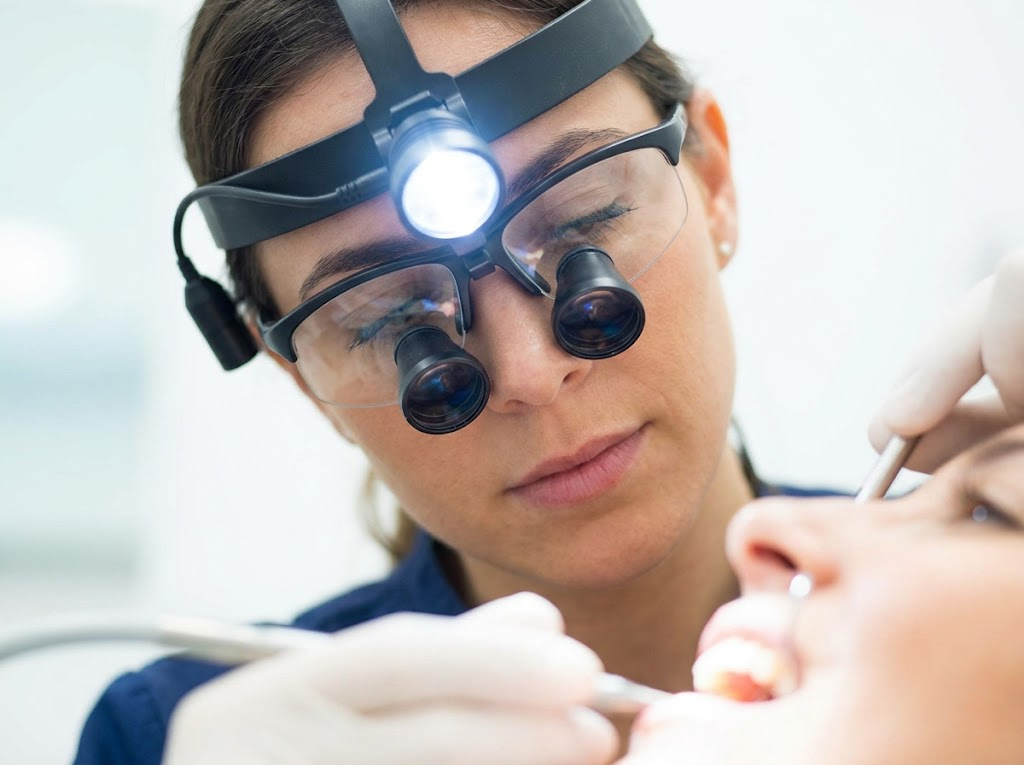
3. Use Loupes with an Adequate Declination Angle
Why it matters: Proper loupes eliminate neck flexion. Research shows they reduce cervical pain by 30 percent compared to unaided vision.
How to do it: Choose loupes with a 15 to 25 degree declination angle. This allows you to look down with your eyes rather than tilting your entire head. Get professionally fitted to ensure optical alignment. Always pair it with a headlight. This provides shadow-free illumination that follows your gaze, so you never lean toward the mouth. Clean lenses daily. Dirty optics force you to strain.
4. Invest in Ergonomic Instruments
Why it matters: Dull or poorly designed tools increase wrist force by 50 percent, directly raising carpal tunnel risk.
How to do it: Select scalers and curettes with these features:
- Handles at least 10 millimeters in diameter to reduce pinch force
- Textured or silicone grips for better control with less tension
- Lightweight construction under 50 grams
- Balanced weight distribution centered near the middle of the handle
Sharpen instruments weekly. Dull tips require excessive pressure. Test them. If your hands tire quickly or feel off-balance, replace them.
5. Choose the Right Operator Stool
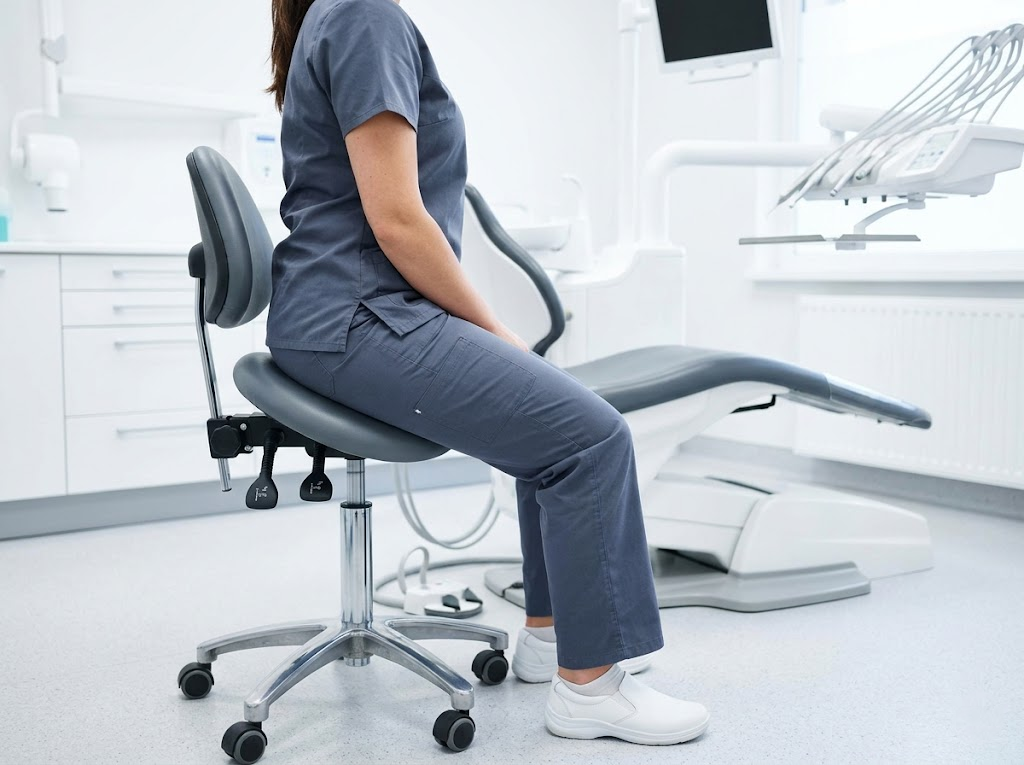
Why it matters: Traditional stools compress the lumbar spine and encourage slouching during long appointments.
How to do it: Opt for a saddle stool or ergonomic chair with tilt adjustment. Set the height so the hips are slightly above the knees. This creates a 10 to 15 degree pelvic tilt. Adjust the tilt to maintain your natural spine curve. Never let your pelvis roll backward. Take 60-second micro-breaks hourly to shift weight or stand briefly. Saddle stools improve posture in 90 percent of hygienists within weeks.
6. Keep Your Wrists Neutral While Scaling
Why it matters: Repeated wrist flexion or extension is the top cause of carpal tunnel syndrome in dental hygiene.
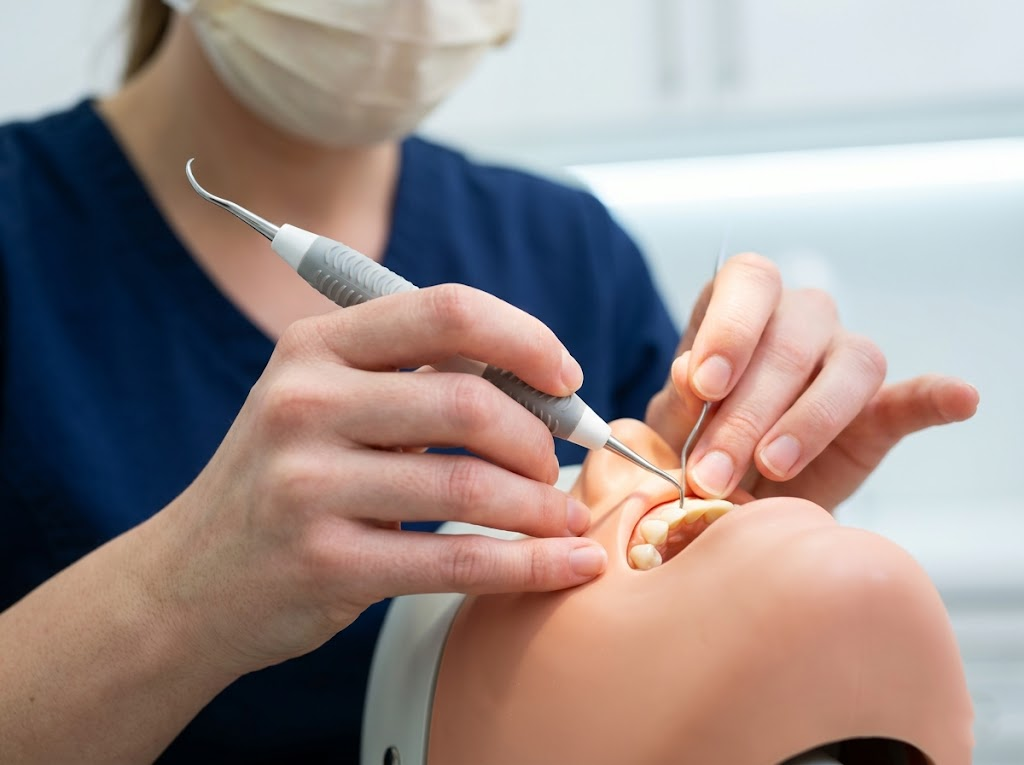
How to do it: Keep your wrist straight, aligned with your forearm. Never bend it upward or downward. Use a fulcrum. Rest your finger on an adjacent tooth or cheek to stabilize the instrument. Let your elbow and shoulder do the work, not your wrist. Hold tools with a relaxed pinch grip. This protects the median nerve far better than a tight, tense hold. Practice daily. Two minutes of neutral-wrist scaling drills build muscle memory.
7. Optimize Your Overhead Lighting
Why it matters: Poor lighting forces 80 percent of hygienists to twist or lean. These compensations accumulate into chronic pain.
How to do it: Position the overhead light directly above the work area for each quadrant. For the upper-right teeth, angle them to the left. For lower molars, lower it closer to the mouth. Pair with a headlight for consistent, shadow-free illumination. If you squint or lean in, adjust the light immediately. Never adjust your posture to compensate. Test visibility. The area should glow evenly without glare.
Start Small, Stay Consistent
You do not need to overhaul everything at once. Pick one change this week, such as sharpening instruments daily or adjusting headrest angles per quadrant. Small, consistent habits prevent injury and keep you pain-free for decades. Your body will thank you.
Let Ergo Global Help You Build a Pain-Free Dental Career
At Ergo Global, we understand that ergonomics for dental hygienists is not a one-size-fits-all solution. Every clinician has a different body, different equipment, and a different patient load.
Our team of qualified ergonomists assesses every aspect of your workstation, from operator stool height to loupe declination to instrument selection, and then delivers personalized recommendations tailored to you.
With over 550,000 assessments completed across 55+ countries, we bring deep expertise to every consultation. Whether you are a solo practitioner or running a clinic with multiple hygienists, we can help you protect your team and extend your careers.
Ready to work pain-free for years to come?
Contact Ergo Global today for a personalized ergonomic assessment.