

Healthcare workers are among the most physically burdened professionals in any workforce. They lift and transfer patients, stand for hours on hard floors, and twist into awkward positions to reach equipment. Yet ergonomics for healthcare workers remains one of the most underfunded areas of occupational health, even as the injury rates tell a clear story.
Nursing aides, orderlies, and attendants have one of the highest rates of musculoskeletal injuries of any occupation, surpassing even construction workers in some years. Improving the physical work environment in healthcare is an operational priority that protects staff, reduces turnover, and improves patient care.
The Ergonomic Risks Healthcare Workers Face Every Day
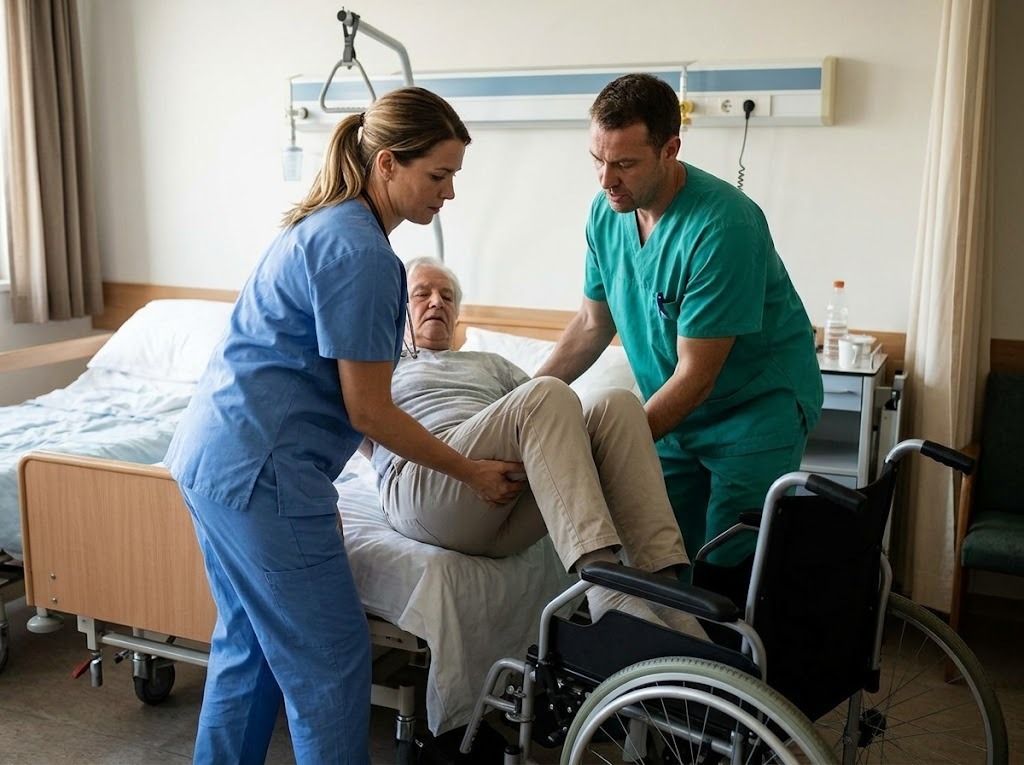
Healthcare workers face a combination of physical demands that create one of the most ergonomically challenging work environments anywhere. The table below summarises the primary risk areas and the roles most affected.
| Risk Type | Description | Roles Most Affected |
| Patient handling & manual lifting | Moving and transferring patients under time pressure, in confined spaces, often without adequate equipment | Nurses, care assistants, orderlies |
| Prolonged standing & static posture | Hours on hard institutional flooring cause lower limb fatigue, back compression, and joint pain | Surgeons, theatre technicians, nurses |
| Repetitive motions & awkward postures | Highly repetitive movements each shift; reaching across beds, bending over surgical fields, hunching toward screens | Phlebotomists, pharmacists, and dental professionals |
| Pushing & pulling heavy equipment | Transporting beds, stretchers, and medication carts across uneven flooring and through tight corridors | Porters, ward nurses, theatre staff |
| Psychological load | Cognitive demand and emotional stress affect posture and muscle tension, increasing the likelihood of rushing or skipping breaks | All clinical roles |
Common Injuries Ergonomics for Healthcare Workers Aims to Prevent
Understanding what is at stake makes the case for preventive action. Healthcare workers sustain musculoskeletal injuries at rates that exceed most other occupational groups, and the damage is typically cumulative rather than sudden.
The most frequently reported work-related injuries include:
- Lower back pain
- Muscle and ligament tears
- Joint and tendon inflammation
- Herniated discs
- Pinched nerves
- Rotator cuff injuries
- Neck and cervical strain
- Knee pain
- Carpal tunnel syndrome
- Foot and lower limb fatigue
Many of these conditions develop slowly, which is precisely why workers often push through early warning signs until the injury becomes genuinely disabling. None of them is inevitable. They are largely preventable with the right environment, equipment, and practices.
How to Improve Ergonomics for Healthcare Workers
Ergonomics in healthcare is the science of fitting the demands of the job to the physical capabilities of the people doing it. When that fit is poor, the cost is paid by the worker. Research reviewed by the National Research Council and NIOSH confirms a clear relationship between physical work demands and musculoskeletal disorders, with heavy lifting, frequent bending and twisting, repetitive motion, and sustained awkward postures identified as the primary drivers of injury in clinical settings.
The recommended approach to reducing that risk follows a defined priority order: engineering controls first, administrative measures second, and individual protective approaches last.
Step 1: Look for Signs of MSDs Before They Become Injuries
Any effective ergonomics program begins with identifying where the problem actually is. This means actively looking for early signs and symptoms of musculoskeletal strain through worker surveys, discomfort questionnaires, and body diagrams that map where staff are experiencing pain.
Reviewing health and injury data alongside this is equally important:
- Injury and illness records by department and role
- Lost work days and restricted duty data
- Workers’ compensation costs over time
This evidence targets intervention resources toward the jobs and departments with the highest demonstrated risk, rather than applying generic solutions across a complex environment.
Step 2: Secure Management Commitment and Involve Frontline Staff
Ergonomics programs consistently fail without genuine buy-in at both ends of the organization. Management must recognize that a program is needed and commit to implementing its recommendations. Without that, even well-designed interventions stall.
Frontline staff are equally indispensable. Nurses, technicians, care assistants, and porters have the most accurate ground-level picture of what makes a task physically difficult. An effective ergonomics team draws on both groups, typically including representatives from management, frontline worker groups, and health and safety professionals from the departments with the highest injury rates.
Step 3: Apply Engineering Controls First
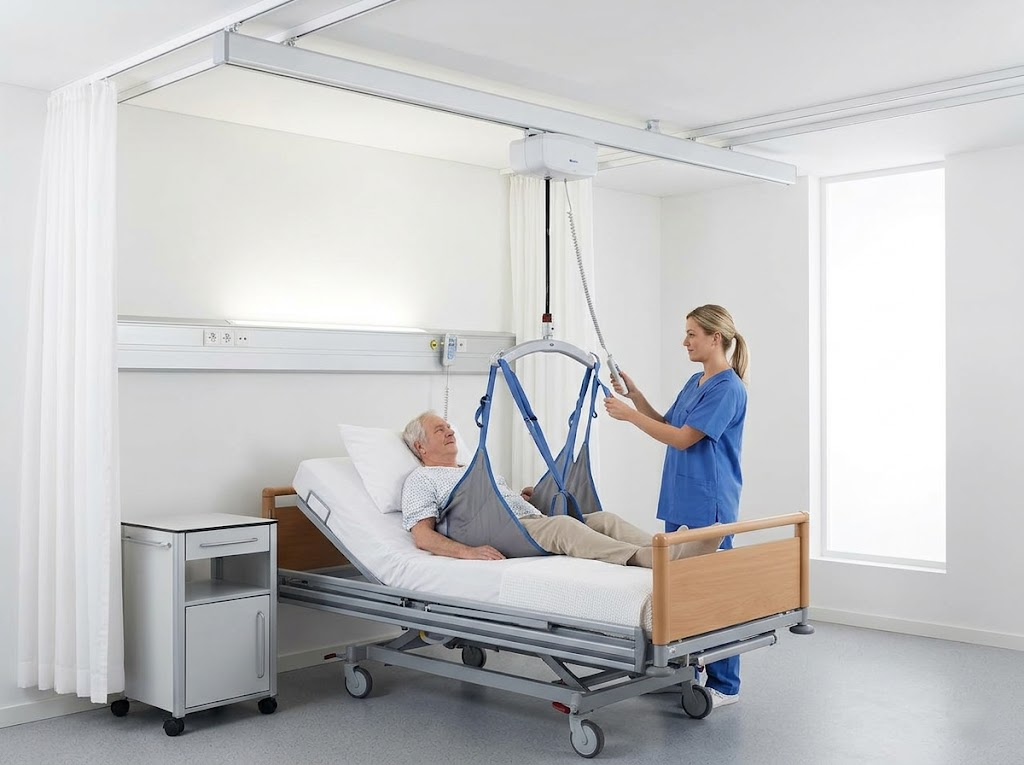
Engineering controls are the preferred first response to ergonomic risk because they reduce or eliminate the physical demand at the source. The equipment does the work rather than relying on the caregiver’s body to absorb the load.
The most impactful engineering solutions for healthcare settings include:
- Ceiling-mounted and floor-based full-body patient lifts
- Lateral transfer devices and sliding sheets
- Sit-to-stand lifts
- Powered push-pull assist devices
- Height-adjustable patient beds
Research confirms that using equipment for patient handling reduces injuries and that the equipment typically pays for itself within three years. It also increases the quality of patient care and reduces staff turnover, particularly in long-term care settings.
The 35-Pound Manual Lifting Limit
The Revised NIOSH Lifting Equation establishes that no caregiver should manually lift more than 35 pounds of a patient’s body weight under ideal conditions. That limit drops further when lifting with arms extended or with the back in flexion. The reason is biomechanical: the spine generates internal compression and shear forces many times greater than the external load being moved. A small external load handled at arm’s length creates an enormous internal load on the lumbar discs. With repeated exposure, tissue tolerance decreases over time, making the same task progressively more dangerous over a career.
Step 4: Use Administrative Controls to Reduce Exposure
When engineering controls cannot fully address the risk, administrative measures reorganize work to reduce the physical load on individual workers.
- Assign more than one caregiver to high-demand tasks. Attempting to move or reposition patients alone is a leading cause of acute musculoskeletal injury. Having a second caregiver present reduces the load on each individual and lowers the risk of sudden, uncontrolled loading when a patient shifts weight unexpectedly.
- Rotate workers and build recovery time into scheduling. Most chronic injuries in healthcare develop gradually through sustained physical exposure without enough recovery. Shifts that rotate workers across roles with different physical demands, limit consecutive high-demand periods, and include genuine rest breaks allow the body to recover between loads. Scheduling is an ergonomic decision, even when it is not treated as one.
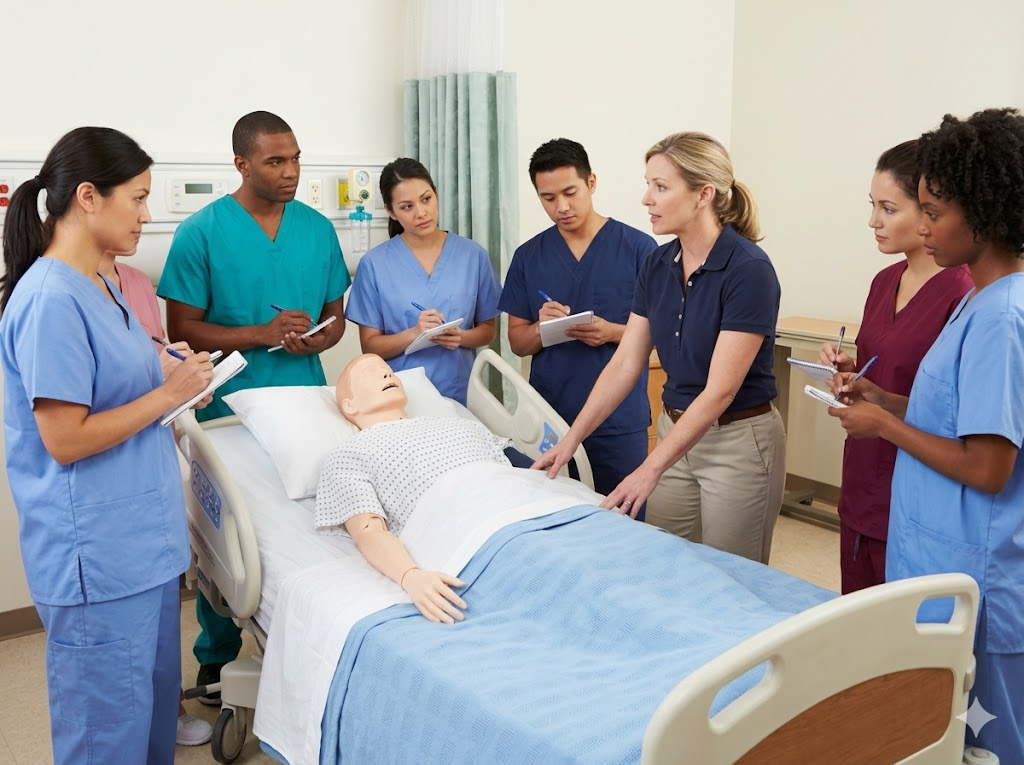
- Train staff and build in-house expertise. Training is most effective when it is hands-on, set in the actual work environment, embedded in onboarding, and refreshed regularly. Workers who understand the biomechanical reasoning behind ergonomic practices are more likely to apply them consistently when under time pressure.
Step 5: Establish a Healthcare Management Program for Injured Workers
Early detection and early intervention are significantly more effective and less costly than managing fully developed injuries. A healthcare management program integrated with the broader ergonomics program provides injured or symptomatic workers with prompt access to physiotherapy, occupational health support, or temporary task modification.
When the same injury type appears repeatedly in the same role or department, that pattern is a diagnostic signal. The solution lies in the task or the environment, not in managing each worker’s case as an isolated event.
Step 6: Address Psychosocial Risk Factors
Physical and psychosocial risk factors interact in the development of musculoskeletal disorders. Research has identified rapid work pace, low job control, work stress, job dissatisfaction, shift work, and mandatory overtime as independently associated with increased MSD risk. Workers under cognitive and emotional pressure are more likely to rush a patient transfer, skip a break, or override early warning signs of strain.
An ergonomics program that addresses only the physical environment while leaving the organizational conditions that drive that pressure unchanged will consistently fall short of its potential.
Step 7: Build a Proactive Program, Not a Reactive One
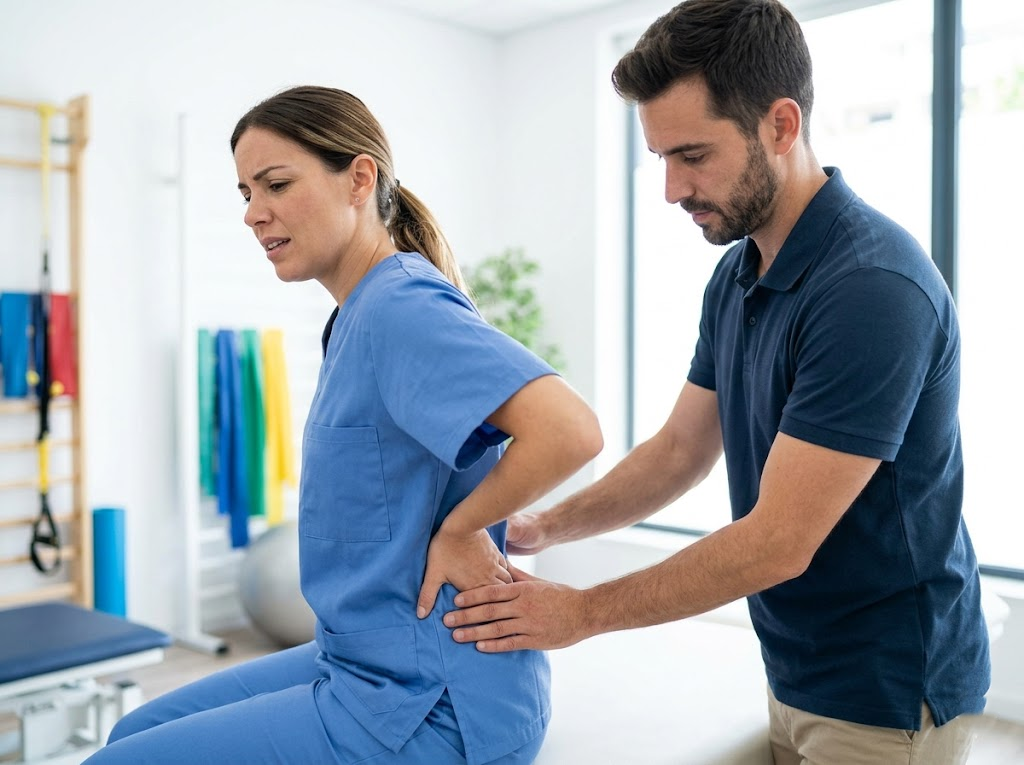
Ergonomics is most effective when it is built into how a facility operates rather than applied after injuries have already occurred. Addressing signs and symptoms early in the injury development process reduces the overall severity of outcomes and the cost to both the worker and the organization.
The timing of intervention matters significantly at the facility level as well. Incorporating ergonomic controls into the design and construction of a healthcare facility can cost approximately one-fourth of what retrofitting would cost after the fact. For organizations planning renovations or new builds, this is a financial argument as much as a health one.
About Ergo Global
At Ergo Global, we specialize in ergonomics consulting for complex, high-demand environments, including healthcare facilities where the physical stakes are high for both staff and patients. We conduct thorough on-site assessments, identify the tasks and workflows driving injury risk, and work with management and frontline teams to build practical, sustainable solutions.
Our consultants understand the operational realities of healthcare settings and design interventions that work within shift structures, staffing constraints, and budget realities. If you are ready to reduce staff injuries, lower turnover, and build a safer workplace for your clinical teams, we are here to help.
Contact us today to book a healthcare ergonomics consultation.