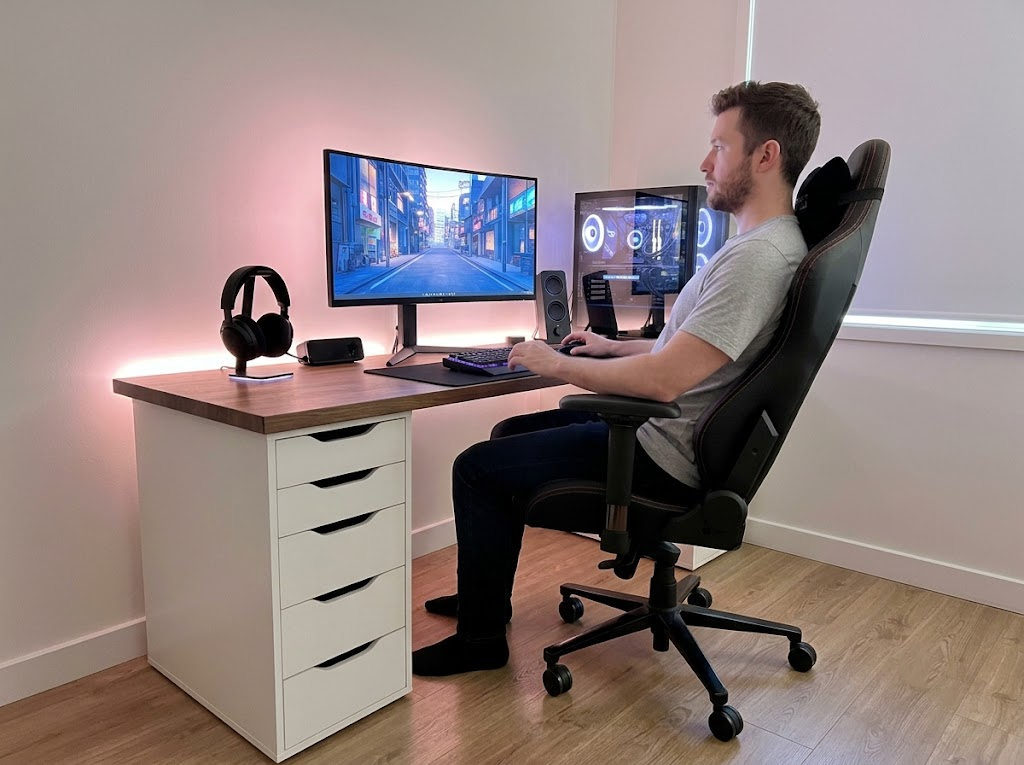


Creating art often means long hours in the same posture. That can quietly lead to strain, fatigue, and even chronic injury. Ergonomics for artists focuses on adjusting your workspace and habits so your body can keep up with your creativity. A short adjustment today can prevent months of discomfort later.
Why Ergonomics for Artists Matters
Professional and hobbyist artists face a highly unique mix of daily physical stress. Repetitive hand movements combined with static sitting positions and awkward neck angles all contribute to severe muscle strain.
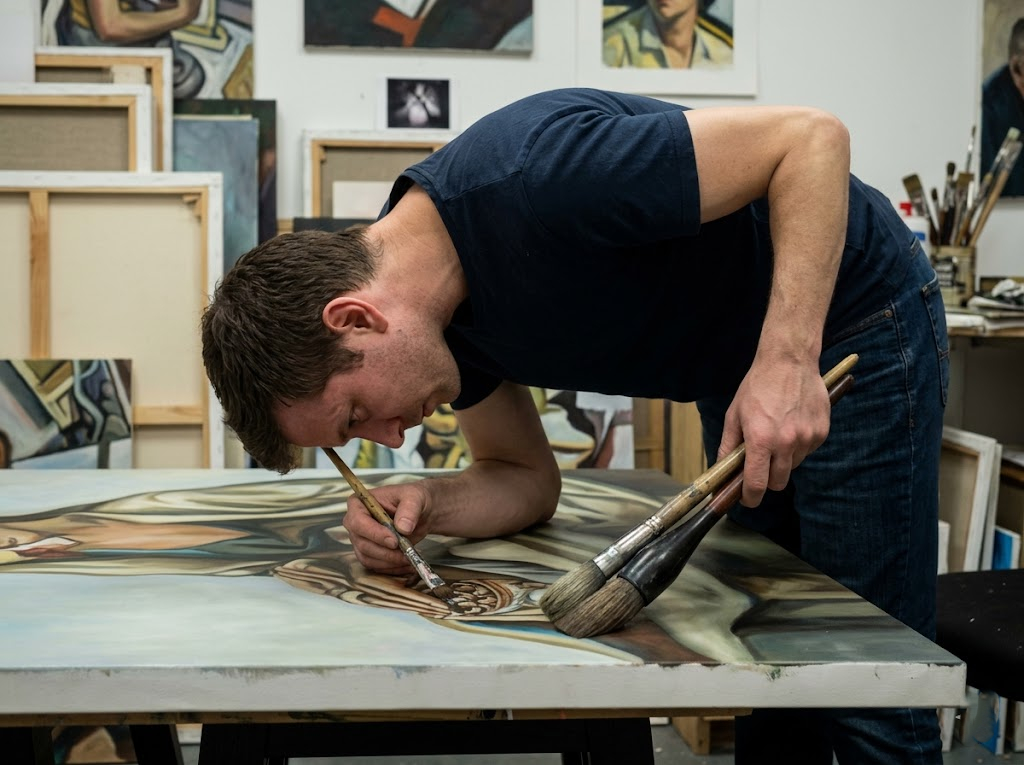
Unlike traditional office workers who might type in a standardized forward-facing position, artists frequently contort their bodies to reach specific, intricate areas of a canvas or a digital tablet.
Research specifically focused on visual artists shows a shockingly high rate of neck pain, shoulder pain, and lower back pain linked directly to prolonged static posture and repetitive motion. According to a detailed study, a staggering 88.8 percent of visual artists reported experiencing active musculoskeletal pain during their work.
Another specific clinical study published in the Journal of Health and Rehabilitation Research found that 59.3 percent of professional painters experienced chronic wrist pain strictly due to repetitive daily tasks. For detailed craft-based work like fine textiles and handloom weaving, the physical toll is equally severe, with 60.7 percent of craft workers suffering from severe neck injuries, while 55.8 percent developed painful wrist strain.
These are absolutely not rare or isolated cases. They reflect exactly how incredibly common physical strain is in the fast-paced creative world. Implementing proper ergonomics for artists is absolutely vital to sustaining a healthy and productive career.
Common Ergonomic Risks in Art Work
Understanding the exact physical risks is the very first step toward lasting prevention. Most creative professionals suffer from a dangerous combination of the following four factors.
1. Static Posture
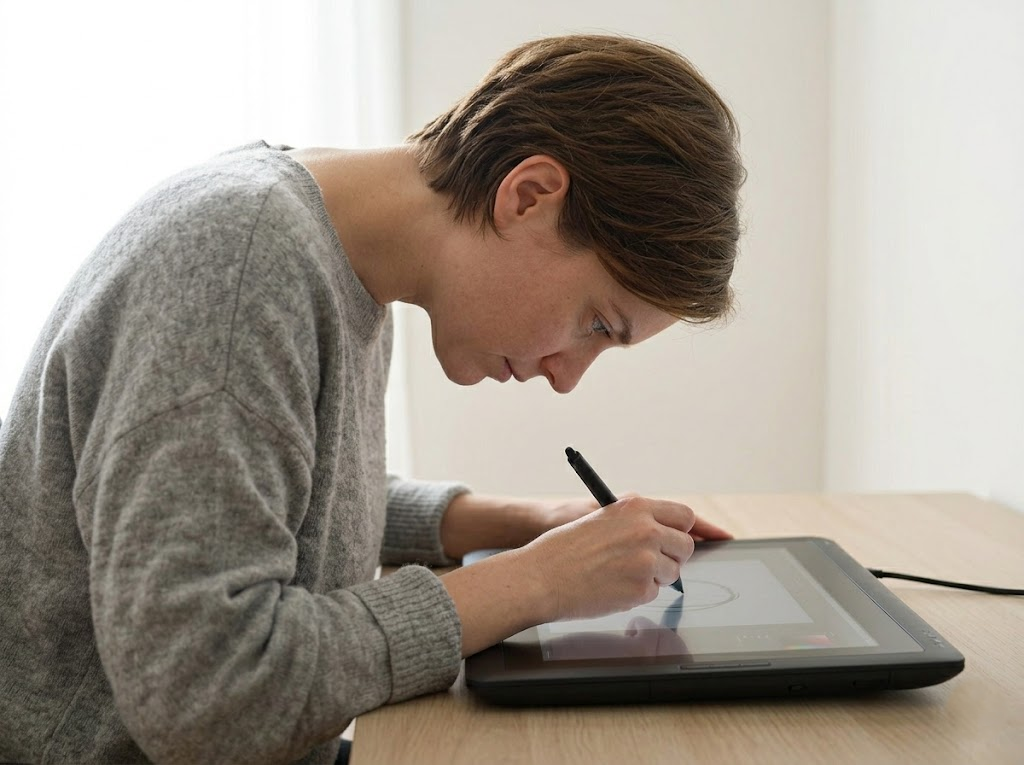
Holding the exact same seated or standing position for long consecutive periods drastically reduces healthy blood flow. This lack of circulation increases muscle fatigue exponentially. Your human muscles are fundamentally designed to move and flex. When they stay tightly contracted just to hold a rigid position, they quickly begin to ache and stiffen. This specific risk is especially common in meticulous drawing, fine painting, and zoomed-in digital illustration.
2. Repetitive Motion
Executing fine motor control naturally requires highly repeated wrist and finger movement. Over a long period of time, this continuous physical action can easily lead to dangerous repetitive strain injuries. This constant micro movement is exactly why many veteran artists deeply struggle with severe inflammation in their delicate tendons.
3. Poor Workspace Setup
Improper desk height, a total lack of arm support, or wildly incorrect screen positioning can forcefully push the human body into highly unnatural positions. Unfortunately, many passionate artists use makeshift creative setups that were never intended for long-term physical labor.
4. Forward Head Position
Leaning deeply toward a flat canvas or a glowing screen places an extreme excess load on the fragile neck and upper spine. For every single inch your heavy head moves forward out of alignment, the effective physical weight of your head on your delicate cervical spine increases drastically.
Ideal Ergonomic Setup for Artists
Your primary workspace should adapt to your body, not force you to adapt to a bad desk. Here is exactly how to beautifully optimize your creative environment.
Desk and Work Surface
Your work surface should match your medium.
| Medium | Recommended Setup |
| Digital Tablet | Use a slight incline to reduce wrist strain. |
| Painting | Use an easel to maintain an upright posture. |
| Drafting | Use a tilted desk to bring the work to your eyes. |
Desk height should allow elbows to rest at about a 90-degree angle. This prevents you from shrugging your shoulders or reaching too far forward.
Chair and Sitting Position
A good chair is not about comfort alone. It should support posture over time. Keep your feet flat on the floor. Maintain a neutral spine with lower back support. Avoid slouching or leaning forward for long periods. If your chair is too high and your feet dangle, use a footrest to stabilize your pelvis.
Arm and Wrist Position
Keep wrists in a neutral position. They should not be bent upward or downward. Support your forearms to reduce the load on your shoulders. Avoid gripping your tools too tightly. A “death grip” on a pen or brush is a fast track to tendonitis. This setup reduces pressure on tendons and nerves in the wrist and forearm.
Monitor or Canvas Placement
Position your primary work area at eye level to avoid neck strain. Keep your viewing distance at about an arm’s length. Tilt screens or tablets to match your natural line of sight. Even small adjustments here can significantly reduce neck pain.
Movement and Break Strategy for Artists
No ergonomic setup replaces movement. Your body is designed to move, and even the most expensive chair cannot save you from an eight-hour static session.
Follow a Simple Work Cycle
You should aim for a structured routine to give your muscles a rest.
- Work for 25 to 45 minutes.
- Take a 5 to 10-minute break.
- Stand, stretch, or walk around the room.
Studies on repetitive work show that continuous motion without breaks significantly increases the risk of musculoskeletal disorders. According to OSHA guidelines, frequent short breaks are more beneficial than a few long breaks.
Stretching Focus Areas
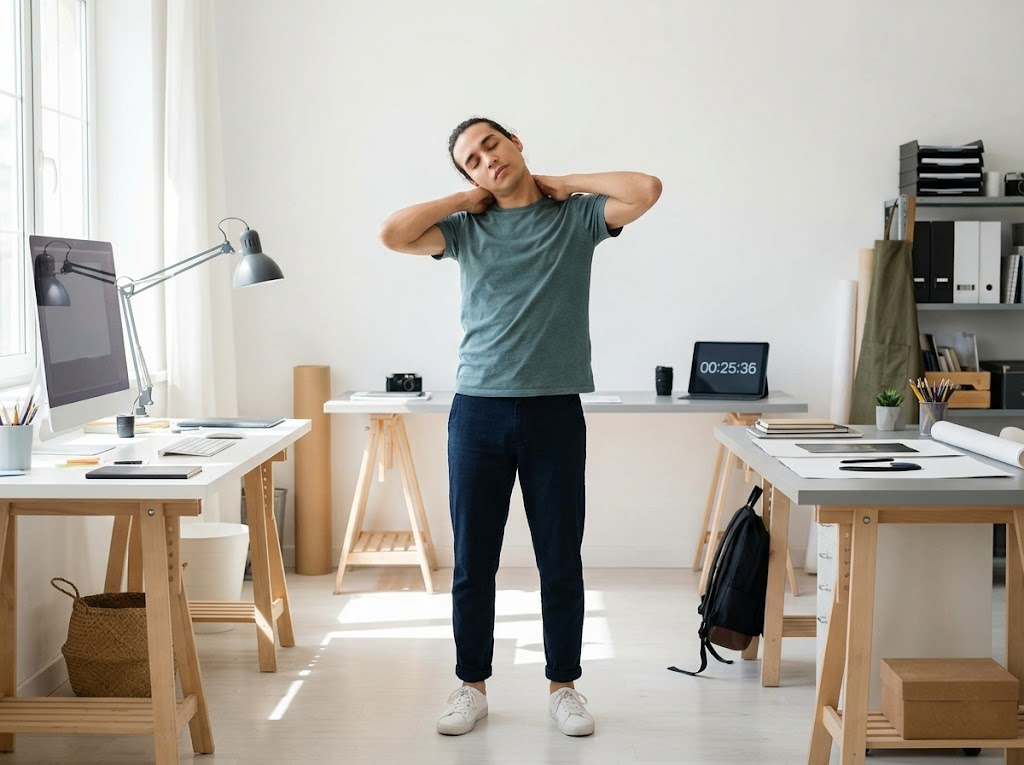
When you finally take your scheduled break, you must pay close attention to a few specific areas of your body.
- Neck and shoulders
- Wrists and forearms
- Lower back and hips
Carefully roll your tight neck and shoulders back while gently tucking your chin. Fully extend your tired arms and gently pull your fingers back to release your wrists. Stand entirely up and do a slight, gentle backbend or wide hip circles to release your lower back. Gentle daily stretching beautifully helps maintain joint mobility and drastically reduces physical stiffness.
Ergonomics Tool Selection and Equipment for Artists
The tools you hold are just as important as the desk you sit at. Proper ergonomics for artists involves paying attention to the small details of your equipment.
Drawing Tools
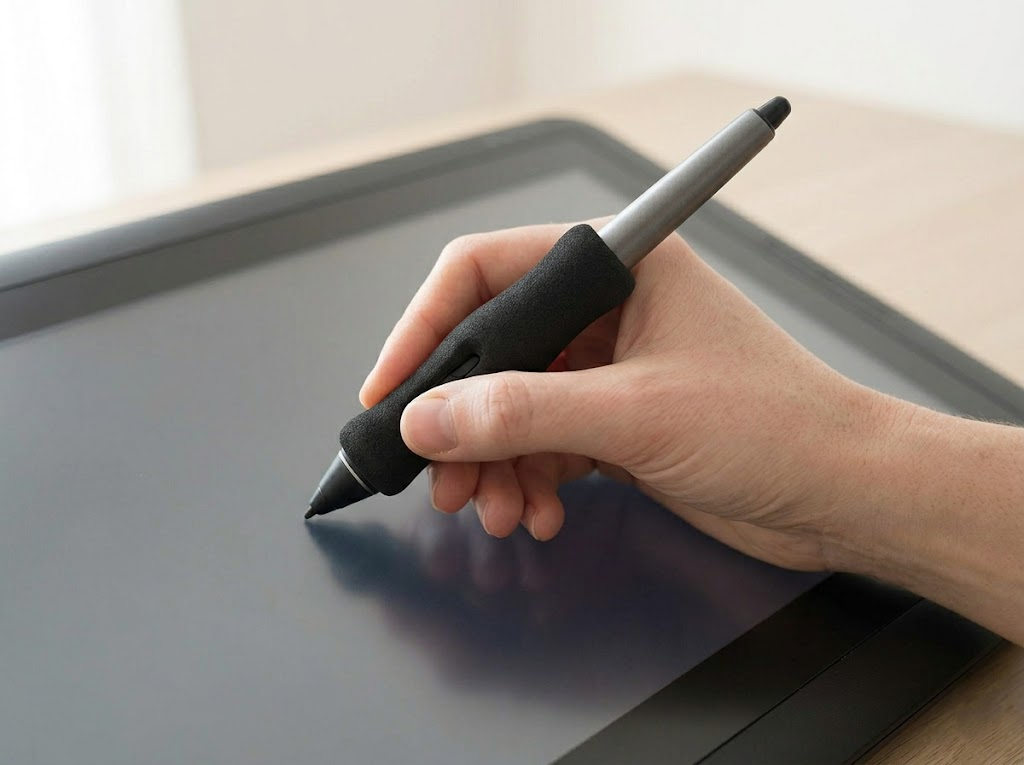
Use thicker pens or styluses to reduce grip force. You can buy foam grips to slide onto existing tools. Choose lightweight tools to reduce fatigue in the small muscles of the hand.
Digital Equipment
Consider a pen display with an adjustable tilt stand. Use an external keyboard to improve your positioning. This allows you to keep your screen at eye level while keeping your hands at desk level. A vertical mouse can also reduce wrist deviation if you spend a lot of time navigating software menus.
Support Accessories
Wrist rests are helpful for short tasks or while using a mouse. Adjustable arm supports are better for longer sessions. Use footrests if your chair height requires it to keep your legs at the correct angle. Equipment should support your body instead of forcing you to adapt.
Early Warning Signs to Watch
Ignoring discomfort is one of the biggest mistakes artists make. Pain is a signal that something is wrong. Look out for these signs:
- Persistent wrist or finger pain
- Tingling or numbness in the hands
- Shoulder tightness
- Lower back stiffness
- Reduced grip strength
These signals often appear before a serious injury develops. If you catch them early, you can often fix the issue with simple environmental changes.
Ergonomics for Digital Artists vs. Traditional Artists
While both groups face risks, the specific challenges differ.
Digital Artists
Digital artists have a higher risk of wrist and eye strain. They often sit longer with minimal posture variation because the “canvas” never moves. They benefit greatly from adjustable screens and high-quality input devices. Blue light filters and the 20-20-20 rule, which is looking at something 20 feet away for 20 seconds every 20 minutes, are essential.
Traditional Artists
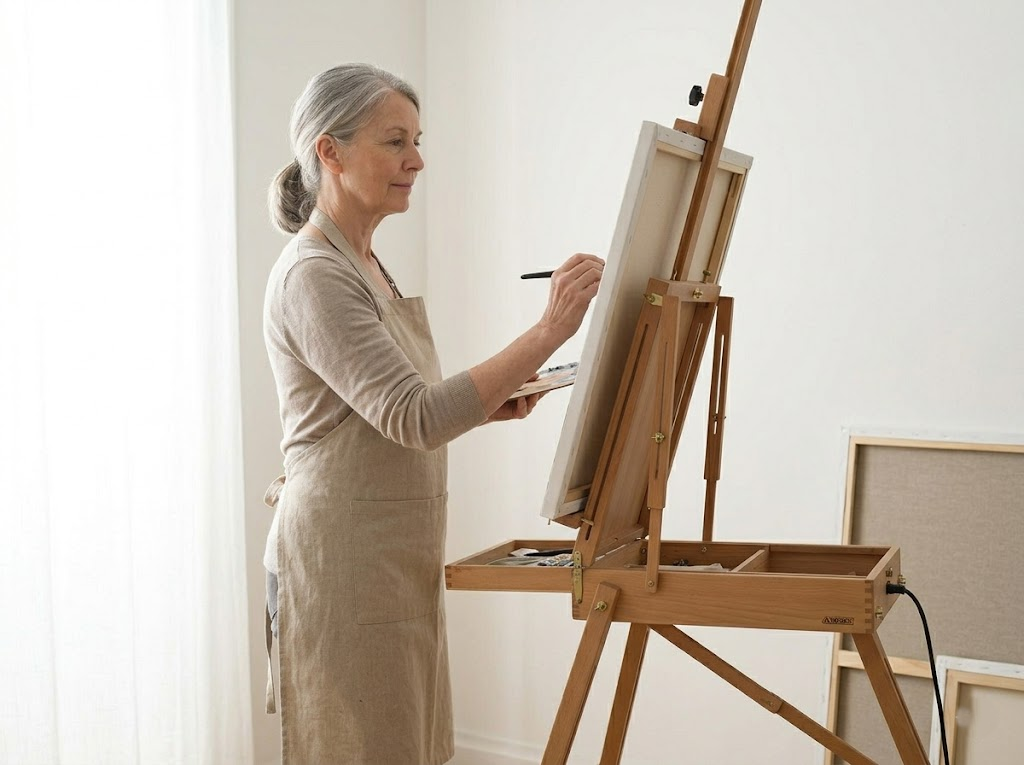
Traditional artists naturally experience much more physical variation in their daily posture. However, they very often adopt highly awkward bending positions to reach the edges of a large canvas. They experience severe strain on their shoulders and lower back simply from leaning. They benefit the most from highly adjustable wooden easels and properly tilted table angles.
Long-Term Impact of Poor Ergonomics
Without direct and early intervention, seemingly minor discomfort can extremely easily develop into debilitating physical conditions.
Chronic lower back pain, tendonitis, and severe carpal tunnel syndrome are tragically common among career artists. A targeted medical study published on ResearchGate discovered that 19.8 percent of surveyed painters had developed full carpal tunnel syndrome strictly from their daily work.
Painful tendonitis can literally make it physically impossible to hold a simple brush for many weeks at a time. This terrible reality leads to heavily reduced creative productivity and massive loss of income.
In some highly unfortunate cases, talented artists are forced to significantly reduce their working hours or stop creating entirely.
Practical Ergonomic Checklist for Artists
Use this as a quick reference for your studio:
- Screen or canvas: Is it at eye level?
- Elbows: Are they at a 90-degree angle?
- Wrists: Are they in a neutral, straight position?
- Feet: Are they flat on the ground or on a footrest?
- Work surface: Is it angled to prevent leaning?
- Breaks: Did you set a timer for 45 minutes?
- Stretching: Have you moved your neck and wrists today?
Consistency matters more than perfection. Even small changes to your daily routine will add up over time.
How We Support Artists at Ergo Global
At Ergo Global, we understand that your art is your life. We work directly with artists, studios, and creative teams to improve how they work and how they feel at the end of each day.
Our focus is on practical ergonomics for artists that fit real workflows. Whether you are a digital illustrator, a painter, or a designer, we help you stay in the zone without the pain. We assess your workspace, posture, and daily habits. Then we provide clear adjustments that reduce strain and support long-term health. This includes workstation design and equipment recommendations that match your creative process.
If you are experiencing discomfort or want to prevent it, we are ready to help.
Contact us and build a healthier workspace today.