


Driving is often viewed as a sedentary task that requires little physical effort. However, professional drivers know that this is far from the truth. Whether you are a daily commuter or a long-haul trucker, the physical toll of sitting behind the wheel is significant. Poor ergonomics for drivers can lead to chronic pain and fatigue, and even serious safety risks. When the body is not properly supported, every mile adds a layer of strain to the musculoskeletal system. Understanding how to optimize your vehicle environment is essential for long-term health and career longevity.
What Is Ergonomics and Why Does It Matter?
Ergonomics is the science of designing and arranging the things we use so we can interact with them more efficiently and safely. In the context of transportation, it focuses on the relationship between the driver and the vehicle cabin. Good ergonomics aims to reduce injury while keeping you comfortable and productive.
Sitting for long periods is exceptionally hard on the human body. This is especially true in a moving vehicle. Unlike a stationary office chair, a car seat is constantly in motion. Drivers must move their head and arms, and legs to operate the steering wheel and pedals. This constant movement, combined with road vibration, creates a unique set of physical stressors.
Left unaddressed, these issues lead to more than just a stiff neck. They contribute to chronic pain, irritability, and decreased mental alertness.
The Ergonomic Risks Faced by Drivers
Long-haul drivers face a specific set of challenges that increase their risk of injury. Recent data from the U.S. Bureau of Labor Statistics indicates that heavy truck drivers have some of the highest rates of non-fatal injuries of all occupations.
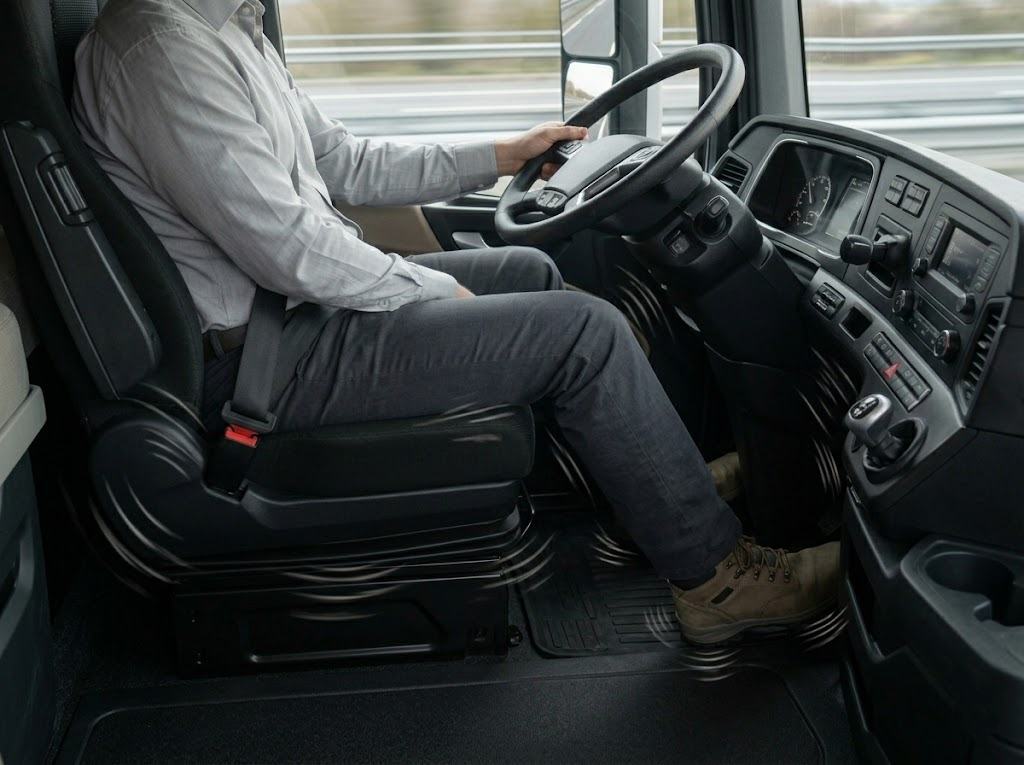
1. Whole-Body Vibration (WBV)
As a vehicle moves, it generates vibrations that travel through the seat and floor into the driver’s body. These vibrations cause small and repetitive contractions in the muscles. Over several hours, this leads to muscle fatigue and reduced blood flow to the spinal discs. Long-term exposure to WBV is a primary risk factor for lower back disorders.
2. Static Posture and Muscle Tightness
Sitting in one position for hours causes muscles to tighten. When you hold your arms out to reach the steering wheel, your shoulders and upper back must work constantly to support the weight. This often leads to tension headaches and shoulder tendinitis.
3. Foot and Leg Issues
Operating pedals requires the legs to be in a constant state of readiness. Many drivers lean their legs against the door or center console for support. This habit rolls the knees outward and tightens the buttock muscles. This can eventually compress the sciatic nerve, causing tingling or pain down the leg.
4. Cognitive Fatigue
Physical discomfort is a major distraction. When a driver is focused on a sore back or a cramped leg, their reaction time slows down. Studies from the National Institute for Occupational Safety and Health (NIOSH) show that physical strain directly impacts a driver’s ability to maintain focus. This increases the likelihood of road accidents.
The Benefits of a Good Ergonomics Program
For transportation companies, a comprehensive driver ergonomics program is a major competitive advantage. It is not just about employee comfort. It is about the bottom line and operational safety.
- Reduction in Injuries: A structured program identifies risks before they become workers’ compensation claims. By teaching drivers how to set up their cabins, companies see a significant drop in back and neck injuries.
- Improved Driver Retention: The trucking industry faces a massive labor shortage in 2026. Drivers are more likely to stay with a company that prioritizes their physical well-being. A comfortable driver is a happy one, less likely to experience burnout.
- Increased Productivity: When drivers are not distracted by pain, they can complete their routes more efficiently. They require fewer unscheduled stops to stretch or rest.
- Lower Insurance Costs: Fewer accidents and injuries lead to lower insurance premiums over time. Many insurance providers offer discounts to companies that implement verified ergonomic safety programs.
How to Adjust Your Vehicle for Better Ergonomics
You do not necessarily need a new vehicle to improve your comfort. Most modern cars and trucks offer enough adjustments to create a safe environment. Follow this sequence to optimize your setup.
Step 1: Visibility and Height

You must be able to see clearly without straining your neck. Start by sitting as straight and tall as possible. Press your shoulder blades against the back of the seat. Adjust the seat height so you can see easily over the dashboard. You should have a clear view of all mirrors without having to lean forward. If you look in the rearview mirror and see the car’s ceiling, you know you are slouching.
Step 2: Leg Position
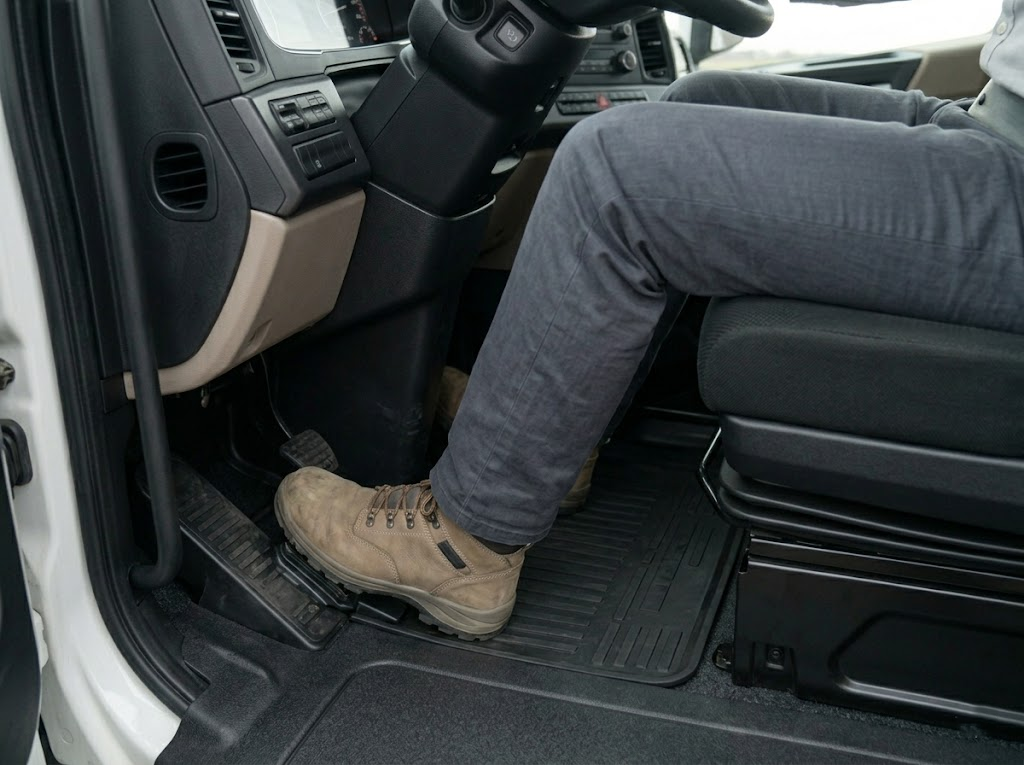
Move your seat forward or backward to reach the pedals comfortably. Your knees should have a slight bend even when the pedals are fully depressed. Never lock your knees when braking or clutching. Ensure there is at least 2 inches of clearance between the seat edge and the backs of your knees. This prevents the seat from cutting off circulation to your lower legs.
Step 3: Arm and Steering Position
Extend your arms straight in front of you. Your wrists should be able to drape over the top of the steering wheel. This ensures that when you grasp the wheel, your elbows remain bent and relaxed at your sides. Hold the steering wheel at the 9 and 3 o’clock position. This provides maximum control and keeps your arms out of the way of the airbag. Avoid holding the top of the wheel for long periods, as this can cause shoulder strain.
Step 4: Back and Lumbar Support
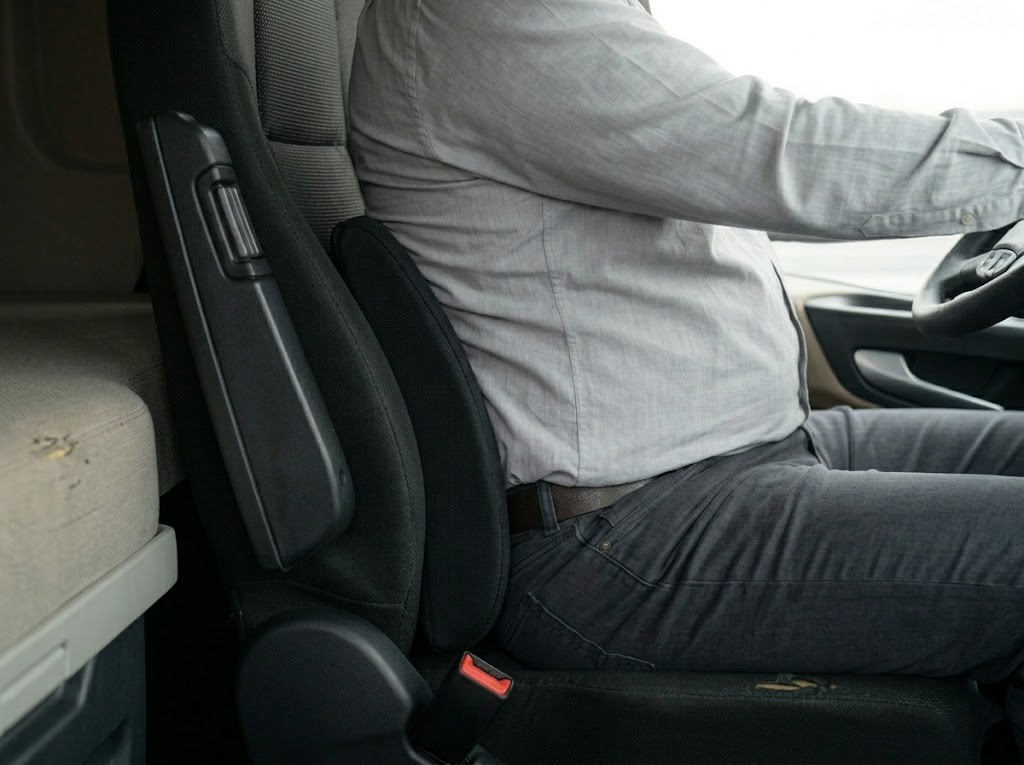
The entire length of your back should be in contact with the seat. Adjust the lumbar support so it fits snugly into the curve of your lower back. If your vehicle lacks built-in support, use a dedicated lumbar cushion or a rolled-up towel. This support maintains the natural curve of the spine and reduces pressure on the discs.
Step 5: Head Restraints and Airbags
The headrest is a vital safety feature for preventing whiplash. The top of the headrest should be even with the top of your head. It should be close to your head but not so far forward that it pushes your chin down. Additionally, ensure you are sitting at least 10 to 12 inches away from the steering wheel. This distance is necessary for the airbag to deploy safely during a crash.
Habits and Daily Practices for Safer Driving

Adjusting the seat is only the beginning. Your behavior behind the wheel determines your long-term health. Ergonomics for drivers includes the habits you form while on the road.
Pro Tip: Remove bulky objects like wallets or cell phones from your back pockets. These items unbalance your hips and put direct pressure on the sciatic nerve.
Take Regular Movement Breaks
Human bodies are designed for movement. On long trips, you should get out of the vehicle every hour to walk and stretch. This restores blood flow to tired muscles and resets your posture. If you cannot stop, use “micromovements” while driving. Roll your shoulders, rotate your ankles, or turn your head slowly from side to side. These small actions prevent muscles from locking up.
Use the Dead Pedal
Most vehicles have an inclined spot on the floor to the left of the brake. This is called the dead pedal. Use it to rest your left foot and brace your body. This helps you maintain a stable posture during turns and prevents you from leaning too heavily on the center console.
Dress for Comfort
What you wear affects how you sit. Avoid restrictive or bulky clothing that limits your range of motion. Puffy jackets are particularly dangerous because they create too much space between your body and the seatbelt. This can cause the belt to fail to tighten properly during a collision.
Entering and Exiting the Vehicle
Many injuries occur when drivers hurry to exit the cab. Avoid twisting your spine while stepping down. Instead, sit on the seat with both feet on the ground and then swivel your body out. Use the steering wheel or a handle for stability. This “sit and swivel” method protects your lower back from sudden torque.
How Ergo Global Can Help Your Fleet
We at Ergo Global specialize in helping transportation companies protect their most valuable assets. Our team provides professional ergonomics consulting that targets the specific needs of long-haul drivers.
We understand that a healthy driver is a safe and efficient driver. We offer on-site cabin assessments and personalized training programs for fleets of all sizes. By partnering with us, you can reduce your workers’ compensation claims and improve driver retention rates.
Our experts are ready to help you design a comprehensive wellness program tailored to your unique business goals. Your drivers work hard to keep the world moving. They deserve a workspace that supports their health and longevity.
Contact us today to start your ergonomics journey.