

Manufacturing floors move incredibly fast. Every single shift demands high physical effort from your workforce. When your production lines run around the clock, tracking physical safety requires absolute precision. You need a highly reliable, data-driven system to protect your factory workers from daily injury and long-term physical degradation.
That is exactly where an ergonomics software for manufacturing proves its immense value. To effectively protect your production teams and your bottom line, forward-thinking facility leaders are moving away from outdated paper checklists and adopting dedicated digital solutions to manage physical risk across their entire production network.
The Physical Reality of Manufacturing Work
Factory workers face heavy physical demands every single day on the floor. The Occupational Safety and Health Administration (OSHA) reports that work-related musculoskeletal disorders (MSDs) affect the muscles, nerves, blood vessels, ligaments, and tendons. In a busy manufacturing setting, these specific injuries recur due to familiar yet highly hazardous daily routines.
These severe physical risk factors include:
- Heavy manual lifting of raw materials and finished goods.
- Pushing and pulling heavy supply carts across expansive plant floors.
- Awkward bending over machinery, assembly stations, and conveyor belts.
- Highly repetitive motions on the fast-paced assembly line.
- Prolonged standing on hard concrete floors can lead to severe fatigue in the lower limbs and back.
The actual safety data shows exactly how heavy this physical toll really is. The U.S. Bureau of Labor Statistics (BLS) reports massive injury rates in private manufacturing. Over the recent 2023-2024 period alone, there were 1.8 million cases involving days away from work in private industry. A staggering portion of these nonfatal injuries—nearly 950,000 cases—were directly caused by overexertion, repetitive motion, and bodily reactions. These are injuries that are highly preventable with the right ergonomic interventions.
The ROI of Proactive Ergonomics
Investing in ergonomics is not just a regulatory necessity; it is a highly profitable business strategy. Research initially highlighted by the Washington State Department of Labor and Industries, and further analyzed in a comprehensive review of 250 independent ergonomics case studies, proved that addressing specific physical risks works incredibly well.
This deep review showed exactly what happens when facilities implement proper physical workstation interventions, yielding incredible returns on investment:
- 59% average reduction in musculoskeletal disorders.
- 68% decrease in workers’ compensation costs.
- 75% average reduction in lost workdays.
- 25% average increase in productivity among general workers.
- 67% average decrease in scrap and errors, directly impacting quality assurance.
These numbers demonstrate that the true value of ergonomics extends far beyond basic safety as it fundamentally improves operational efficiency. However, applying these physical interventions across hundreds or thousands of factory workers requires a highly capable digital system. Manual paper checklists and static spreadsheets simply cannot keep up with a fast production schedule or provide the real-time analytics needed to drive these kinds of results.
How Dedicated Software Drives Massive Cost Savings
The financial impact of workplace injuries extends far beyond initial medical bills. According to the Liberty Mutual Workplace Safety Index, overexertion involving outside sources (lifting, pushing, pulling) consistently ranks as the leading cause of disabling workplace injuries, costing U.S. businesses over $12 billion annually.
When you factor in indirect costs such as production downtime, recruiting and training replacement workers, and damaged equipment, the National Safety Council (NSC) estimates the true cost of a single lost-time injury can easily exceed $42,000.
Moving From Reactive Safety to Proactive Prevention
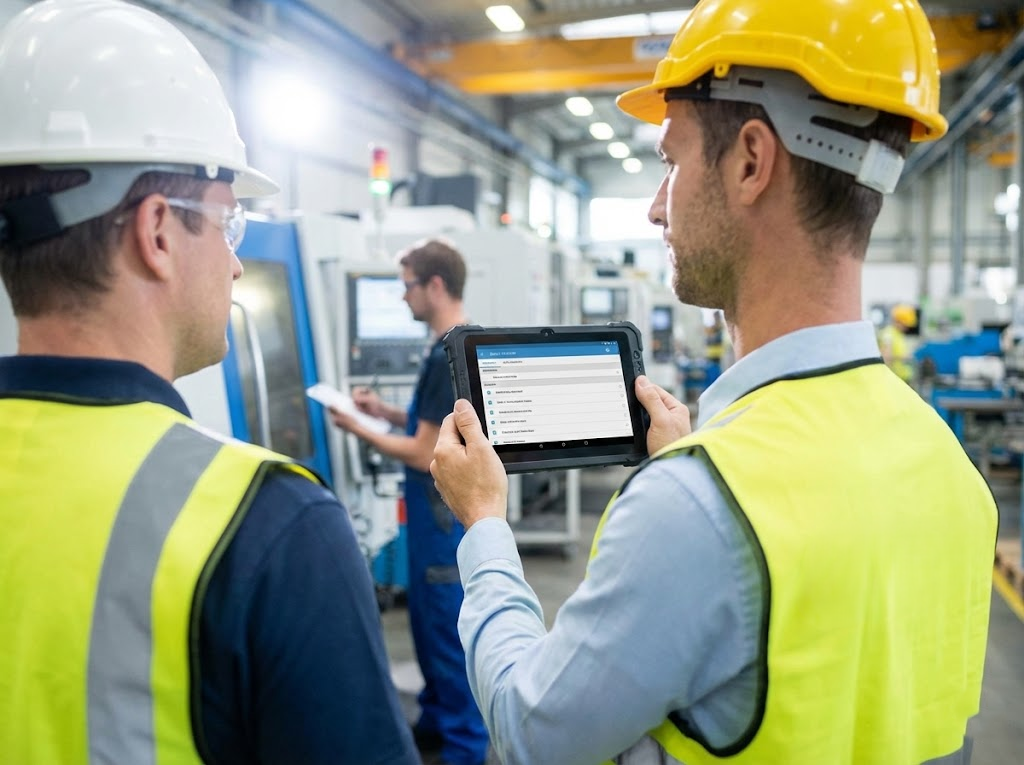
To truly protect workers and reduce overhead, manufacturing leaders must leverage technology that scales across multiple plants and standardizes safety data. Modern ergonomics platforms transform how facilities manage risk by shifting from a reactive posture to a proactive, data-driven strategy.
Here is how dedicated software achieves this transformation:
- Data-Driven Prioritization: In a factory with thousands of individual tasks, it is impossible to fix everything at once. Software aggregates risk scores and highlights the top 5% of workstations that cause the most physical strain, allowing safety teams to allocate their budget where it will have the greatest impact.
- Advanced Visual Analysis: Floor supervisors can capture video of an employee performing a task using a mobile device. Modern software uses AI to analyze joint angles, lifting speeds, and repetition rates—identifying invisible micro-traumas that human observation often misses.
- Standardization Across Global Sites: A safety manager at corporate headquarters can view a centralized dashboard to compare ergonomic risk profiles between a plant in Ohio and one in Germany, ensuring safety standards are applied uniformly across the enterprise.
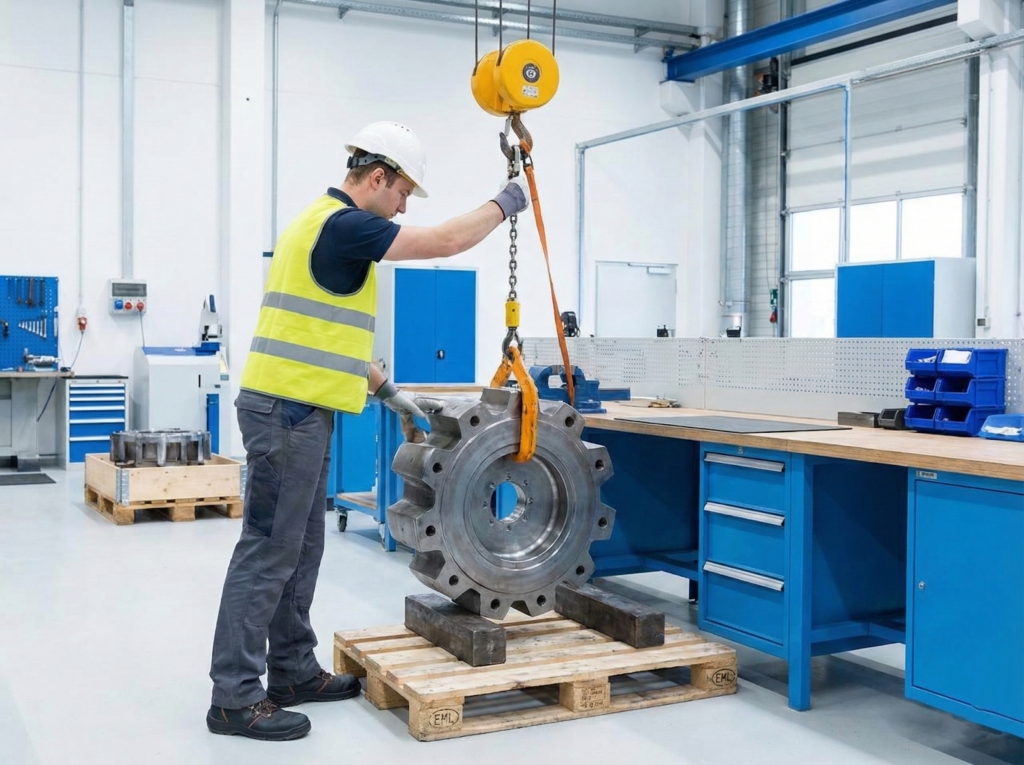
- Implementing the Hierarchy of Controls: By housing all safety data in one place, teams can systematically track how risks are being mitigated. They can document whether a hazard requires elimination (automating the task), engineering controls (installing a hoist), or administrative controls (enforcing job rotation), as outlined by the Centers for Disease Control and Prevention (CDC) safety guidelines.
About Ergo Global
At Ergo Global, we turn workplace safety into a highly practical, data-driven digital programme. We combine qualified ergonomists with advanced digital assessments, active training modules, and follow-up support to help your teams manage physical risk effectively across complex operational landscapes.
Our team comprises 86 dedicated professionals serving clients across 55 countries, with over 500,000 safety assessments successfully completed worldwide. As we continue to expand our digital solutions to support complex industrial environments, we are committed to helping safety directors build total compliance alongside strict OSHA guidelines and international standards.
Talk to us today about how to build a comprehensive ergonomics plan and integrate the right software that fits your exact workforce configuration.
Talk to us today about a demo and a plan that fits your workforce configuration.