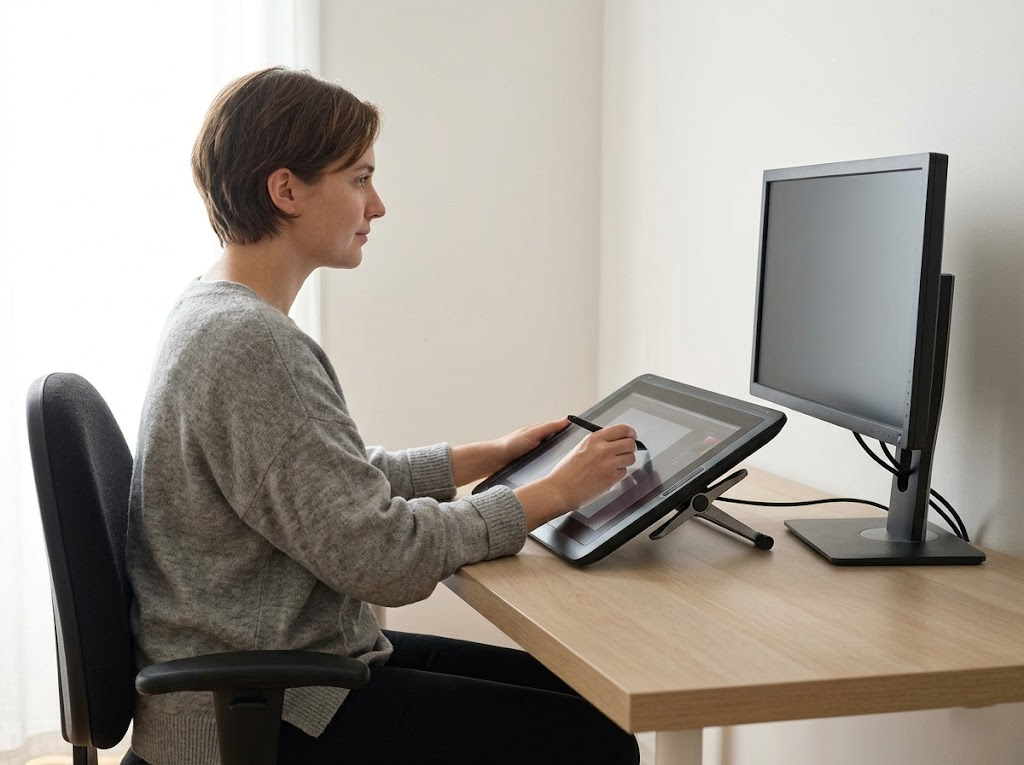


Modern life often leaves people staring at screens for hours, which can lead to a physical deformity known as a tech neck hump. This rounded protrusion at the base of the neck is not just a cosmetic issue because it signals significant spinal strain. Learning how to get rid of tech neck hump involves a mix of ergonomic adjustments, consistent movement, and targeted strengthening.
What is Tech Neck and What Causes It?
Tech neck is a specific type of forward head posture caused by our daily interactions with modern devices.
Looking down to read a text message or slouching in front of a computer monitor places your cervical spine in a highly unnatural position. This puts immense strain on your neck muscles and leads to a cascade of physical problems over time.
Technology itself is not the actual enemy here. The real problem is our tendency to adopt poor posture while using these devices. A sedentary lifestyle contributes significantly to this issue because sitting for long periods can create negative muscle memory. Your muscles simply adapt to the bad posture as you spend more time sitting at a desk or looking down at your phone.

The human head weighs about 10 to 12 pounds when perfectly aligned over the shoulders. Shifting your head forward dramatically changes the physics of your spine. A minor 15-degree shift forward increases the weight on your neck to 27 pounds. A 45-degree angle increases the strain to 49 pounds. Dropping your head completely down to a 60-degree angle puts a staggering 60 pounds of pressure on your cervical spine. You are basically hanging a heavy bowling ball from your forehead for several hours every day.
This extreme daily strain forces your muscles to contract and spasm. It heavily impacts the cervical neck flexors running along your vertebrae and the sternocleidomastoid muscles located at the base of your skull. The muscles in your chest become tight while the rhomboid muscles in your upper back become incredibly weak.
Common Symptoms of Tech Neck Spinal Strain

Identifying the problem early makes it much easier to correct. Many people experience symptoms long before a visible hump appears.
| Symptom | Description |
| Chronic Pain | Persistent discomfort in the neck and upper back regions. |
| Stiffness | Reduced range of motion when trying to turn your head. |
| Soreness | Tender spots in the muscles around the shoulder blades. |
| Headaches | Pain at the base of the skull caused by cervical stress. |
| Nerve Pressure | Tingling or sharp pain that moves down into the arms. |
If you notice these signs, it is time to evaluate your daily habits. Specialists often use physical exams to check how well your spine and shoulders move. In some cases, doctors use imaging to assess whether the curvature of the neck has begun to reverse. Leaving this condition untreated can lead to severe structural changes. Your body might develop a visible hump at the base of your neck as tissue builds up to protect the strained spine. You might also experience balance issues or suffer from painful nerve compression.
There are also cosmetic side effects. The constant downward angle of your head creates dynamic wrinkles across the front of your neck. These are similar to the wrinkles you might get around your eyes from squinting. Repeated muscle movement combined with a natural loss of collagen will make these neck lines permanent over time.
The Hidden Medical Dangers of Tech Neck
This condition is an actual medical danger that can lead to permanent damage. Doctors frequently warn that young adults are developing early-onset arthritis because of their smartphone habits. Losing the proper structure of your spine forces individual joints to work much harder than nature intended.

Your joints and discs will wear down rapidly under this constant pressure. This triggers a degenerative process much earlier in life. As the degeneration gets worse, medical treatment options become highly limited. Chiropractors and surgeons have a very hard time fixing a spine that has completely degenerated.
How to Get Rid of Tech Neck Hump
You can successfully reverse the effects of poor posture through a combination of daily therapies. Fixing the structural damage might take anywhere from a few months to a full year. You should still notice a reduction in pain within the first few weeks of starting a treatment plan.
Stretches and Exercises
Performing daily exercises with proper form is the best way to correct your alignment. You should start with these movements and back off immediately if you feel sharp pain.

1. Lateral Flexion
Gently bring your right ear down toward your right shoulder to stretch the left side of your neck. Hold this position for 15 seconds. Repeat this motion twice on each side of your body.
2. Rotation with Flexion
Look as far over your right shoulder as you comfortably can. Bring your chin down toward your chest and then rotate your head to the side. Hold for 15 seconds and perform two repetitions per side.
3. Rotation with Extension
Look over your shoulder to the maximum distance. Angle your gaze upward toward the ceiling as high as possible. Rotate your head slightly to the side. Hold for 15 seconds and repeat twice on each side.
4. Seated Rhomboid Stretch
Sit in a firm chair and scoot all the way to the front edge. Spread your legs wide with your feet completely flat on the floor. Reach down and grab your left ankle with your right hand. Press your left hand directly into the elbow crease of your right arm. Hold for 15 seconds on both sides.
5. Standing Retraction
Stand with your back pressed flat against the interior of a door frame. Relax your arms by your sides. Squeeze your shoulder blades downward and backward against the frame. Hold this tight squeeze for 5 seconds and complete 10 repetitions.
6. Corner Pectoral Stretch
Find an empty corner in your room. Place your forearms parallel on the adjoining walls. Gently lean your body weight into the stretch to open your chest. Hold for 15 seconds. Slide your arms up slightly and hold for another 15 seconds. Fully extend your arms overhead for a final 15 seconds.
7. Floor Neck Lengthening
Lie flat on your back with your knees bent and your feet on the floor. Slowly slide the back of your head along the floor to lengthen your neck muscles. Do not push your chin forward during this movement. Hold the lengthened position for 60 seconds.
8. Standing Chin Tuck
Stand up straight and place one hand directly behind your head. Lower your chin slightly. Push the back of your head firmly into the palm of your hand. Remove your hand and try to maintain that straight alignment.
9. Doorway Posture Stretch
Place your arms on either side of an open doorway so they look like cactus arms. Squeeze your shoulder blades tightly together. Gently lean your chest forward through the door and draw your chin backward. Hold for 60 seconds.
10. Prone Stomach Stretch
Lie flat on your stomach with your arms bent out to the sides. Let your forehead rest lightly on the floor. Lift your arms and your head upward together without lifting your chin. Repeat this lifting motion 10 times.
11. Edge of Bed Extension
Lie on your back on your bed and let your head hang off the edge. This uses gravity to reverse the forward curve of your neck. Hold this for 15 to 30 seconds to relax the front of your neck.
Posture Correctors and Braces
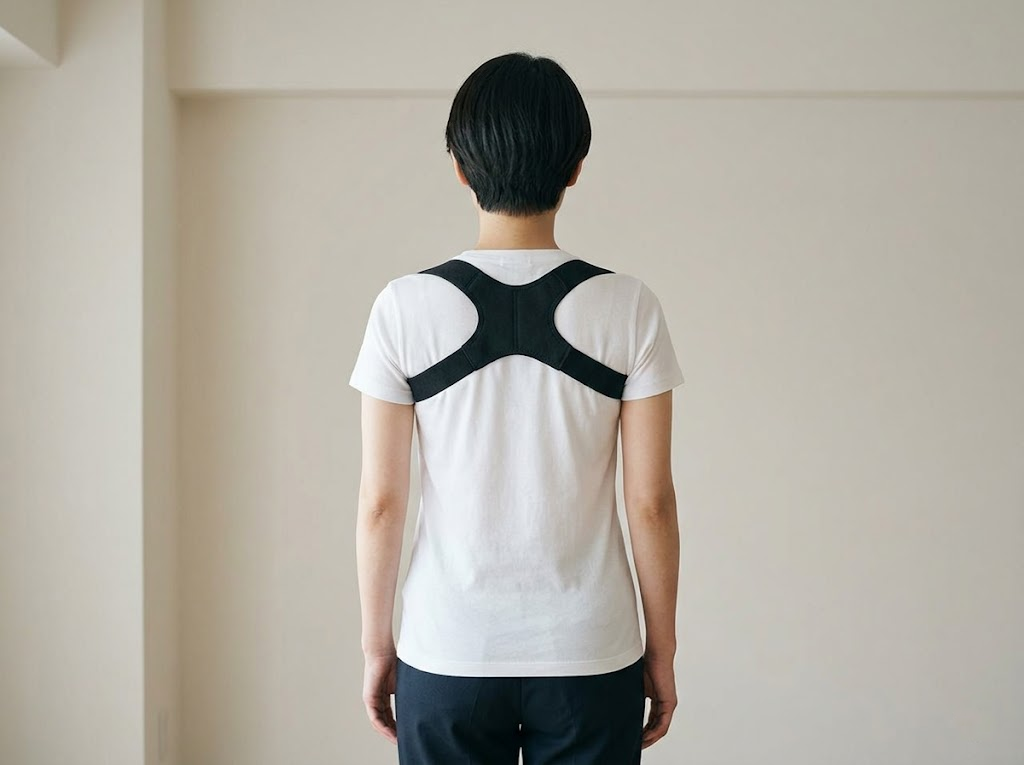
Wearing a posture corrector provides excellent physiological feedback to your brain. These devices gently pull your shoulders back into alignment. They serve as a constant physical reminder to sit up straight while you work or walk. They are highly effective when paired with a good exercise routine.
Digital Posture Applications
Software developers have created tools to fix the problems caused by our screens. Posture apps live directly on your phone or desktop computer. Some apps use your webcam to analyze your daily sitting habits. The software will sound an alarm or flash a notification on your screen the moment you start to slouch forward.
Massage Therapy
A deep tissue massage helps alleviate the sharp pain caused by tight cervical muscles. Massage therapy will not permanently fix your spinal alignment on its own. You must use massage as a supplemental treatment alongside daily stretching and strengthening routines.
Proper Sleep Ergonomics
The pillow you sleep on heavily dictates your spinal health. Thick and fluffy pillows bend your neck into terrible angles for eight hours every night. You should replace them with a low-profile pillow. Thinner pillows make it much easier to retain your natural cervical curve while you rest.
Professional Medical Support

You should consult a medical expert if your symptoms are severe or if your pain makes it impossible to sleep. A chiropractor or a physical therapist will perform a thorough postural examination. They can evaluate your joints for early signs of degeneration. These professionals perform targeted adjustments to improve your specific range of motion. They also build highly customized exercise plans to strengthen your weakest postural muscles.
Developing Daily Mindfulness

It is incredibly easy to slip right back into bad habits despite your best intentions. Practicing mindfulness is a highly powerful way to protect your body. You need to build a habit of constantly checking your body mechanics while driving your car or sitting at your office desk. You must clearly understand what specific activities cause your pain so you can build a better environment to prevent it.
Ergo Global: Your Partners in Ergonomic Health
At Ergo Global, we act as your first-person partner for office and industrial ergonomics consultants. We have seen how the wrong desk setup or a poorly designed factory floor can lead to chronic pain and long-term injury.
We work directly with you to identify these risks and fix them at the source. Our team provides clear guidance on how to adjust your workspace to protect your spine. Whether you manage a large team or work from a home office, we help you create a safer and more comfortable environment.
If you want to improve your business health and productivity, please visit our contact page to begin your consultation.
Let us help you find a better way to work without the physical toll of technology.