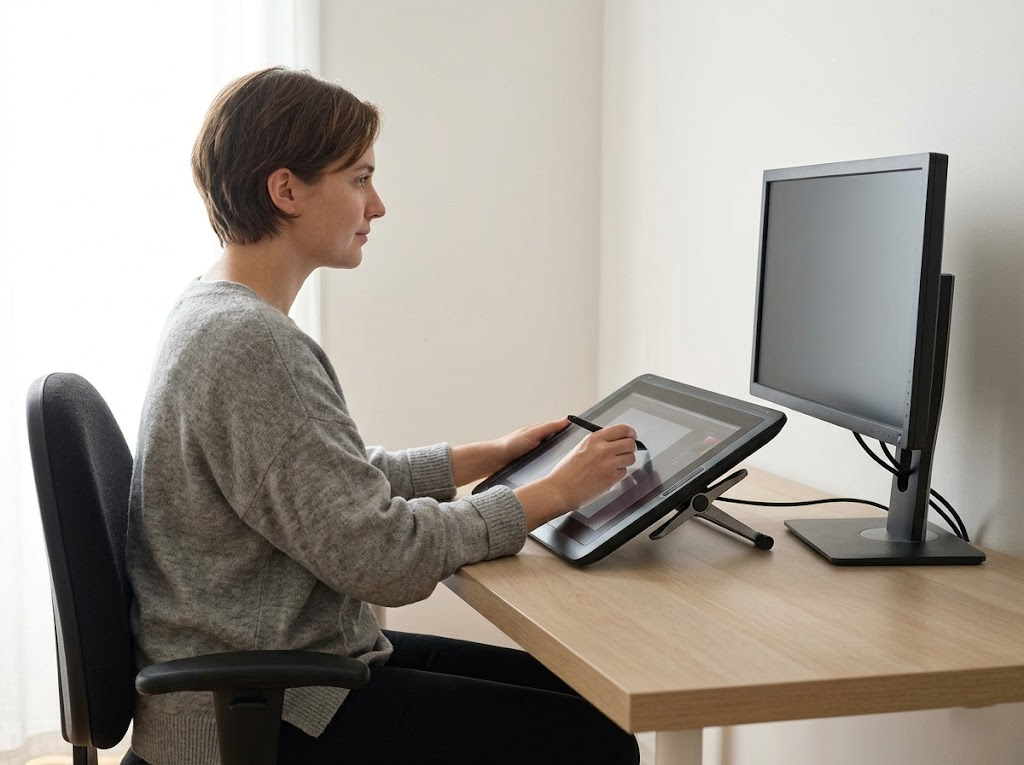


Sitting for many hours every day often leads to a dull or sharp ache in your lower spine. This is a very frequent issue that most adults deal with at some point in their lives. A lack of regular physical movement greatly increases your risk of developing these frustrating health problems.
If you are feeling this discomfort right now, you are likely wondering how to fix lower back pain from sitting. We will look at why this happens and share proven ways to find relief so you can work comfortably again.
What Is Lower Back Pain?
The lower back consists of five specific vertebrae labeled L1 through L5, which are surrounded by a large network of muscles, tendons, and ligaments to keep everything stable.
This entire area supports your upper body weight and creates the natural inward curve of your lower spine. This specific region acts as a major link in the signal transmission system from your brain to your legs.
Because of this connection, your body can perform daily movements like stepping forward or moving side to side. When something goes wrong in this area, it can disrupt your entire day.
Depending on how long the discomfort lasts, medical professionals divide lower back pain into three distinct categories.
| Pain Category | Duration | Description |
| Acute Pain | Less than 6 weeks | Sudden onset is usually caused by a specific injury or awkward movement. |
| Subacute Pain | 6 to 12 weeks | Lingering discomfort that persists after the initial healing phase. |
| Chronic Pain | Over 12 weeks | Long-term pain that can severely limit mobility and reduce quality of life. |
Acute pain refers to discomfort lasting less than six weeks. Subacute pain sticks around for six to twelve weeks before resolving. When the pain happens continuously for more than twelve weeks, it enters the chronic stage. Chronic pain can severely limit your mobility and reduce your overall quality of life.
Symptoms of Lower Back Pain to Watch Out For
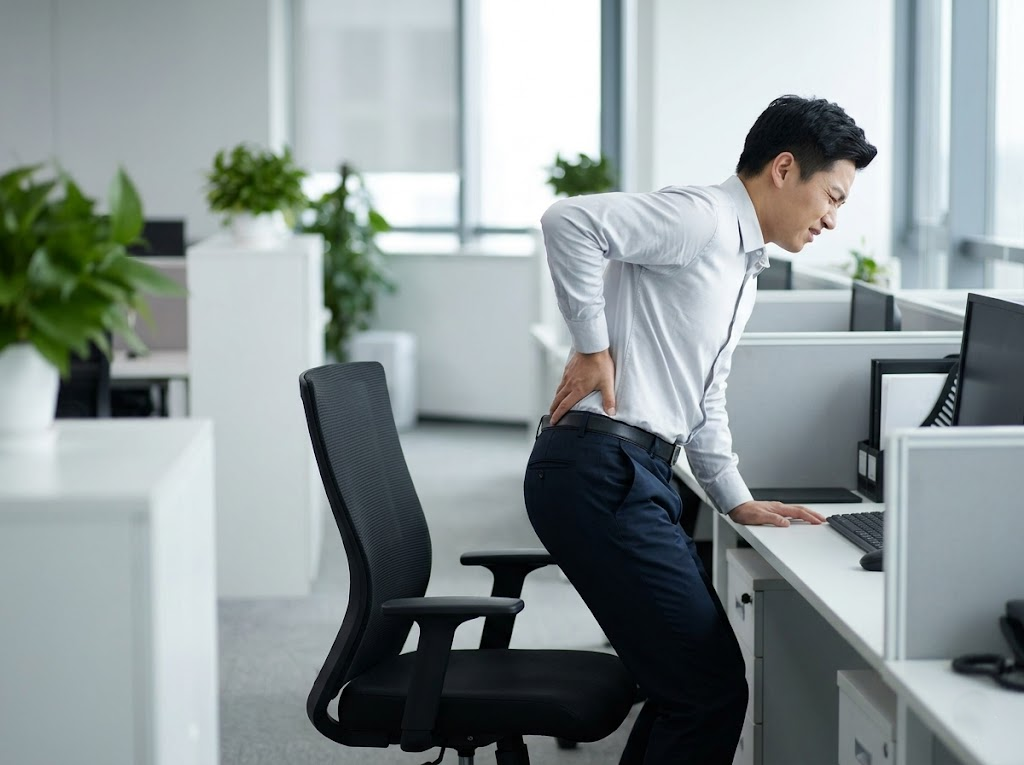
The symptoms of back pain change depending on what started the problem and how bad the condition is. You should look for these specific signs to understand what is happening in your body:
- A sudden sharp ache that happens after you lift something heavy or move the wrong way.
- A dull throbbing sensation that grows worse the longer you stay at your desk.
- Pain that travels down into your buttocks and the back of your thighs.
- Tingling or prickling feelings in your legs that feel like pins and needles.
- A numb sensation in your feet or toes that makes it hard to feel the floor.
- Increased stiffness when you try to stand up after sitting for an hour.
- Muscle spasms in the lower back area make it hard to move your torso.
If your pain comes with a high fever or if you suddenly lose control of your bladder, you must visit a medical facility immediately. These can be signs of a more serious problem that requires quick attention from a professional.
How to Fix Lower Back Pain from Sitting
You can use several strategies to manage your discomfort and stop it from getting worse. Here are the best ways to handle back pain caused by your workspace.
1. Take Short Breaks to Keep Blood Flowing
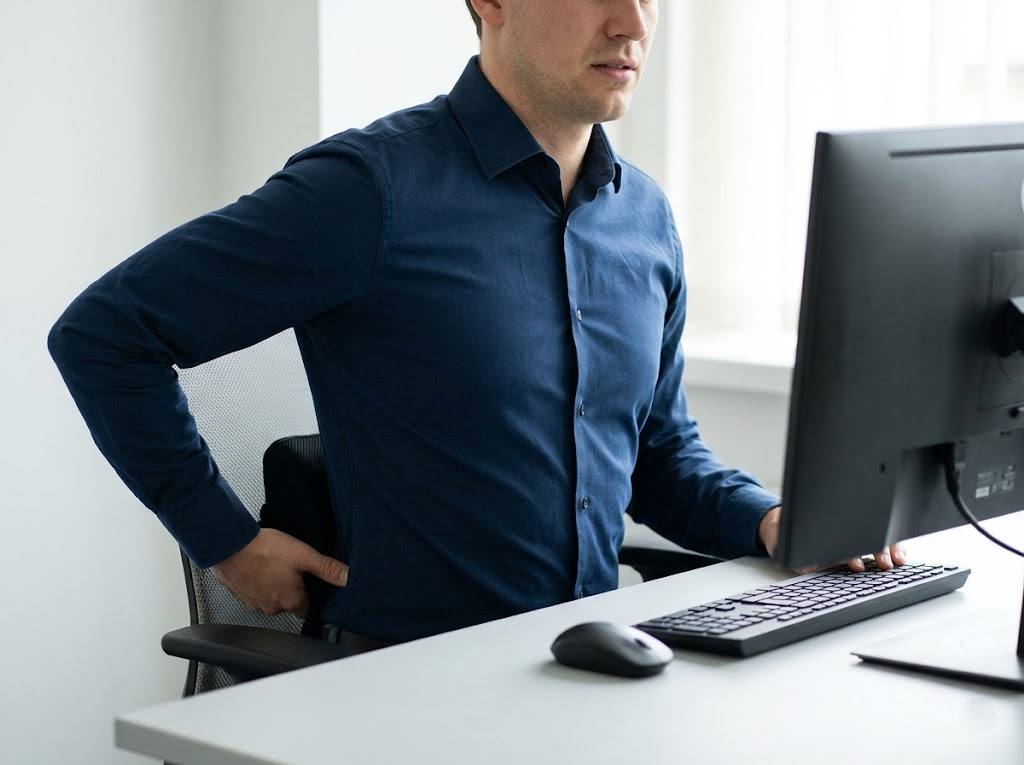
Even if you sit with perfect posture, staying perfectly still for hours can harm your physical health. Active movement reduces stiffness in your back and shoulders. Studies show that standing up and walking around every 30 minutes lowers the risks of sitting for too long.
Try to move your body actively throughout the workday to keep your muscles relaxed and increase healthy blood circulation. You might do a quick ten-minute workout or simply stand up to stretch your arms for a few seconds.
2. Try These Desk Exercises
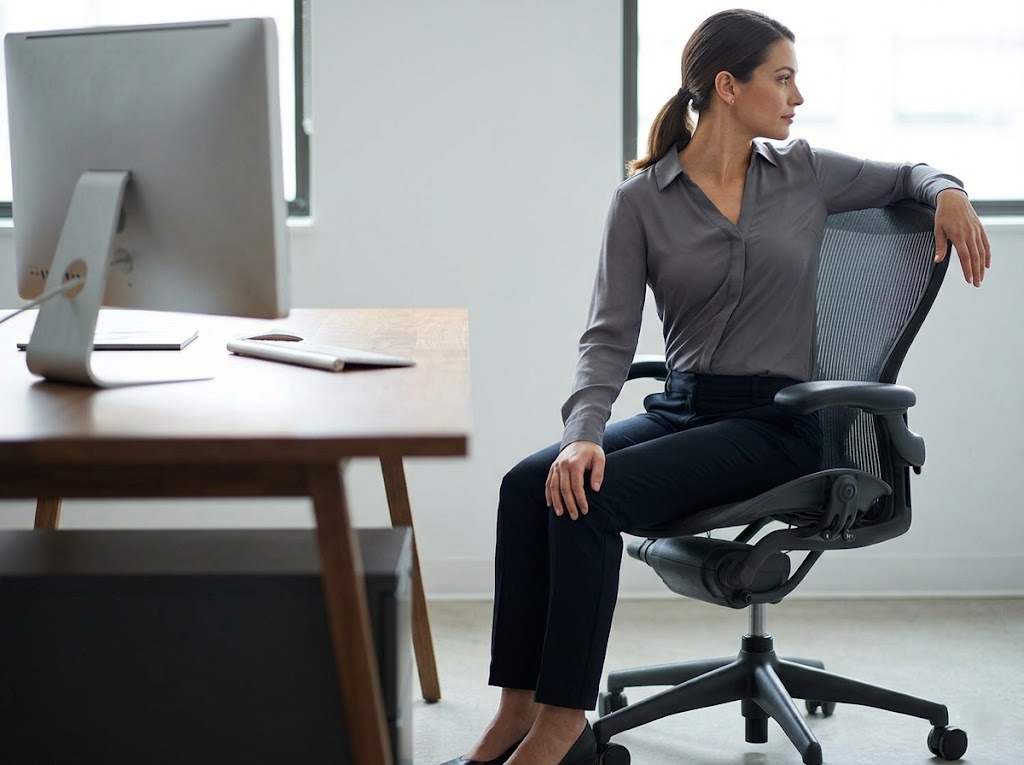
You can perform a few specific movements right at your desk to support your spine. These exercises help your body stay flexible and strong:
- Shoulder Squeezes: This move builds strength between your shoulder blades and reduces tension in your neck. Simply pull your shoulder blades together 15 to 20 times during your shift.
- Cat and Cow Stretch: This motion relieves tight muscles and makes your spine much more mobile. Start on your hands and knees on the floor and arch your back upward while dropping your head. Then lower your belly while looking up at the ceiling and repeat the move.
- Bird and Dog Pose: This exercise builds core strength to support your entire spine. While resting on your hands and knees, you should lift one arm and the opposite leg straight out at the same time. Switch sides and repeat the process slowly to build balance.
- Seated Spinal Twist: Sit upright in your chair with your feet flat on the floor. Place your left hand on your right knee and gently rotate your upper body to look over your right shoulder. Hold this position for several breaths and then switch to the other side to relieve pressure in your lower back.
- Knee-to-Chest Stretch: While sitting or lying down, you can bring one knee up toward your chest and hold it with both hands. This movement helps stretch out the muscles in your lower back and hips that get tight from sitting. Hold for thirty seconds on each leg to feel the tension start to fade away.
3. Use an Adjustable Standing Desk
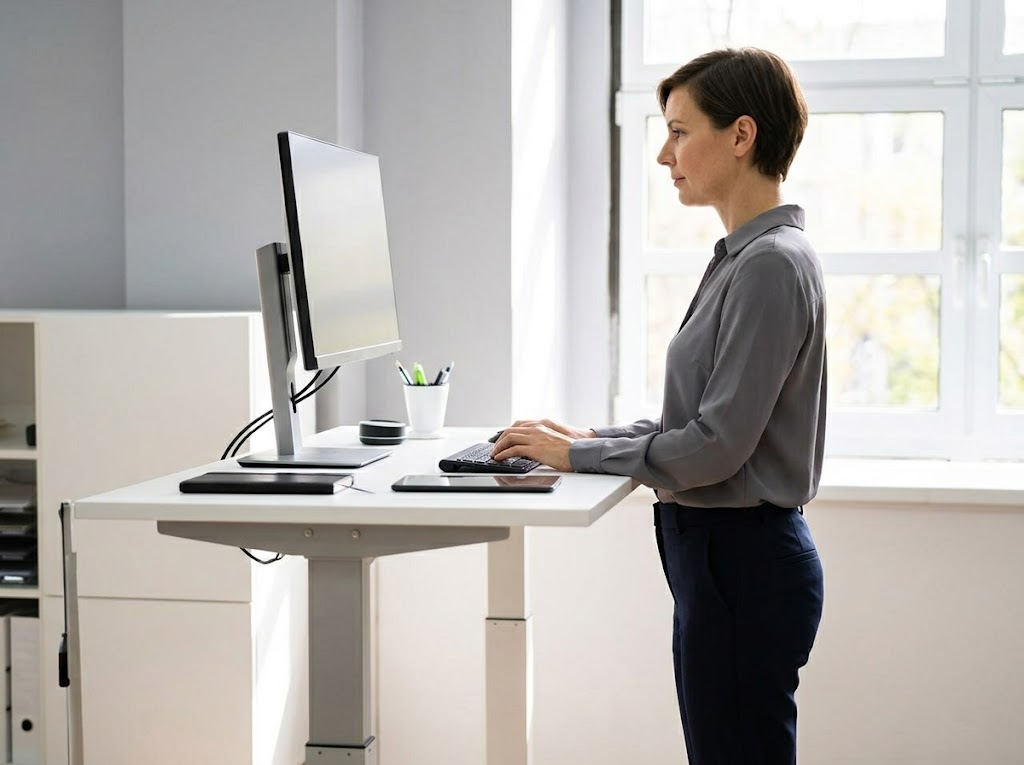
An adjustable standing desk lets you easily adjust the height of your workstation. This means you can switch between sitting and standing modes whenever you feel stiff. Research shows that standing desks help office workers stay productive while experiencing fewer backaches. Standing for six to fifteen minutes at a time can improve muscle comfort for many people. If a moving desk encourages you to stand more often and reduces your pain, it is a smart choice for your health.
4. Adjust Your Chair and Computer Height
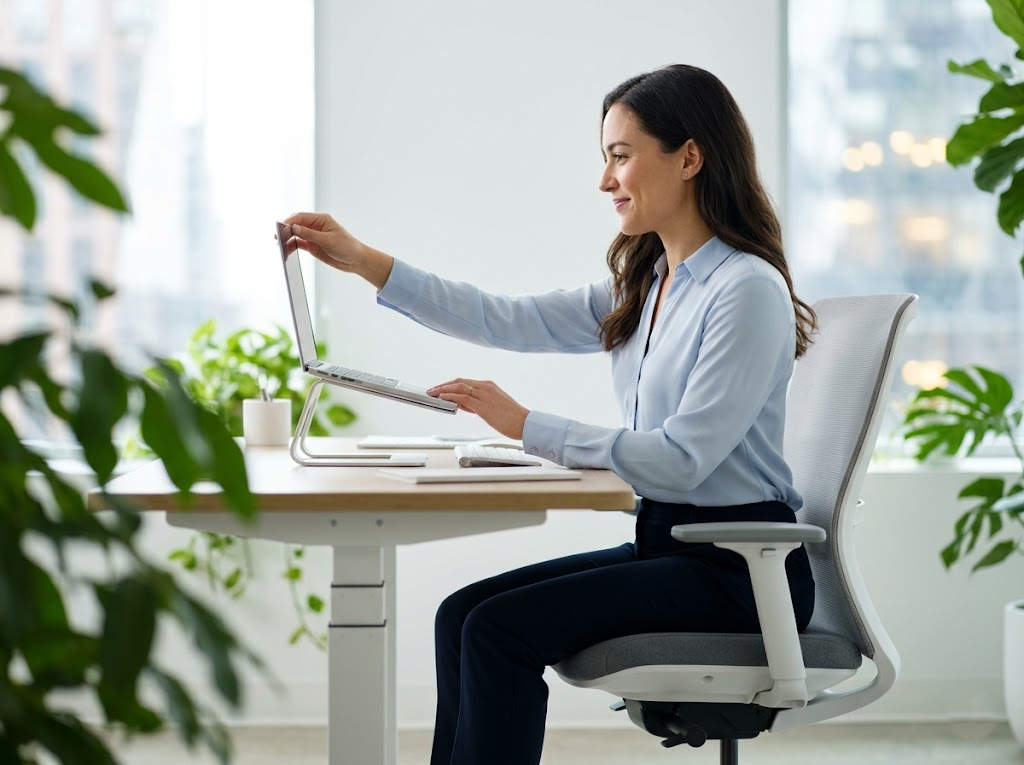
When your computer monitor sits too high or too low, your neck and back take on extra strain. You must make sure your computer is placed at the correct height, whether you sit or stand. Your eyes should align with the center of the screen when you look straight ahead. If your monitor cannot move, you can place a stand or some thick books underneath it. Staying about 50 to 80 centimeters away from your screen also helps prevent you from leaning forward.
A supportive chair is also necessary when you spend hours at a desk. A good office chair supports your lower back and hips comfortably while you work. If your current chair is flat, you can buy a separate cushion to fill the gap in your lower spine. Pick a cushion that supports your back without forcing you to slouch. Always keep your feet planted flat on the floor to maintain proper bodily alignment.
5. Apply Ice or Heat Therapy
Using temperature therapy is an excellent home remedy for office workers with sore muscles. You can use either ice or heat to manage the discomfort caused by sitting all day.
Cold packs work best within the first 48 hours after a sudden injury or muscle strain because they reduce swelling.
Warm heat brings a rush of fresh blood flow to the area which helps injured tissues repair themselves. Warmth also improves flexibility, so you can do your daily stretches with less stiffness.
6. Take a Short Course in Pharmacy Medicine
Using pharmacy medicine can help you quickly manage a bad flare-up.
Drugs that fight inflammation are generally the best options for sudden backaches because they reduce pain signals. Ibuprofen is a common choice that provides fast relief for many people.
If your pain lasts overnight, naproxen might be better for you. You must read the usage instructions carefully before taking anything, and use it only for a short time.
Do not use these for more than 10 days without consulting a doctor.
7. Consider Deep Tissue Massage Therapy

Getting a professional massage can relieve deep muscle pain and improve your overall health.
Deep tissue massages work well for sudden backaches in the short term. The firm pressure breaks down hard muscle knots and increases blood flow to the painful area. It also improves your overall mobility, so you can walk and stretch without much pain.
Regular massage therapy can help manage chronic back conditions when combined with exercise and a healthy diet.
How To Know When You Need Medical Help
You need to seek professional medical attention if your symptoms refuse to fade after two or three weeks of dedicated self-care. A primary care doctor or a musculoskeletal specialist can accurately diagnose the root cause of your physical struggles. You must go to an emergency room immediately if your pain begins after a major fall or a sudden car accident.
Watch out for these severe warning signs:
- Sudden weakness in your legs.
- Loss of normal bladder or bowel control.
- Unexplained fevers or body chills.
- Rapid and unexpected weight loss.
- Severe and unbearable agony that prevents sleep.
Let Ergo Global Fix Your Workspace Setup
At Ergo Global, we understand that dealing with physical discomfort makes it hard to focus on your career and your life.
As a specialized ergonomics consultant team, we work directly with you to solve these exact problems. We study your office setup and provide specific recommendations to improve your posture and reduce your pain.
Our primary goal is to help you build a workspace that supports your health rather than harms it every day.
If you are tired of dealing with constant back pain, please visit our contact page to schedule a consultation today.