

Running a commercial kitchen involves making hundreds of decisions that impact your team and your bottom line. While food quality and speed are usually the top priorities, your staff’s physical health is the foundation of a successful operation. Workplace safety in the culinary world has moved beyond simple slip-and-fall prevention. Today, the focus is on ergonomics.
The Physical Toll of Food Service
Kitchen environments are naturally demanding. Staff members spend hours standing on hard surfaces. They perform repetitive chopping motions and lift heavy stockpots. These actions put immense strain on the body.
Recent data from the U.S. Bureau of Labor Statistics shows that the hospitality sector continues to face high rates of non-fatal injuries.
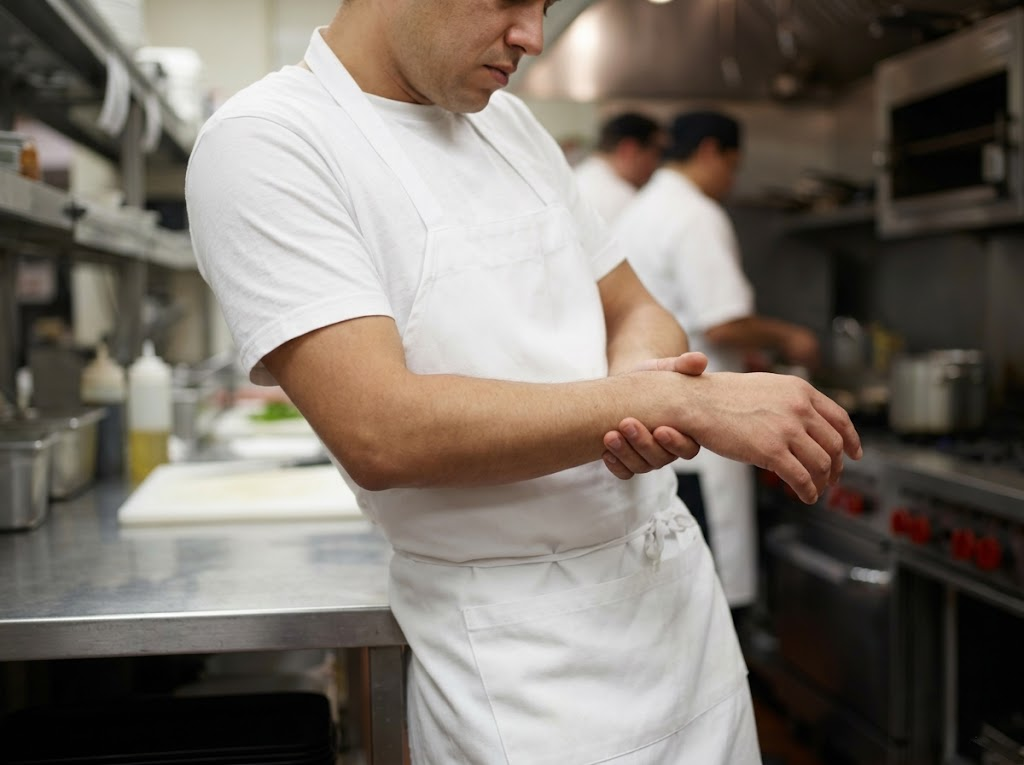
In fact, musculoskeletal disorders (MSDs) are a primary concern. These include back pain and carpal tunnel syndrome. Research suggests that 75% of restaurant workers report experiencing back pain at some point in their career.
These injuries do more than hurt the individual. They lead to lost workdays and decreased kitchen output.
Defining Ergonomics for Kitchen Workers
Ergonomics is the science of designing the workplace to fit the user. In a kitchen, this means adjusting the environment to the chef or prep cook. It is not just about fancy gadgets. It is about height-adjustable tables and proper lighting. It involves placing high-use items within easy reach. The goal of ergonomics for kitchen workers is to reduce physical stress and eliminate injuries.
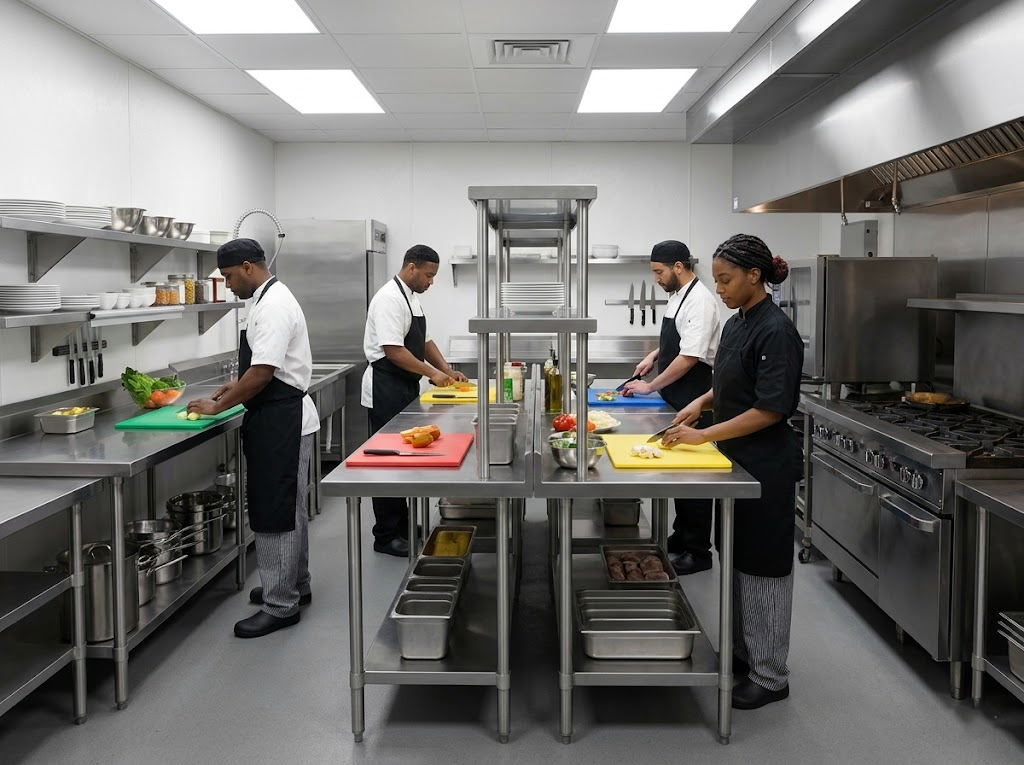
When a kitchen is designed with the human body in mind, tasks become easier. Workers move with more fluidity. They experience less fatigue during a long shift. This transition from a “one size fits all” approach to a tailored environment is essential for modern food service operations.
Five Reasons Why Ergonomics Matter for Kitchen Workers
A well-designed kitchen does more than just prevent accidents. It creates an environment where employees can perform at their highest level without the distraction of physical pain.
Investing in these improvements is a sign of a forward-thinking business that values its human capital as much as its equipment.
1. Significant Reduction in Injury Risk
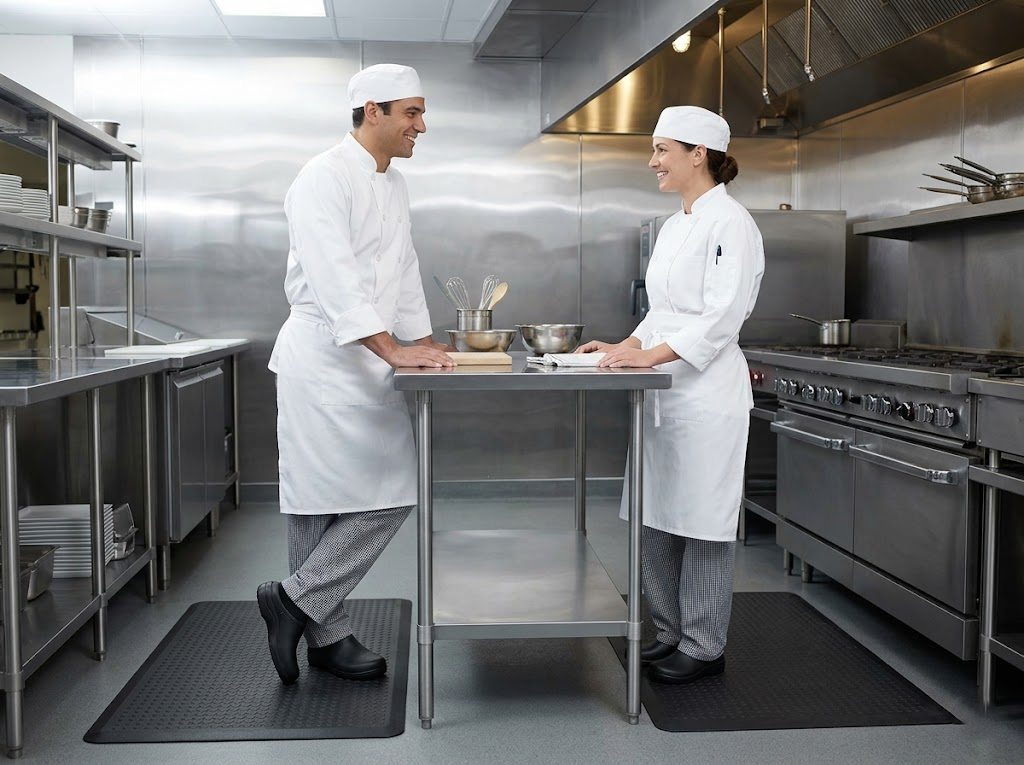
The most immediate benefit is a drop in workplace accidents. Proper ergonomics addresses the root causes of MSDs. By reducing the need for awkward reaching and heavy lifting, you protect your team. Statistics show that MSDs account for 31% of all workplace injuries. Preventing these incidents keeps your best talent on the floor.
2. Improved Employee Retention
The restaurant industry often struggles with high turnover. Some reports suggest that employee turnover can exceed 70% annually. Workers are more likely to stay when they feel physically comfortable. A kitchen that prioritizes health shows employees that they are valued. This builds loyalty and reduces the high costs associated with hiring and training new staff.
3. Increased Productivity and Speed
When tools are placed correctly, workers do not waste time or energy. An ergonomic kitchen layout minimizes unnecessary walking and bending. This efficiency allows the team to handle more orders in less time. A more comfortable worker is also a faster worker. Fatigue often leads to mental fog and slower movements. Proper support keeps the energy levels high throughout the service.
4. Better Food Quality and Consistency
Physical discomfort is a major distraction. A chef struggling with back pain may rush a dish or skip a minor detail. When staff members are comfortable, they can focus entirely on the craft. This leads to higher standards of food preparation and better consistency for the guests.
5. Massive Cost Savings
Workplace injuries are expensive. The average cost of an MSD-related injury is approximately $21,000 per incident. This figure includes medical bills and lost productivity. Beyond direct costs, there are indirect costs, such as higher insurance premiums. Investing in ergonomics for kitchen workers offers a high return on investment. Some studies show an ROI ranging from 3:1 to 15:1 for ergonomic interventions.
The Role of Ergonomics in Kitchen Materials and Design
Improving the workspace does not always require a full renovation. Small ergonomic changes for kitchen workers can make a huge difference.
Upgrading Footwear and Flooring
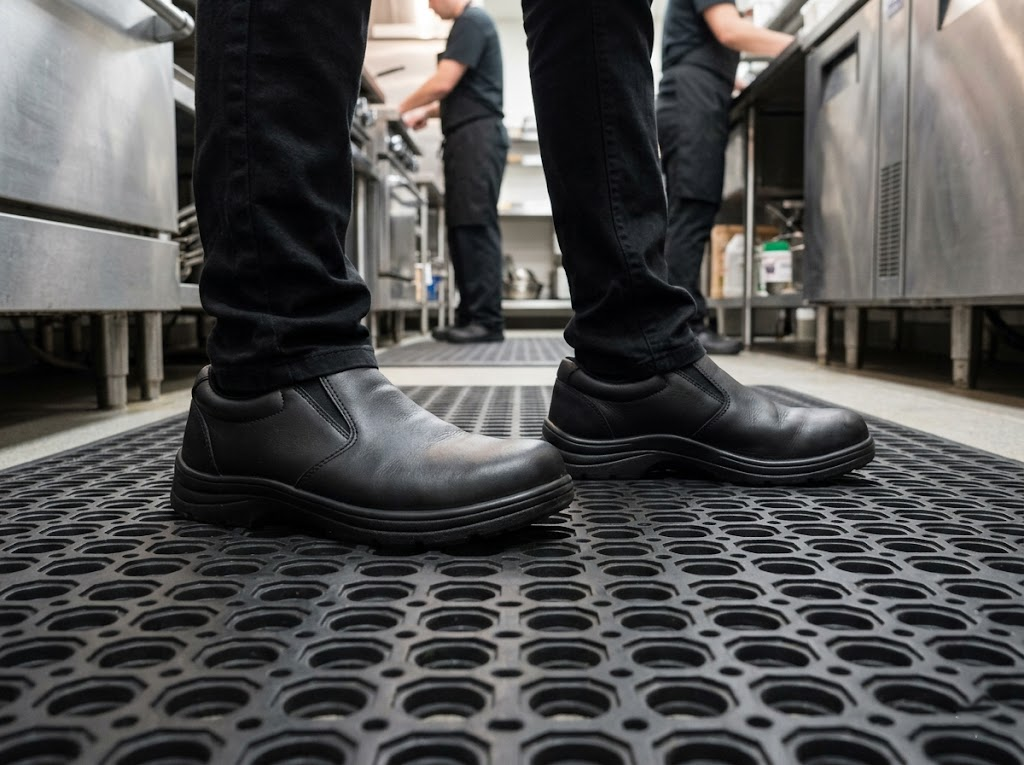
The floor is the foundation of kitchen ergonomics. Hard tiles cause immediate joint pain. Installing thick anti-fatigue mats at stationary workstations provides a crucial cushion that absorbs the shock of prolonged standing. Additionally, management should enforce a strict dress code requiring highly supportive, slip-resistant footwear. Good shoes align the spine and prevent the foot pain that plagues so many culinary professionals.
Adjustable Counter Heights
Standard counters are usually 36 inches high. This works for some people, but causes others to hunch over. Using adjustable stands or varying counter heights allows people of different sizes to work safely. Prep work should ideally happen at a height where the elbows are at a 90-degree angle.
Organized Reach Zones
The most frequently used items should be kept in the primary reach zone. This is the area between the waist and the chest. Items that are heavy or used less often can go on higher or lower shelves. This simple organization reduces the need for deep bending or overhead reaching.
Providing Adjustable Workstations
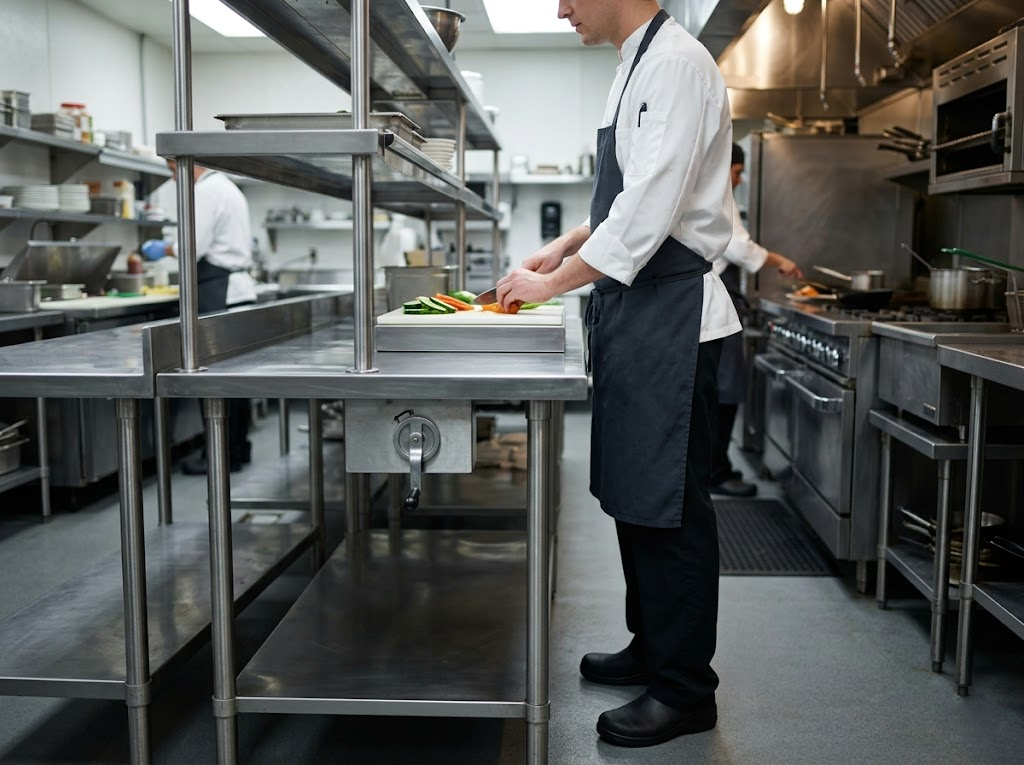
Since kitchen workers come in all different heights, fixed-height tables are a major ergonomic failure. Investing in height-adjustable prep tables allows every chef to work in a neutral posture. The work surface should ideally sit just below the elbows. If adjustable tables are too expensive, restaurants can provide heavy-duty cutting board risers for taller staff members or sturdy step platforms for shorter employees.
Utilizing Mechanical Aids
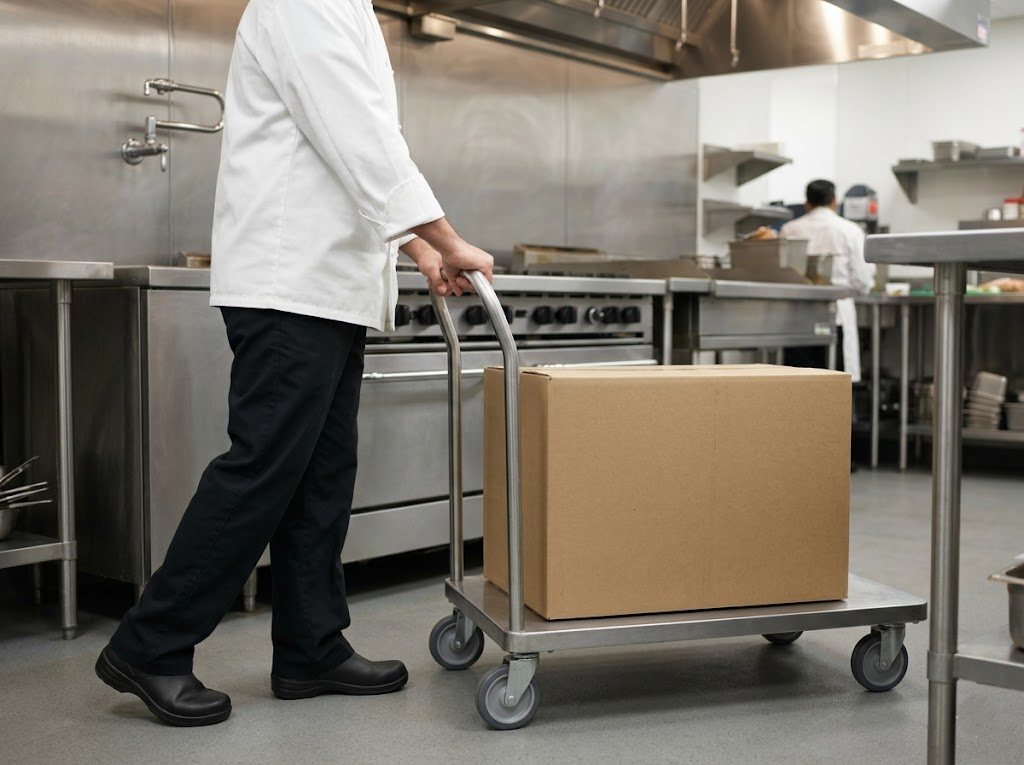
Manual labor should be minimized whenever possible. High-volume kitchens must invest in commercial food processors to handle repetitive slicing and dicing. When moving heavy inventory, staff should never carry heavy boxes across the room. Equipping the kitchen with wheeled carts and dollies enables workers to safely transport bulk ingredients. Moving heavy stockpots filled with water is another major risk. Installing a pot filler faucet directly over the stove eliminates the need to carry heavy pots from the sink.
Selecting Ergonomic Tools
The design of hand tools plays a massive role in wrist health. Standard kitchen knives often have rigid handles that force the hand into an unnatural grip. Ergonomic knives feature contoured handles that encourage a more relaxed hold. Utensils with thicker handles reduce the grip force required to hold them, which directly lowers the risk of tendonitis. Providing lightweight pots and pans also reduces the daily strain placed on the wrists and forearms.
The Long-Term Impact of Ergonomic Care
Workplace safety is a continuous process. It requires regular assessments and feedback from the people doing the work. When you implement ergonomics for kitchen workers, you are building a culture of care. This culture attracts high-quality professionals who want a long career in the industry.
Business owners must look at the data. The HSE 2024/25 report indicates that work-related ill health is rising in several sectors. The hospitality industry is at the forefront of this trend. Taking proactive steps today prevents a crisis tomorrow. Your staff is your most valuable asset. Protecting their bodies is the smartest business decision you can make.
How We Can Help at Ergo Global
At Ergo Global, we believe every kitchen worker deserves a safe, comfortable environment. We specialize in providing expert ergonomics consulting to hospitality businesses of all sizes.
Our team works directly with you to identify hidden risks in your kitchen layout. We provide actionable plans that reduce injury rates and boost your bottom line. We have seen firsthand how a few smart changes can transform a high-stress kitchen into a peak-performance workspace.
Whether you need a full equipment audit or staff training, we are here to support your mission. Your team works hard for you.
It is time to make their work easier.
Please visit our contact page to schedule your first consultation today.