


Industrial workplaces are physically demanding environments where workers often push their bodies to the limit.
The primary goal of ergonomics for industrial workers is to adapt workplace tools, tasks, and environments to fit human capabilities. This approach reduces the strain on muscles and joints by ensuring the job matches the person.
By focusing on the human element, companies can mitigate musculoskeletal disorders (MSDs) caused by excessive force, awkward postures, and repetition.
The True Cost of Neglecting Ergonomics
Ignoring employees’ physical needs is a recipe for high costs and low morale.
Recent data from the Health and Safety Executive shows that an estimated 1.9 million workers suffered from work-related ill health in the 2024/25 period. Musculoskeletal disorders account for 27% of these cases.
The financial burden is equally staggering. The total annual cost of workplace injury and new cases of work-related ill health has reached approximately £22.9 billion. For a high-volume manufacturer, a single injury with direct costs of $20,000 can result in a total loss of $100,000 when indirect factors like lost productivity are included.
Effective ergonomics for industrial workers is not just a safety measure but a vital economic strategy.
Common Physical Risks in Industrial Environments
To prevent injuries, we must first understand the specific physical stressors that cause them. Industrial environments are unique because they often combine several high-risk factors into a single shift. According to the Bureau of Labor Statistics, MSDs result in a median of 10 days away from work per incident.
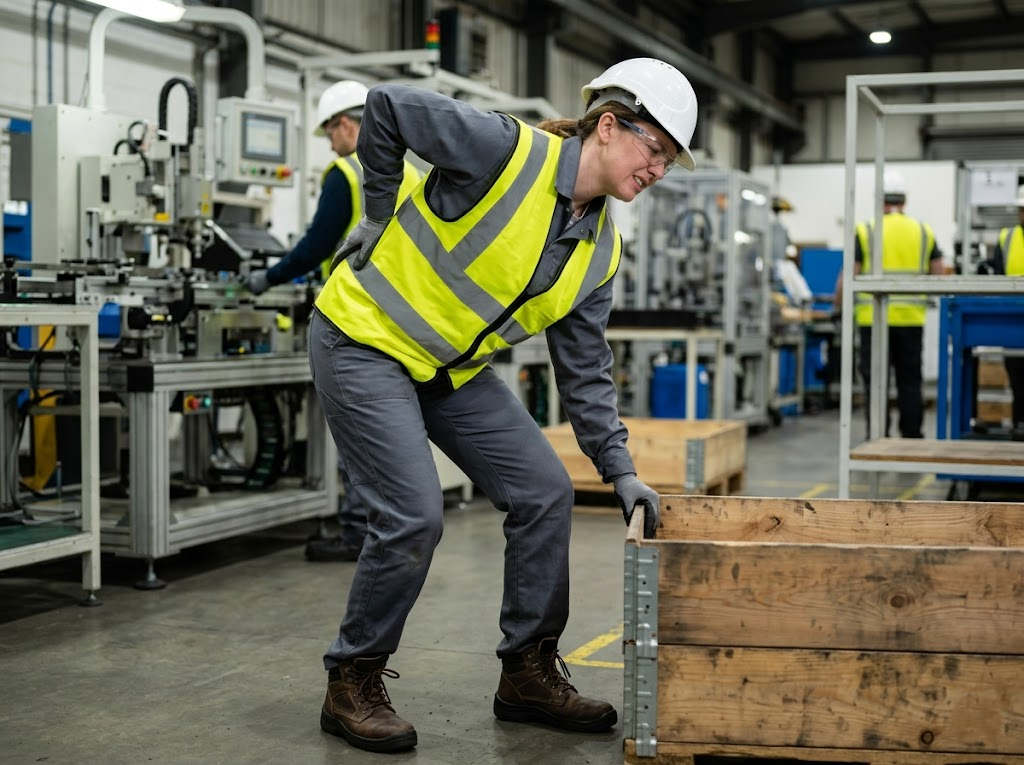
Repetition and Chronic Fatigue
In assembly lines or packaging facilities, workers perform the same movements thousands of times a day. This constant repetition does not allow the body enough time to recover. Over weeks and months, this leads to chronic muscle fatigue and tissue damage. Small micro-tears in the tendons can eventually lead to severe conditions such as tendonitis or carpal tunnel syndrome.
Forceful Exertions
Lifting heavy crates or pulling heavy pallets requires significant muscle force. When a worker uses excessive force, the risk of a muscle strain or a ligament tear increases. This is particularly dangerous when the weight exceeds the individual’s natural lifting capacity. Overexertion remains a primary cause of non-fatal injuries across all industrial sectors.
Awkward Postures
The human body functions best when it is in a neutral position. Industrial tasks often force workers to reach high above their heads or bend deep at the waist. Some may even need to twist their torso while carrying a heavy load. These awkward postures put uneven pressure on the spinal discs and joints. Over time, this pressure can lead to chronic back pain or even a herniated disc.
Vibration and Tool Use
Long-term exposure to vibration is a major risk factor for workers using hand-held power tools. Machines such as jackhammers, grinders, and impact wrenches deliver constant shocks to the hands and arms. This can lead to hand-arm vibration syndrome. This condition affects blood flow and nerve function in the fingers.
Main Ways Ergonomics Prevents Industrial Injury
There are several specific ergonomics strategies for industrial workers that lead to better health outcomes. Each method plays a role in showing how these interventions prevent injury by targeting different physical stressors.
From mechanical assistance to smarter layouts, these interventions form a comprehensive shield for the workforce.
Reducing Physical Strain and Force
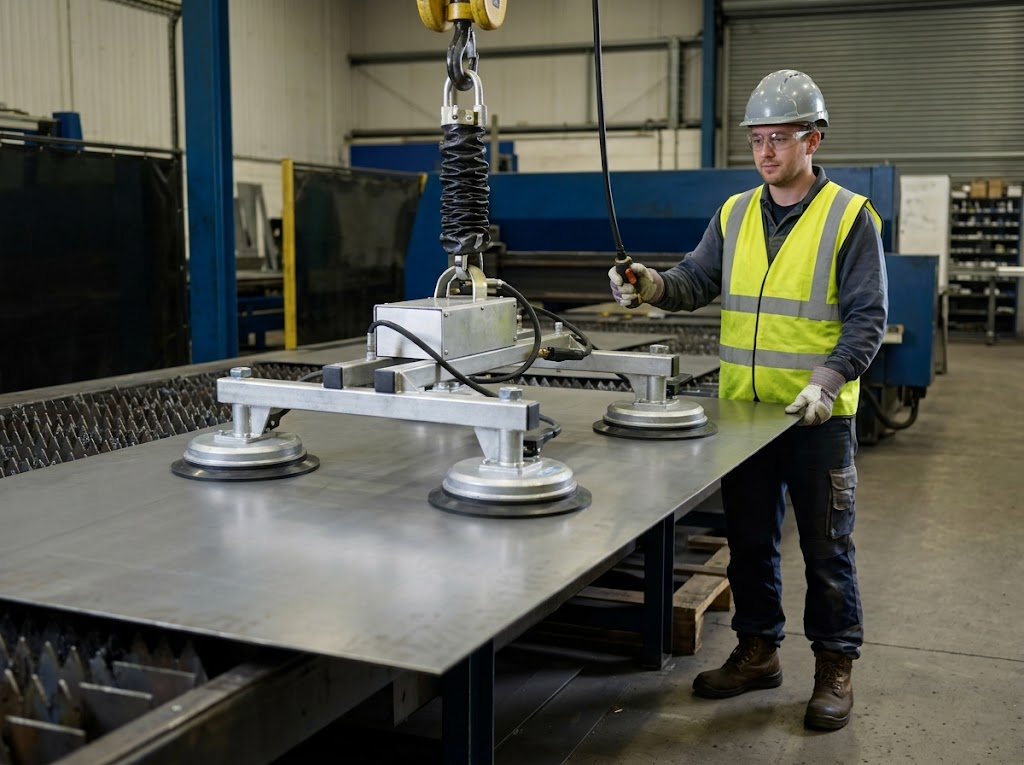
One of the most effective ways to prevent injury is to reduce the amount of force required for a task. Manual lifting is a primary cause of back and shoulder strain in warehouses. When workers must move heavy boxes by hand, their spinal discs face intense compression. Studies show that overexertion and bodily reaction account for a huge percentage of non-fatal workplace injuries.
Ergonomic strategies prioritize the use of mechanical aids. These aids include hoists and overhead conveyors. Trolleys and hydraulic lift tables also play a massive role in modern logistics. Using these tools largely eliminates the need for manual lifting. This protection is vital for the long-term health of the spine and prevents acute injuries caused by sudden heavy loads.
Eliminating Awkward Postures
The human body is designed to move within specific ranges. When a worker has to reach high above their head or bend deeply to the floor, they are in an awkward posture. These positions put uneven stress on the musculoskeletal system. Over time, this leads to chronic pain and reduced mobility.
Adjustable workstations are a key solution to this problem. These allow tasks to be performed at the proper height for each individual worker. A one-size-fits-all approach fails in a diverse workforce. By adjusting the surface, employees can keep their spine in a neutral position. This position is often called the safe S-curve. It minimizes the risk of pinched nerves and stops the overextension of tendons in the neck and shoulders.
Minimizing Repetitive Motion
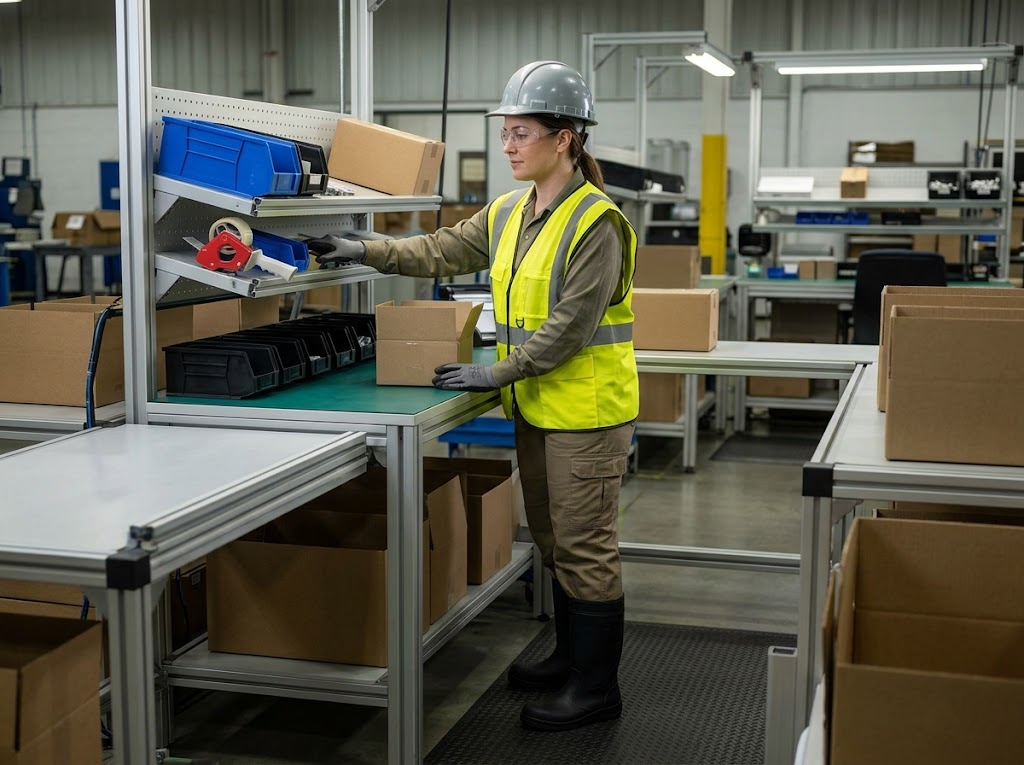
Repetition is a silent threat in the industrial world. Performing the same small movement thousands of times a day causes micro-trauma to the tissues. This is especially true for the hands and wrists. These repetitive motions often result in carpal tunnel syndrome or debilitating tendinitis. Repetitive strain injuries cost employers over $20 billion annually in direct costs.
Job rotation systems are a powerful administrative tool to combat this wear and tear. In a rotation system, workers move between different tasks throughout their shift. Each task should use a different group of muscles. This gives the primary muscles used in one task a chance to recover while the worker remains productive elsewhere. It effectively prevents the “burnout” of specific muscle groups.
Optimizing Tool Design
The tools used by industrial workers must be designed with human anatomy in mind. Traditional tools can often be heavy or poorly balanced. This forces the worker to grip the tool more tightly than necessary to maintain control. This excessive grip force quickly leads to forearm fatigue and wrist strain.
Ergonomic tools are lightweight and well-balanced. They often feature padded or contoured handles that distribute pressure evenly across the hand. Furthermore, vibration-damping technology is crucial for power tools. Frequent exposure to high vibration can lead to hand-arm vibration syndrome. This condition permanently affects blood flow and nerve function in the fingers. By using tools with built-in dampers, companies protect their workers from irreversible neurological damage.
Improving Workspace Layout
The layout of a factory floor dictates how a person moves throughout the day. If frequently used items are placed far away, the worker must constantly stretch or twist. This repetitive reaching is a common source of side strain and shoulder impingement.
Ergonomic layout focuses on the strike zone. This is the area between the worker’s shoulders and the worker’s waist. It is also the area within easy reach of the arms without leaning. All high-frequency items should be kept within this zone. This prevents the worker from overextending their muscles during their daily routine. It also improves workflow speed because everything is within easy reach.
Benefits of Implementing Ergonomics for Industrial Workers
The rewards for a well-designed ergonomic program are extensive. Beyond the goal of keeping people safe, there is a clear economic benefit. According to OSHA, for every one dollar spent on safety programs, companies can see a return of four to six dollars.

Drastic Reduction in Injury Rates
The most immediate benefit is the drop in Musculoskeletal Disorders. Research indicates that ergonomic interventions can reduce MSDs by an average of 59%. By lowering the frequency of carpal tunnel syndrome and lower back injuries, companies see a 75% reduction in lost workdays. This keeps your most experienced workers on the floor rather than on medical leave.
Significant Gains in Productivity
A worker who is not in pain can focus. Fatigue often leads to mental errors and physical slowdowns. When a workstation is comfortable, employees work faster and more precisely. This leads to fewer quality defects and a higher overall output for the factory. The OSHA safety and health data show that over 40 percent of chief financial officers cite productivity as the top benefit of an effective workplace safety program. By reducing unnecessary reaches and awkward movements, the entire production cycle becomes leaner and more efficient.
Improved Product Quality and Accuracy
Physical fatigue leads to reduced concentration. When workers are tired or in pain, they are more likely to make mistakes that compromise product quality. A detailed report from the CDC on the economics of ergonomics highlights that the efficient allocation of ergonomic resources directly leads to higher product quality. Better-designed tasks ensure that workers can maintain high standards of quality throughout their entire shift without their bodies giving out.
Enhanced Employee Retention and Morale
When a company invests in ergonomics for industrial workers, it sends a clear message. It shows that management values the staff’s health and well-being. This leads to higher retention rates and a more engaged workforce. According to Gallup workplace research, employee turnover can cost a company 1.5 to 2.0 times an employee’s annual salary. Reducing turnover through better physical comfort is a massive long-term saving. It builds loyalty and fosters a culture where employees feel respected.
Quick Checklist for a Safer Workspace
You can evaluate your current workplace by using this simple checklist. If you answer no to any of these points, your facility may be at risk for ergonomic injuries.
- Are tasks performed at roughly waist height for the worker?
- Are frequently used tools kept within 15 inches of the body?
- Are mechanical aids available for loads over 35 pounds?
- Are anti-fatigue mats placed at stationary workstations?
- Do workers have the freedom to take short stretch breaks?
- Have all employees been taught the basics of neutral posture?
- Do tool handles have a non-slip surface to reduce grip force?
Partnering with Ergo Global for Your Success
At Ergo Global, we believe that your workforce is your most valuable asset. We see the hidden risks in your facility that others might overlook.
Our team of expert consultants specializes in creating customized strategies that prioritize ergonomics for industrial workers. We do not offer generic advice. Instead, we dive deep into your specific operations to provide actionable solutions that reduce injury rates and boost your bottom line.
We handle everything from comprehensive site audits to hands-on employee training programs. Let us help you build a culture of safety that lasts for years.
If you are ready to protect your team and optimize your performance, reach out to us through our contact page today.
Together, we can make your workplace a model of health and efficiency.