

Standing desks have become a familiar part of modern offices, and for good reason. The research behind reducing prolonged sitting is fairly compelling. But there is a gap between owning a height-adjustable desk and actually using it in a way that benefits your body. Most people who buy one either stand for too long and end up with tired, aching legs or drift back to sitting most of the day within a few weeks.
The 20-8-2 rule for standing desks addresses this directly. It gives desk workers a simple, research-backed rhythm for splitting the workday between sitting, standing, and moving, without having to think too hard about it or overhaul the way they work.
Where the 20-8-2 Rule Came From
The 20-8-2 rule was developed by Dr. Alan Hedge, Professor of Ergonomics at Cornell University, based on research on how the body responds to static desk postures. His team found that alternating between sitting, standing, and moving across the day increased energy expenditure without negatively affecting cognitive function or comfort.
The formula itself is refreshingly simple. For every 30 minutes of desk work:
- Sit for 20 minutes: focused, comfortable work in a supported position
- Stand for 8 minutes: upright at a raised desk, keeping the body active
- Move for 2 minutes: a short walk, a stretch, or anything that gets circulation going
That is the whole rule. Over a typical 7.5-hour workday, this pattern amounts to roughly 5 hours of sitting, 2 hours of standing, and 30 minutes of accumulated movement, with around 16 position changes throughout the day.
What Too Much Sitting Actually Does
Most desk workers already have a sense that sitting for long stretches is not great for them. What is less obvious is just how much the research bears that out.

A cross-sectional study involving nearly 45,000 workers found that sitting for almost all of the workday without breaks was associated with a significantly increased risk of poor general health and back and neck pain. Office workers commonly spend between 70 and 85 percent of their working hours seated, often without any meaningful change in position. Over time, that sustained load on the spine, hips, and lower limbs builds into the kind of chronic discomfort that many people quietly accept as part of having a desk job.
Research also links prolonged sitting to a range of cardiometabolic health risks, including elevated blood pressure, reduced insulin sensitivity, and a greater likelihood of developing cardiovascular disease. A CDC-supported study found that introducing sit-stand options at work reduced daily sitting time by 66 minutes and cut upper back and neck pain by 54%.
The issue is not that sitting is harmful in short periods. The issue is staying in the same position for too long.
Standing All Day Has Its Own Problems Too
When standing desks first became popular, there was a tendency to treat them as a straightforward fix for everything that sitting caused. That framing missed something real.

Standing in one position for extended periods carries its own health risks, including leg fatigue, lower-limb discomfort, and increased strain on the circulatory system. Dr. Hedge’s own research found that after around 30 minutes of continuous standing, people begin to adopt awkward postures that raise the risk of musculoskeletal problems. Spending the whole day on your feet is a different kind of static posture, and the body does not respond particularly well to that either.
What the body responds well to is variety. A standing desk is most effective when used to change positions regularly throughout the day. The 20-8-2 rule for standing desks is built around exactly that principle.
Breaking Down What Happens in the 20-8-2 Rule
Each segment of the 20-8-2 cycle serves a different purpose, and understanding what each one does makes it easier to follow the pattern intentionally rather than mechanically.
The 20 Minutes of Sitting
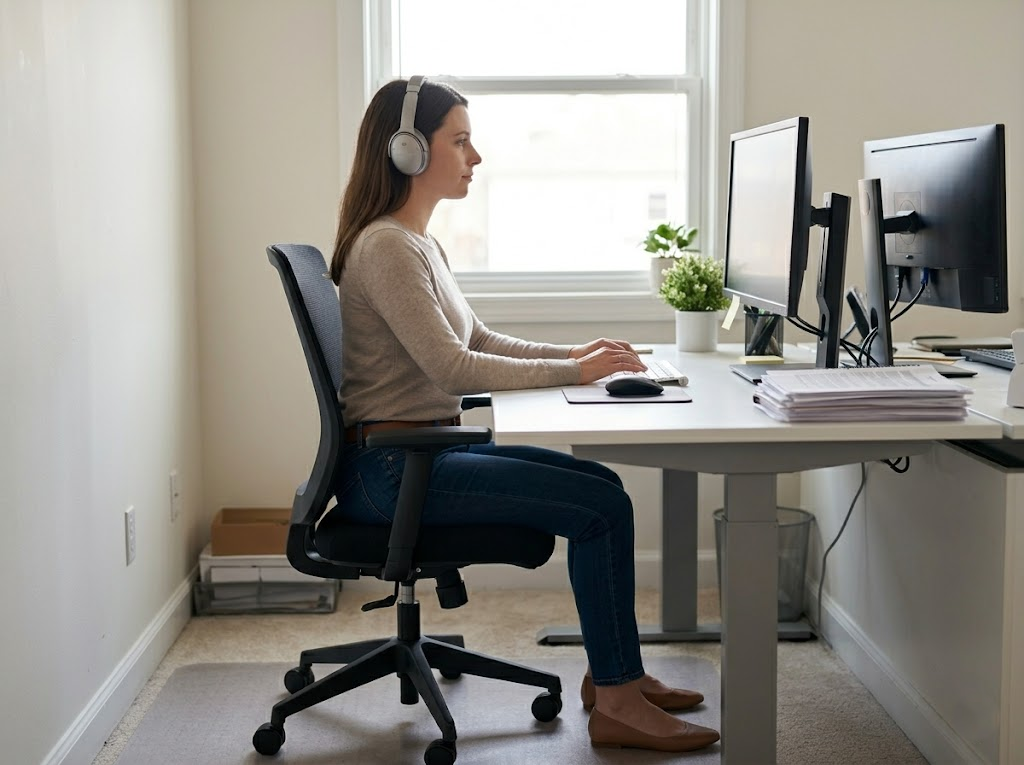
Sitting itself is not the problem. Sustained, unbroken sitting for hours is.
The first 20 minutes of each cycle allow for focused, supported work in a position that does not strain the body when maintained with reasonable posture. The goal is simply to use this time well and transition out of it before the physical costs of static sitting start to accumulate.
Posture during this window matters. Feet flat on the floor, elbows at around 90 degrees, and the screen at roughly eye level all reduce the load on the spine and neck during seated work, so the 20 minutes are genuinely restorative rather than just a slower form of damage.
The 8 Minutes of Standing

Standing activates the muscles and helps counteract the stiffness and reduced circulation that come from prolonged seated postures. The 8-minute standing window is long enough to shift the body’s loading and prompt blood flow, without pushing into the fatigue territory that comes with longer unbroken standing periods.
During this time, the standing desk should be set so that elbows rest at 90 degrees with the desk surface and the monitor sits at or just below eye level. A poorly set standing desk height creates the same postural problems as a sitting desk at the wrong height, so taking a moment to set the adjustment properly is worth doing.
The 2 Minutes of Moving

This is the segment that delivers the biggest physiological benefit. Brief movement periods help boost circulation, reduce muscle fatigue, and give the brain a short break that supports focus for the next cycle. It does not need to be organized or effortful. Walking to refill a water bottle, doing a shoulder roll, stepping outside for a moment, or taking a brief walk around the office all count.
The movement segment also works for people without a standing desk. The sit-then-move portion of the 20-8-2 pattern delivers most of its benefits regardless of desk type, making the approach accessible to anyone working at a desk.
How to Make It Work in a Real Workday
The main barrier to following the 20-8-2 rule for standing desks is simply remembering to change positions when focus is high, and the work is pulling you in. A few straightforward habits help with that.
Set a Repeating Timer
The simplest approach is a repeating 20-minute alarm. When it fires, stand up. Eight minutes later, move briefly, then sit again. Phone alarms, browser extensions, and dedicated wellness apps all handle this with minimal setup, and the habit tends to become more automatic fairly quickly once the timer does the reminding.
Build Up Gradually if You Are New to This
If you are new to standing at a desk, jumping straight into the full 20-8-2 pattern can feel demanding on the feet and lower back. A gentler approach is to do one full cycle per hour in the first week, sitting normally for the rest of the time. Building tolerance gradually over two to three weeks makes the habit considerably more sustainable than going in at full intensity from day one.
Make the Movement Breaks Feel Natural
Walking to get water, taking a message to a colleague in person, or stepping outside are all ways to make the 2-minute break feel like a natural part of the workday rather than an interruption. The goal is actual movement, not just a different static posture. That distinction matters more than most people initially realize.
Add a Little Support for the Standing Periods
An anti-fatigue mat under the desk reduces strain on the feet and lower legs during standing. Supportive footwear makes a difference, too. These are small additions, but they noticeably affect how comfortable the standing portion feels, particularly in the early weeks of building the habit.
The Rule Is a Guide, Not a Script
The 20-8-2 rule for standing desks is a starting point, not a fixed formula. Some people settle into a 25-8-2 pattern. Others find 20-10-2 works better. Some days the cycle will be less consistent than others, and that is fine. The research supports the broader principle of regular positional variety, and any meaningful increase in movement across the day compares favorably to long stretches of unbroken sitting.
Consistently following the 20-8-2 rule throughout a full workday can reduce total sitting time by up to 3 hours. Over weeks and months, that shift has a real effect on musculoskeletal complaints, afternoon energy levels, and general well-being, which many desk workers experience as a gradual background decline. Getting the habit started is the harder part. Once the cycle feels familiar, it tends to settle into something that feels natural rather than imposed.
How Ergo Global Can Help
Knowing the 20-8-2 rule is one thing. Getting a workstation that actually supports it is another. At Ergo Global, we help individuals and organizations create ergonomic work environments that make healthy habits easier to build and maintain. Our certified ergonomists conduct personalized workstation assessments on-site and virtually, covering desk height, monitor placement, seating setup, and effective integration of movement patterns into the working day.
We also run ergonomics training programs for teams that want to build better habits across the whole workforce. If you want to get more out of your standing desk, or simply feel better by the end of the day, get in touch with the Ergo Global team and let us help you put it all together.