

Nursing is one of the most physically demanding professions in the world, and the injury rates reflect it. The lifetime prevalence of low back pain in nurses reaches as high as 90%, and in a survey of 569 registered nurses, 84.7% reported high occurrence of lower back pain over the preceding twelve months. These are not isolated incidents. They reflect a systemic problem rooted in how nursing work is organized, equipped, and carried out.
Ergonomics for nurses exists to address that. This article covers the risks nurses face every day and the practical measures individuals and healthcare organizations can implement to reduce them.
Why Ergonomics for Nurses Matters More Than Most People Realize
The injury numbers in nursing are striking. Over 84% of registered nurses report experiencing low back pain in any given twelve-month period, and the lifetime prevalence of low back pain in the nursing profession reaches as high as 90%, with recurrence rates exceeding 70%. These are not outlier figures from a single study. They reflect a profession-wide pattern documented consistently across decades of occupational health research.

The consequences extend beyond the individual nurse. Chronic pain and musculoskeletal injury drive some of the highest rates of absenteeism in the healthcare sector. They push experienced nurses toward early career exit, contributing to workforce shortages that directly affect patient care. And they represent an enormous and largely preventable cost to healthcare organizations, insurers, and public health systems.
The physical demands of nursing are unlikely to disappear. Patients still need to be moved. Beds still need attending. Long shifts are a structural reality of clinical care. What can change is how those demands are managed, and that is precisely what a thoughtful approach to ergonomics for nurses addresses.
The Physical Demands Driving Injury in Nursing
Before addressing solutions, it helps to understand where the risk is actually concentrated.
Patient Handling and Lifting
Manual patient handling is the single largest contributor to musculoskeletal injury in nursing. Moving, repositioning, and transferring patients places compressive and shear forces on the spine that exceed safe limits, especially when performed repeatedly across a long shift. Survey data consistently place the lower back as the most frequently injured region, followed by the back, knees, neck, and shoulders. The combination of an awkward and unpredictable load, time pressure, and confined physical spaces makes manual patient handling one of the most hazardous routine tasks in any workplace.
Prolonged Standing and Walking
Nurses routinely spend 10 or 12 hours on their feet, covering distances of several miles per shift on hard institutional flooring. The cumulative impact on the lower limbs, joints, and lumbar spine is significant. Fatigue from sustained standing reduces postural control, which in turn increases the likelihood of poor positioning during patient handling tasks, creating a compounding risk pattern that worsens across the shift.
Awkward Postures at the Bedside

Bending over patient beds that are positioned too low, reaching across wide bed surfaces, and twisting to access equipment on the wrong side of the body are all common in bedside nursing care. These positions place sustained load on the lumbar discs and the muscles of the upper back and shoulders. When repeated many times per shift, they contribute directly to the high rates of musculoskeletal injury seen in ward-based nursing roles.
Repetitive Tasks and Fine Motor Demands
Medication preparation, documentation, drawing blood, inserting lines, and managing infusion pumps all involve repetitive upper limb and hand movements. Over time, these tasks contribute to wrist strain, tendinitis, and shoulder injuries, particularly when workstations are not adjusted to the individual nurse’s height and reach.
Night Shifts and Fatigue
Night shift nurses face an additional ergonomic risk factor that is rarely framed as such: fatigue-related postural degradation. When the body is fatigued, muscle activation patterns change, postural awareness diminishes, and the likelihood of injury during routine tasks increases. Nurses working frequent night shifts, long consecutive shifts, or rotating schedules carry a higher injury burden as a result.
How to Improve Ergonomics for Nurses
The following practices address the three areas where ergonomic improvements for nurses have the greatest impact: patient handling, workstation design, and daily work habits.
Safe Patient Handling and Mobility (SPHM) Techniques
Shifting patient movement away from manual effort and toward purpose-built equipment is the single most effective way to reduce injury risk in clinical settings.
Utilize Assistive Equipment
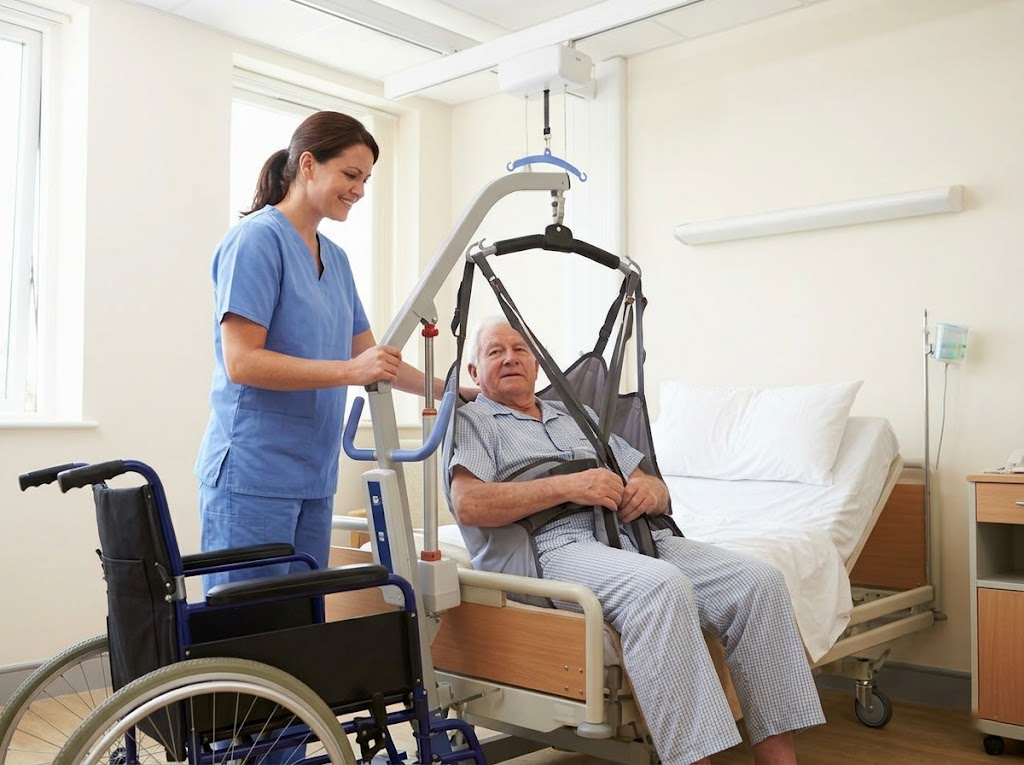
Mechanical ceiling lifts, floor-based lifts, transfer boards, and friction-reducing slider sheets move patients without placing the nurse’s spine, shoulders, or wrists under load. Facilities that invest in this equipment see measurable reductions in injury claims. The barrier is most often institutional hesitation around upfront cost rather than any question of effectiveness.
Optimal Bed Height
Adjusting the patient bed to approximately hip level before any procedure keeps the nurse’s spine in a neutral position and reduces the bending load on the lumbar spine across hundreds of interactions per shift. Many bed-related injuries occur because this step is skipped under time pressure. Building it into standard practice as a consistent first step makes a significant difference.
Reduce Manual Lifting
Nurses should not manually lift more than 35 pounds of a patient’s weight. Beyond that threshold, mechanical assistance is required. Repeated lifting above this limit places compressive and shear forces on the vertebrae that accumulate over time into disc damage, nerve compression, and chronic pain. Organizations that embed this limit into policy and provide the equipment to support it see consistent improvement in injury data.
Supportive Devices
Gait belts provide a secure handhold during patient ambulation and transfers, reducing the unpredictable load on the nurse’s body when a patient loses balance. Using a gait belt allows the nurse to maintain a stable, upright posture rather than bracing under sudden weight. Low-cost and practical, they are largely a matter of team culture.
Workstation and Task Ergonomics
Charting, medication preparation, and documentation expose nurses to a different set of ergonomic risks centered on posture and repetitive motion.

Adjustable Workstations
Height-adjustable desks allow nurses to alternate between sitting and standing while completing documentation tasks, reducing the physical strain of prolonged static posture. Keyboards and mice should be positioned at elbow height, with wrists in a neutral position, to reduce load on the forearms and shoulders during extended charting sessions.
Posture Control
A neutral posture — upright spine, relaxed shoulders, level head — significantly reduces musculoskeletal load whether charting at a workstation or standing at a bedside. Slouching or craning forward toward a low screen places sustained strain on the cervical spine and upper back that compounds with every hour of exposure.
Avoid Twisting
Twisting the torso during a patient transfer or while reaching across a bed is one of the most common mechanisms of lumbar injury in nursing. Turning the whole body, feet included, to face the direction of movement eliminates rotational forces on the spine and is a small habit change with significant long-term protective effects.
Keep Items Close
Positioning frequently used supplies and documentation tools within arm’s reach reduces the repetitive load on the spine and shoulders from reaching. In a patient room, thinking through the setup before beginning a procedure minimizes unnecessary movement and keeps the body in a safer working position throughout.
Preventative Measures and Injury Reduction
Daily habits have a measurable effect on cumulative injury risk, particularly across a full nursing career.
Regular Breaks
Short breaks with gentle stretching and position changes reduce muscular fatigue during repetitive or static tasks. A brief change in activity every hour makes a meaningful difference in how the body accumulates physical load over a shift, particularly in the lower back, hip flexors, and shoulders.
Wear Proper Footwear
Supportive shoes with good arch support reduce leg and lower back fatigue during long shifts on hard flooring. Footwear that lacks support allows the foot to flatten under load, creating compensatory strain that travels up through the knee, hip, and spine with every step.
Maintain Clear Pathways
Cluttered patient rooms and corridors force nurses into awkward movements and create fall hazards. Clear pathways make the physical environment more predictable, reduce the risk of sudden uncontrolled movements, and support safer patient handling by removing obstacles before they become hazards.
Participate in Training
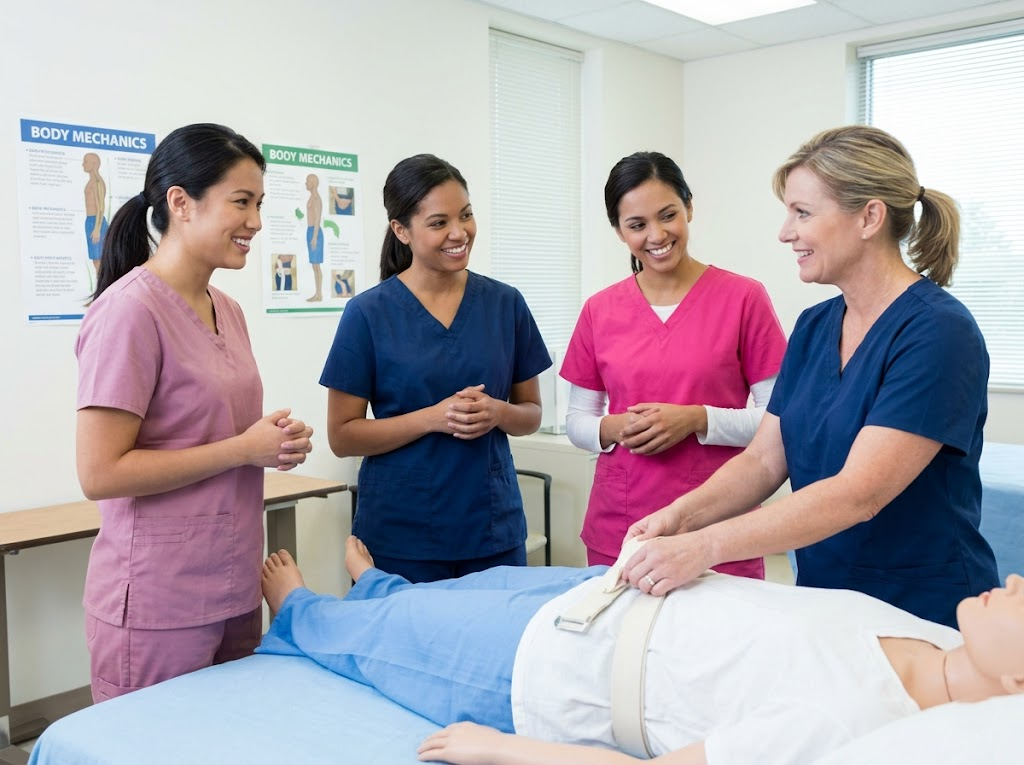
Hands-on training in ergonomic techniques and safe patient handling, refreshed at regular intervals, reinforces best practices and keeps knowledge current as equipment and guidance evolve. Implementing these ergonomic principles reduces the high prevalence of work-related injuries, specifically low back pain, in nursing professionals — provided that knowledge is actively applied and backed by the right equipment and organizational culture.
About Ergo Global
At Ergo Global, we understand the physical realities of nursing and the systemic pressures that make ergonomics so difficult to prioritize in clinical environments. We work directly with healthcare organizations, nursing unit managers, and individual nurses to assess injury risk, identify the specific tasks and environments driving harm, and develop solutions that are practical within the constraints of real clinical work.
Our ergonomics consultants bring both occupational health expertise and direct healthcare experience to every assessment. We do not offer generic recommendations. We build tailored programs that fit your ward, your team, and your operational realities.
If you are ready to reduce nurse injuries, improve retention, and build a safer clinical environment, we are here to help.
Contact Ergo Global today to book a nursing ergonomics consultation.